

A new roadside historical marker commemorating Frederick Douglass’ birth in Talbot County, self-liberation from slavery, and his work as a slavery abolitionist, orator and human rights advocate was unveiled on February 20, 2025, at the Talbot County Courthouse in Easton, Maryland.
Douglass traveled the country delivering powerful speeches on liberation and human rights. He was known for giving a local speech, “Self-Made Men” at the courthouse in a main courtroom on November 25, 1878, to a segregated audience, per details provided by visitmaryland.org. Additionally, the famous abolitionist was born enslaved on Maryland’s Eastern Shore at Holme Hill Farm in Talbot County on February 14, 1818. He died on February 20, 1895.
Douglass self-liberated in 1838 with the help of his future wife, Anna Murray Douglass. He disguised himself in a sailor’s uniform, carried forged freedom papers in his pocket, then traveled by foot, train and steamboat from Baltimore to New York City.

“Frederick Douglass is a timeless historical figure who encourages us to stand strong in the face of adversity and insurmountable obstacles in our life. He will always be part of Maryland’s identity and will continue to inspire generations to come,” said Dr. Julie Schablitsky, The Maryland Department of Transportation’s (MDOT’s) head of Cultural Resources.
As a part of her role, Dr. Schablitsky directs archaeological projects located along the Underground Railroad with a transportation connection, including the birthplace of Harriet Tubman. She also directs and manages Maryland’s Roadside Historical Marker Program.
MDOT partnered with the Maryland Historical Trust to hold the unveiling ceremony during Black History Month and Douglass’ birth month. The new roadside marker is part of the effort to increase the number of markers that highlight Maryland’s untold stories.
The historical marker was installed at the intersection of Tapper’s Corner Road and MD 303, which is near the location of Frederick Douglass’ birthplace.
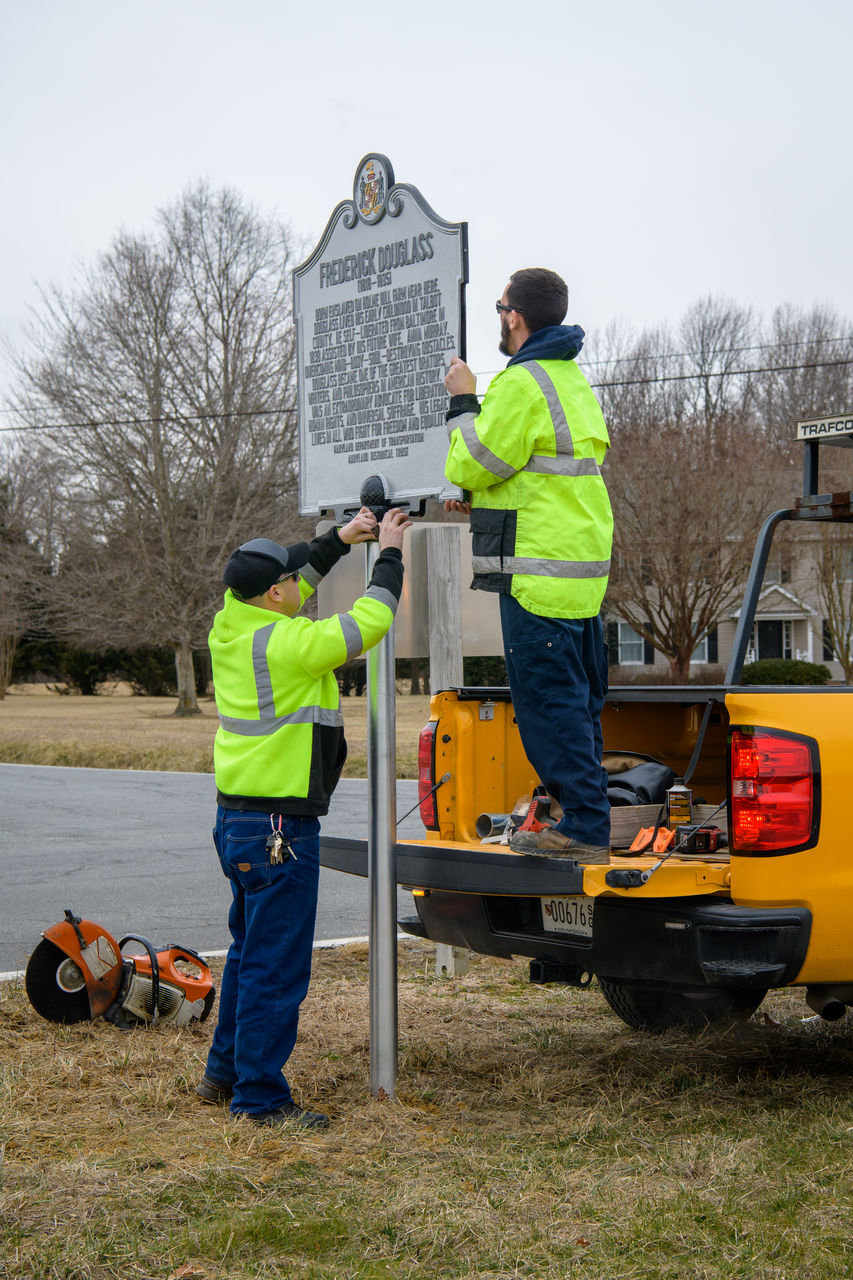
“The Maryland Historical Trust has been partnering with the state highway administration on historical markers for decades,” Dr. Schablitsky added.
Maryland Roadside Historical Markers consist of a pole, cast metal shield painted silver with black lettering across the shield body, and the Great Seal of Maryland. MDOT SHA, then the Maryland State Roads Commission, established a formal, statewide Roadside Historical Marker program in 1933, according to Maryland.gov. It included assistance from the Maryland Historical Society (MHS), a private non-profit. This partnership continued until 1985 when the Maryland Historical Trust (MHT) managed the program with assistance and funding from MDOT SHA. Today, MDOT directs the program with a focus on updating the existing historical markers along Maryland roadways. Maryland helped to educate the public about historical matters by installing approximately 800 cast metal historical markers along state roads since 1930.
“The popularity of the automobile, along with a renewed interest in history during the early 20th century, stimulated state agencies to form partnerships to fund this marker program,” according to Maryland.gov.
Douglass’ relatives and descendants from across the country attended the recent ceremony, in addition to Lt. Governor Aruna Miller; Maryland Transportation Secretary Paul J. Wiedefeld; members of the community; the town of Easton officials; and other Talbot County elected leaders.
“Today, more than ever, it’s important to spotlight the unique history of the Eastern Shore and the cultural giants it produced, like Frederick Douglass,” said Tarence Bailey Sr, a Bailey-Douglass relative and president of Operation Frederick Douglass on The Hill.
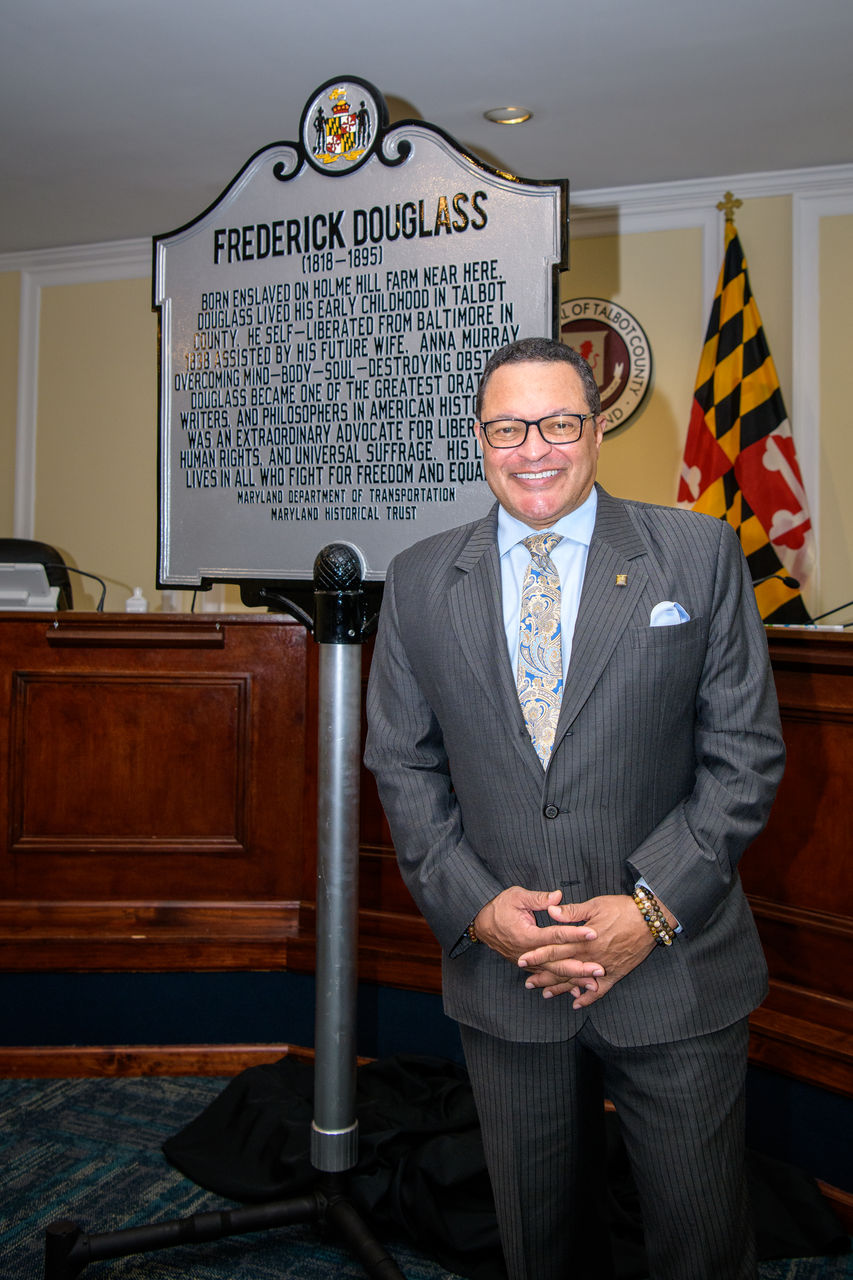
Kenneth B. Morris Jr., the great-great-great-grandson of Frederick Douglass and President of the Frederick Douglass Family Initiatives, stated that “as we mark the 130th anniversary of my great-great-great-grandfather Frederick Douglass’s passing, it is both historic and incredibly moving to see a new marker placed near his birthplace.”
He also pointed out that the recent recognition ensures that his journey from slavery to a life of purpose and transformative impact will never be forgotten.
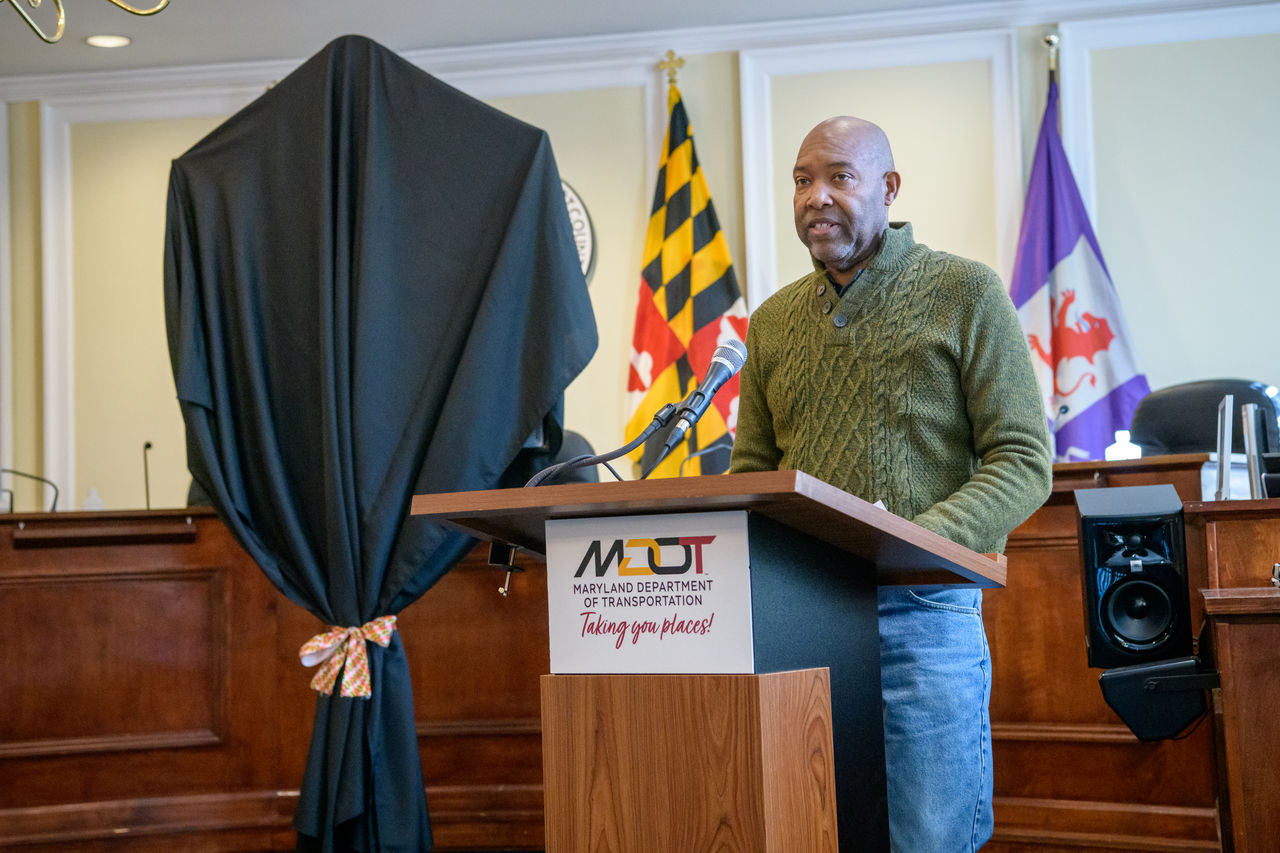
“My family and I are grateful to the Maryland Department of Transportation and the Maryland Historical Trust for honoring his legacy in this way. May this marker commemorate where his story began and inspire all who pass by to carry forward his fight for justice and equality,” Morris Jr. also stated.
“Frederick Douglass’ life and legacy continues to inspire all of us who work every day to protect our freedoms and fight for equality,” said Lt. Governor Miller. “I am honored to help unveil this historical marker which proudly displays where the great Maryland-born leader first started his journey.”
Visit https://maryland.maps.arcgis.com/apps/dashboards/87318efedd984d989c3c8f3a65897c55 to learn more about the locations of other Maryland roadside historical markers. Learn more about Douglass’ life by taking self-guided driving tours via https://www.visitmaryland.org/driving-tours/following-his-footsteps-marylands-frederick-douglass-driving-tour.