
Before Mental Health Awareness Month ends this May, it is prudent to explore mental health concerns of Black males.
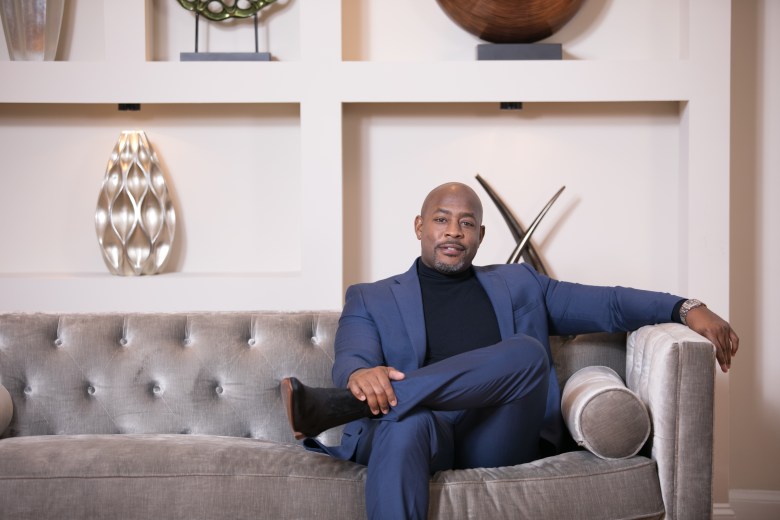
“Black men face unique mental health vulnerabilities shaped by systemic, cultural, and socioeconomic factors. These challenges contribute to disparities in mental health outcomes and access to care,” said Paul Bashea Williams, LCSW-C, LICSW.
The Prince George County, Maryland-based founder and owner of Hearts In Mind Counseling specializes in working with Black men, women, and couples.
A Shortage of Black Therapists
“As a Black male licensed mental health therapist, I understand that I am 1% of the entire field. Black, licensed mental health therapists make up only 4% of the field. These stats tell us that Black men may not have a clinician that can relate to their experiences. That barrier alone may prevent a Black man from pursuing help,” Williams stated.
“Between 56–74% of Black males exposed to traumatic events may have unmet mental health needs. Black Americans living below the poverty level are twice as likely to report serious psychological distress compared to those above the poverty level,” he added, citing Motley R. Banks, A. Black Males, Trauma, and Mental Health Service Use: A Systematic Review (https://pubmed.ncbi.nlm.nih.gov/30556064)
Black men have additional unique mental health vulnerabilities including economic disparities, such as higher rates of poverty, unemployment, and limited access to quality mental health services.
Seek Therapy
Williams noted that Black men are still statistically less likely to seek mental health support compared to other demographic groups. However, he recommends taking solution-based steps to find the right therapist who will understand lived experiences when therapy is pursued. Culturally sensitive assessments and treatment can lead to better mental health outcomes for Black males.
- Seek culturally competent care by being intentional in your search and questions.
- Check therapists’ bios that include what they specialize in and what their approach is.
3. Look for a therapist with a faith-based lens and consider the person’s gender, race and ethnicity.
“Don’t be afraid to interview your therapist prior to becoming their client. Ask them if they are versed in what you need support with,” Williams added.
It is more than appropriate to switch therapists if you feel it is not a good fit.
“It’s like dating. Continue to search until you feel like you can be open and be understood. Make sure you challenge your therapist to provide the direction you want to go. They like feedback as well. Therapy is relationship-based. Also, make sure you give yourself an opportunity to be challenged,” Williams explained.
He remarked that therapy is not a cure. Williams said that it is a toolbox, process and resource that is supposed to be a safe space, but it is not a quick fix.
“Therapy is only as good as the work a client puts in,” he added.
Integrate Self-Care
Williams defines self-care as “the intentional practice of nurturing your physical, emotional, mental, and spiritual well-being.”
“It’s showing up for yourself consistently. Self-care is maintenance, not emergency repair. Its radical responsibility, not selfishness, and it’s recharging, not escaping. It’s being accountable to yourself,” he noted.
Other Mental Health Support
Establishing a brotherhood and consistently checking on men are both vitally important for mental health support, especially in a society where many men are conditioned to suppress vulnerability and emotional expression, according to Williams.
“We grow in community and struggle in isolation. Many men believe they must handle things alone and they are told or have experienced being dismissed when expressing a challenge, hurt, or need. When I think of brotherhood, I see it as a lifeline,” he explained.
Williams also mentioned that creating a safe space for mental health check-ins with mates and spouses is essential for emotional intimacy, trust, and relational health.
Mental Health Maintenance
Mental health disorders such as depression can manifest differently in Black men, often in ways that are misunderstood, overlooked, or mislabeled.
“Cultural expectations, systemic pressures, and survival-based coping shape how symptoms show up. It can look like anger; irritability; withdrawal; overworking; overperforming; substance abuse; risky behavior, physical symptoms and aggression,” according to Williams.
Black men should take proactive measures to support their mental health maintenance.
He suggested talking to someone safe; getting active; practicing self- care; setting boundaries; deconstructing the strong Black man myth; and men paying attention to their bodies, especially their jaws, stomach, and shoulders.
“My true goal is to be a difference-maker for Black people in the mental health field,” said Williams.Learn more about Wiliams, his services and variety of books by visiting www.BasheaWilliams.com and www.HeartsInMindCounseling.com.
- Andrea Blackstone
- Andrea Blackstone
- Andrea Blackstone
- Andrea Blackstone
- Andrea Blackstone
- Andrea Blackstone
- Andrea Blackstone
- Andrea Blackstone
- Andrea Blackstone
- Andrea Blackstone
- Andrea Blackstone
- Andrea Blackstone
- Andrea Blackstone
- Andrea Blackstone
- Andrea Blackstone
- Andrea Blackstone
- Andrea Blackstone
- Andrea Blackstone
- Andrea Blackstone
- Andrea Blackstone
- Andrea Blackstone
- Andrea Blackstone
- Andrea Blackstone
- Andrea Blackstone
- Andrea Blackstone
- Andrea Blackstone
- Andrea Blackstone
- Andrea Blackstone
- Andrea Blackstone
- Andrea Blackstone
- Andrea Blackstone
- Andrea Blackstone
- Andrea Blackstone
- Andrea Blackstone
- Andrea Blackstone
- Andrea Blackstone
- Andrea Blackstone
- Andrea Blackstone
- Andrea Blackstone
- Andrea Blackstone
- Andrea Blackstone
- Andrea Blackstone
- Andrea Blackstone
- Andrea Blackstone
- Andrea Blackstone
- Andrea Blackstone
- Andrea Blackstone
- Andrea Blackstone
- Andrea Blackstone
- Andrea Blackstone
- Andrea Blackstone
- Andrea Blackstone
- Andrea Blackstone
- Andrea Blackstone
- Andrea Blackstone
- Andrea Blackstone
- Andrea Blackstone
- Andrea Blackstone
- Andrea Blackstone
- Andrea Blackstone
- Andrea Blackstone
- Andrea Blackstone
- Andrea Blackstone
- Andrea Blackstone
- Andrea Blackstone
- Andrea Blackstone
- Andrea Blackstone
- Andrea Blackstone
- Andrea Blackstone
- Andrea Blackstone
- Andrea Blackstone
- Andrea Blackstone
- Andrea Blackstone
- Andrea Blackstone
- Andrea Blackstone
- Andrea Blackstone
- Andrea Blackstone
- Andrea Blackstone
- Andrea Blackstone
- Andrea Blackstone
- Andrea Blackstone
- Andrea Blackstone
- Andrea Blackstone
- Andrea Blackstone
- Andrea Blackstone
- Andrea Blackstone
- Andrea Blackstone
- Andrea Blackstone
- Andrea Blackstone
- Andrea Blackstone
- Andrea Blackstone
- Andrea Blackstone
- Andrea Blackstone
- Andrea Blackstone
- Andrea Blackstone
- Andrea Blackstone
- Andrea Blackstone
- Andrea Blackstone
- Andrea Blackstone
- Andrea Blackstone
- Andrea Blackstone
- Andrea Blackstone
- Andrea Blackstone
- Andrea Blackstone
- Andrea Blackstone
- Andrea Blackstone
- Andrea Blackstone
- Andrea Blackstone
- Andrea Blackstone
- Andrea Blackstone
- Andrea Blackstone
- Andrea Blackstone
- Andrea Blackstone
- Andrea Blackstone
- Andrea Blackstone
- Andrea Blackstone
- Andrea Blackstone
- Andrea Blackstone
- Andrea Blackstone
- Andrea Blackstone
- Andrea Blackstone
- Andrea Blackstone
- Andrea Blackstone
- Andrea Blackstone
- Andrea Blackstone
- Andrea Blackstone
- Andrea Blackstone
- Andrea Blackstone
- Andrea Blackstone
- Andrea Blackstone
- Andrea Blackstone
- Andrea Blackstone
- Andrea Blackstone
- Andrea Blackstone
- Andrea Blackstone
- Andrea Blackstone
- Andrea Blackstone
- Andrea Blackstone
- Andrea Blackstone
- Andrea Blackstone
- Andrea Blackstone
- Andrea Blackstone
- Andrea Blackstone
- Andrea Blackstone
- Andrea Blackstone
- Andrea Blackstone
- Andrea Blackstone
- Andrea Blackstone
- Andrea Blackstone
- Andrea Blackstone
- Andrea Blackstone
- Andrea Blackstone
- Andrea Blackstone
- Andrea Blackstone
- Andrea Blackstone
- Andrea Blackstone
- Andrea Blackstone
- Andrea Blackstone
- Andrea Blackstone
- Andrea Blackstone
- Andrea Blackstone
- Andrea Blackstone
- Andrea Blackstone
- Andrea Blackstone
- Andrea Blackstone
- Andrea Blackstone
- Andrea Blackstone
- Andrea Blackstone
- Andrea Blackstone
- Andrea Blackstone
- Andrea Blackstone
- Andrea Blackstone
- Andrea Blackstone
- Andrea Blackstone
- Andrea Blackstone
- Andrea Blackstone
- Andrea Blackstone
- Andrea Blackstone
- Andrea Blackstone
- Andrea Blackstone
- Andrea Blackstone
- Andrea Blackstone
- Andrea Blackstone
- Andrea Blackstone
- Andrea Blackstone
- Andrea Blackstone
- Andrea Blackstone
- Andrea Blackstone
- Andrea Blackstone
- Andrea Blackstone
- Andrea Blackstone
- Andrea Blackstone
- Andrea Blackstone
- Andrea Blackstone
- Andrea Blackstone
- Andrea Blackstone
- Andrea Blackstone
- Andrea Blackstone
- Andrea Blackstone
- Andrea Blackstone
- Andrea Blackstone
- Andrea Blackstone
- Andrea Blackstone
- Andrea Blackstone
- Andrea Blackstone
- Andrea Blackstone
- Andrea Blackstone
- Andrea Blackstone
- Andrea Blackstone
- Andrea Blackstone
- Andrea Blackstone
- Andrea Blackstone
- Andrea Blackstone
- Andrea Blackstone
- Andrea Blackstone
- Andrea Blackstone
- Andrea Blackstone
- Andrea Blackstone
- Andrea Blackstone
- Andrea Blackstone
- Andrea Blackstone
- Andrea Blackstone
- Andrea Blackstone
- Andrea Blackstone
- Andrea Blackstone
- Andrea Blackstone
- Andrea Blackstone
- Andrea Blackstone
- Andrea Blackstone
- Andrea Blackstone
- Andrea Blackstone
- Andrea Blackstone
- Andrea Blackstone
- Andrea Blackstone
- Andrea Blackstone
- Andrea Blackstone
- Andrea Blackstone
- Andrea Blackstone
- Andrea Blackstone
- Andrea Blackstone
- Andrea Blackstone
- Andrea Blackstone
- Andrea Blackstone
- Andrea Blackstone
- Andrea Blackstone
- Andrea Blackstone
- Andrea Blackstone
- Andrea Blackstone
- Andrea Blackstone
- Andrea Blackstone
- Andrea Blackstone
- Andrea Blackstone
- Andrea Blackstone
- Andrea Blackstone
- Andrea Blackstone
- Andrea Blackstone
- Andrea Blackstone
- Andrea Blackstone
- Andrea Blackstone
- Andrea Blackstone
- Andrea Blackstone
- Andrea Blackstone
- Andrea Blackstone
- Andrea Blackstone
- Andrea Blackstone
- Andrea Blackstone
- Andrea Blackstone
- Andrea Blackstone
- Andrea Blackstone
- Andrea Blackstone
- Andrea Blackstone
- Andrea Blackstone
- Andrea Blackstone
- Andrea Blackstone
- Andrea Blackstone
- Andrea Blackstone
- Andrea Blackstone
- Andrea Blackstone
- Andrea Blackstone
- Andrea Blackstone