
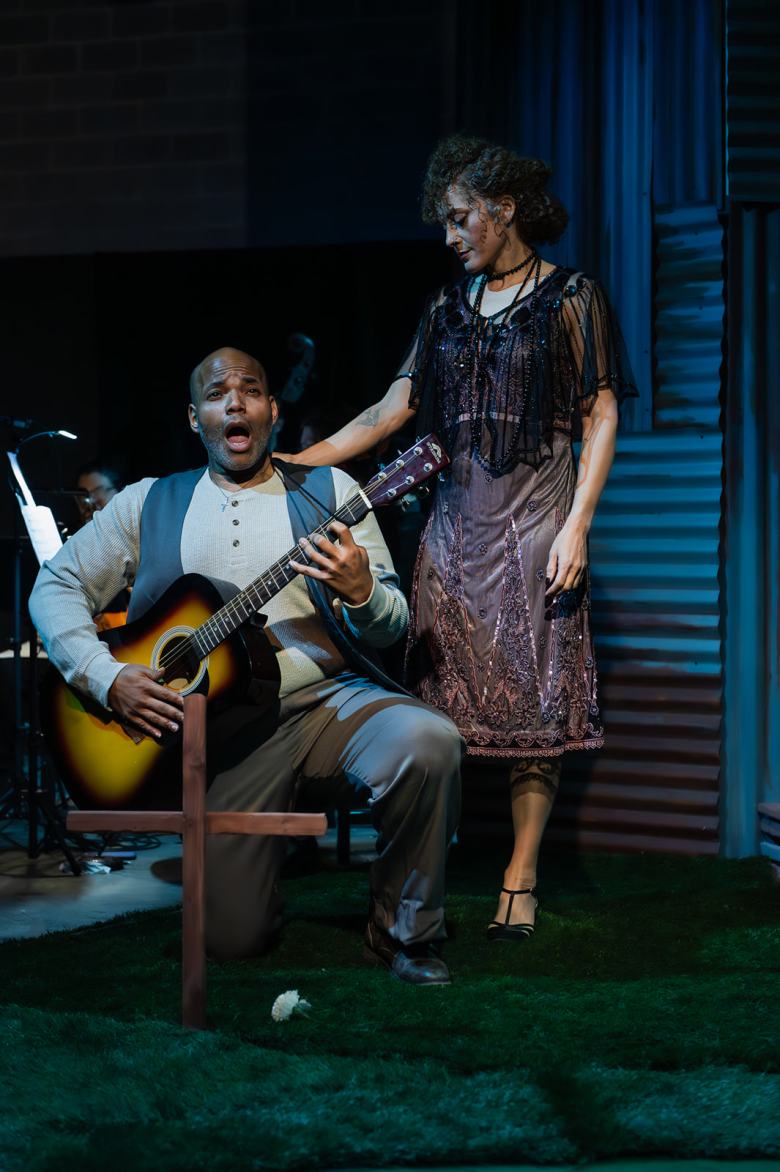
I attended the final performance of The Delta King’s Blues on Sunday, December 21, inside a rustic, intimate theater space in Baltimore that felt perfectly suited to the story being told. The venue—small, raw, and minimally adorned—evoked a Southern juke joint more than a traditional opera house. The chamber orchestra was tucked into a corner, while some audience members sat at cocktail tables just off the stage, becoming part of the bar itself. From the moment you entered, the production dissolved the boundary between performer and patron.
The evening opened not with opera, but with the blues. A singer took the stage to perform three covers of Robert Johnson’s work, setting the emotional and historical tone. He fiddled with his guitar, tapped his toe, and sang with a distinct twang that honored Mississippi Delta roots. It was a grounding, reverent prelude—less overture, more invocation.
The opera proper began with the cast bearing witness to Robert Johnson’s grief as he mourned the loss of a loved one, a sorrow that frames his artistic longing and insecurity. From there, the story unfolded into the familiar folktale: Johnson’s inability to play the guitar well, his desperation, and ultimately, the fateful deal with the devil.
Tenor Albert R. Lee, portraying Robert Johnson, anchored the production with a bright, ringing tenor that carried effortlessly through the former church-turned-theater. His voice was clear, resonant, and emotionally open, capturing both vulnerability and ambition. Opposite him, Christian Simmons delivered a commanding performance as the Devil. His booming bass reminded the audience unmistakably that this was opera; when he sang, the walls seemed to vibrate. His presence was sly and controlled, exuding menace through artistry rather than excess.
Soprano Melissa Wimbish cut through the male-dominated cast with soaring high notes and a magnetic stage presence. Her performance was both playful and grounded—at times a tender comforter to Johnson, at others a fierce and flirtatious bartender who helped propel the story forward. She provided emotional balance, grounding the myth in human connection.
Comic relief came from the supporting duo of Anthony Ballard and Marvin Wayne. Ballard moved fluidly through the space, suspenders swinging as much as his lyrical tenor, while Allen’s rich, bright baritone was delivered with clarity, strong diction, and warmth. Together, they lightened the narrative without undercutting its stakes.
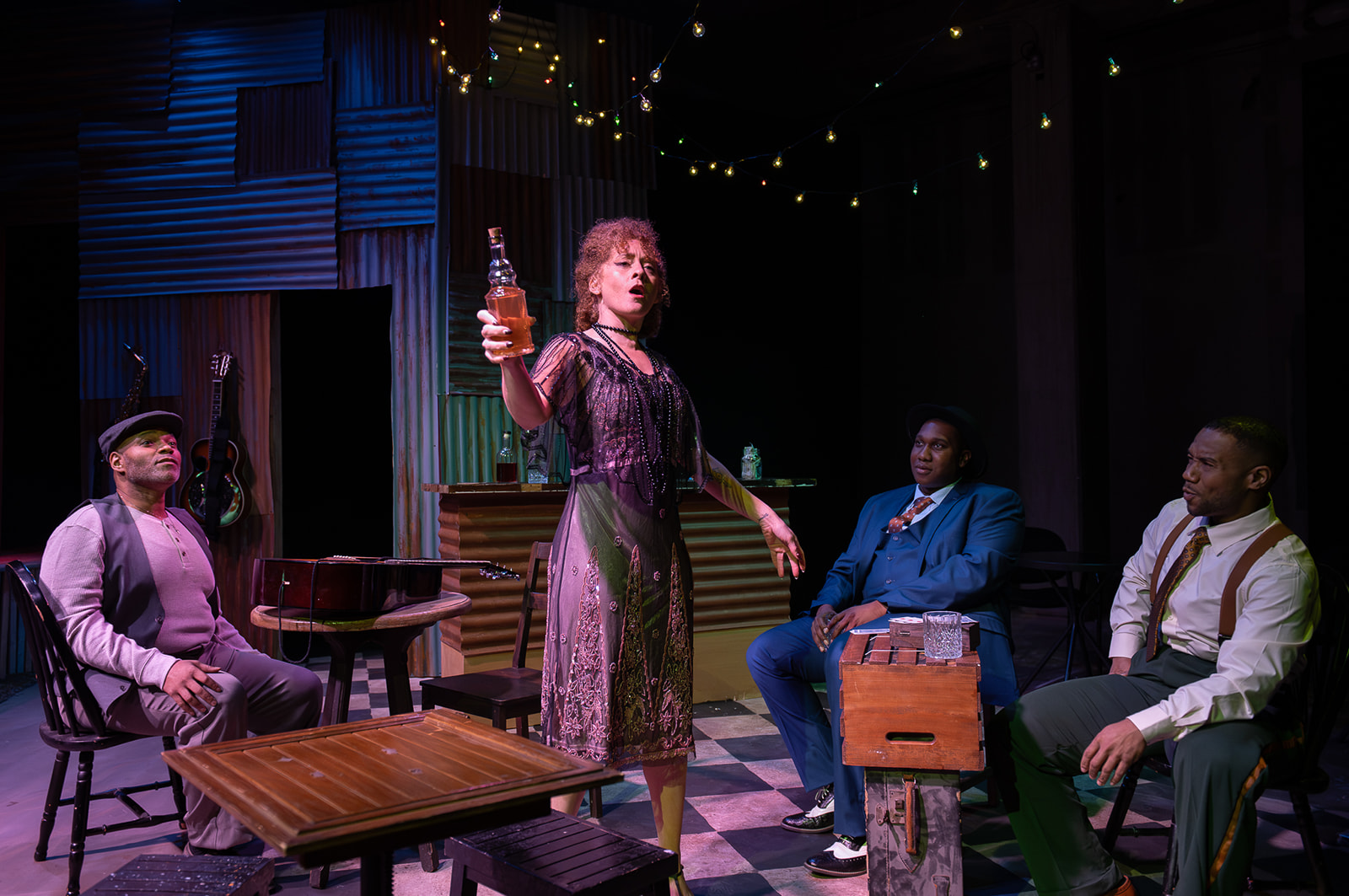
Musically, the orchestra was a standout. Strings blended seamlessly with guitar and piano, creating a sound that felt symphonic while remaining deeply rooted in the blues. Though none of Robert Johnson’s original songs were performed within the opera itself, the production succeeded in telling his folktale without them—honoring the spirit rather than replicating the catalog.
If there was one shortcoming, it was the ending. The opera concluded somewhat abruptly, leaving me yearning for a fuller redemption arc. The emotional high point came when Johnson returned to the saloon where he had once been mocked, now armed with dazzling guitar skill—a powerful moment of arrival that felt like it could have been explored just a bit longer.
Still, the impact of the production was undeniable. This small opera company played to multiple sold-out houses, and the significance of the work was underscored by the presence of internationally renowned opera star Denyce Graves, who was spotted in the audience at Sunday’s performance.
The Delta King’s Blues, presented by IN Series, proves that opera can be intimate, culturally grounded, and boldly reimagined. In a tiny Baltimore theater, the myth of Robert Johnson was not just retold—it was felt, heard, and lived.
Harold Booker Jr.
Harold Booker Jr. is the founder and principal of DrewJenk Consulting, a boutique firm that specializes in project management, technology, and community engagement. He is also a frequent contributor to the Baltimore Times, writing about arts, culture, and social issues that connect personal history with community impact.