
28 Days of Black Futures returns, featuring 28 artists in the Black Futures Cypher
I’ve learned over time that transformation rarely begins with scale. It begins with alignment.
Too often, we measure impact by how wide we reach, how many, how fast, how far. But the most lasting change I’ve witnessed has not come from scaling wide. It has come from scaling deep, deepening relationships, strengthening trust, and rooting practice in place.
Movements stall not because people don’t care, but because they believe their contribution is too small to matter. That belief, quiet and persistent, is one of the most dangerous myths we carry.
The Power of One emerged as a response to that myth. Not as a celebration of individualism, but as an affirmation of collective responsibility. One voice, one choice, one act of care, when connected to others, can shift narratives, move resources, and strengthen community.
That understanding feels especially urgent right now.
We are living through a period of contradiction and retreat. Institutional giving is growing, yet support for communities of color and race-explicit work is shrinking. This tension is not anecdotal. It is documented.
According to Derailed, a report from the Philanthropic Initiative for Racial Equity, institutional giving grew 44 percent between 2019 and 2023. Yet the share reaching communities of color declined. Even at its 2021 peak, funding for communities of color accounted for less than 10 percent of all institutional giving. By 2023, that share had fallen to 6.8 percent, lower than it was nearly a decade earlier.
Funding for racial justice, defined as systemic change and power-building, never exceeded 1.4 percent of total giving. Adjusted for inflation, support for communities of color dropped more than 22 percent between 2021 and 2023. At its highest point, racial justice funding reached $1.65 billion, roughly the annual budget of a single mid-sized private university. The comparison reveals a profound mismatch between the scale of harm and the philanthropic response.
As The Chronicle of Philanthropy has reported, this pullback is not only about dollars. It is about narrative. Institutions have quietly stepped away from race-explicit commitments made after 2020, favoring safer language and narrower approaches that ultimately blunt impact.
At the organizational level, research published through Candid’s IssueLab, including Holding the Line: Black-Led Nonprofits and Race-Explicit Work Amid Backlash, shows how Black-led organizations are disproportionately pressured to downplay or remove explicit references to race in order to secure funding. Leaders describe the toll of being asked to code-switch their missions, diverting energy away from community care and into survival.
Taken together, these patterns point to a sobering reality. As institutions grow more cautious, resources consolidate upward rather than circulate outward. Commitments made in moments of crisis are being rolled back just as communities continue to navigate economic instability, cultural backlash, and systemic neglect.
This is where The Power of One becomes more than a message. It becomes a practice.
The question is not what is missing. It is what is already here.
What is in your hand? Time. Skill. Story. Care. Resources. Presence. Transformation does not begin with abundance. It begins with participation. What may feel insufficient on its own becomes enough when shared.
This is the foundation of The Power of One. Not the belief that one person can do everything, but the understanding that everyone carries something that matters when placed in common. “What’s in your hand?” is not a judgment. It is an invitation to stop waiting for more and start offering what is already present.
When large systems retreat, participation becomes power. When institutional support narrows, individual choices to listen, to give, to share, and to stay engaged become essential infrastructure. The Power of One is not a substitute for systemic investment, but it is a refusal to wait for permission. It affirms that alignment between values and action still matters, especially when conditions are difficult.
For generations, Black communities have relied on culture to survive, organize, and imagine freedom. Music. Storytelling. Shared ritual. These have never been separate from how we build trust or care for one another. Culture carries our values long before institutions catch up.
At CLLCTIVLY, we treat culture as infrastructure, not decoration or content, but a living system that shapes how value moves, how relationships form, and how futures are built.
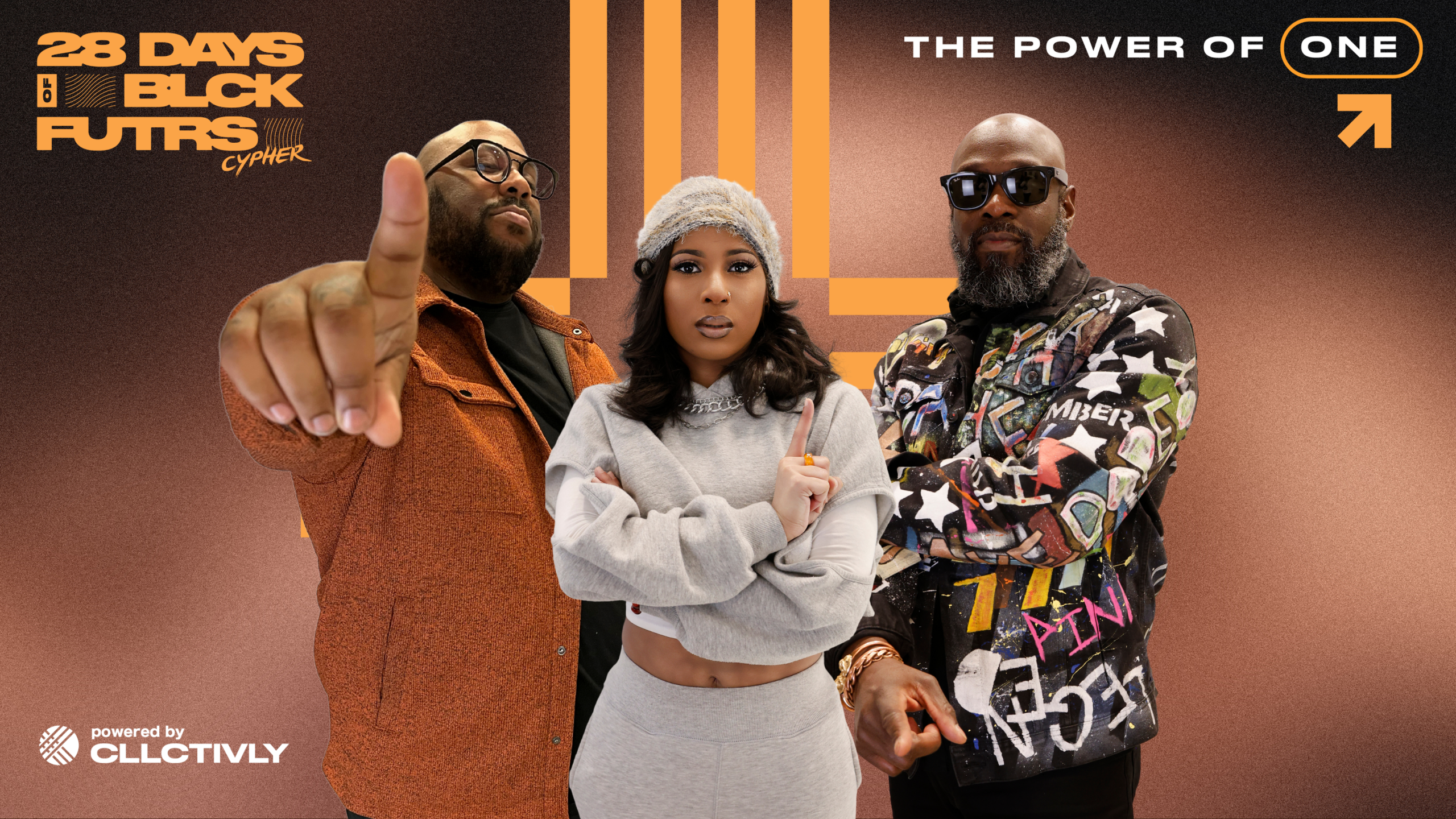
This understanding sits at the heart of 28 Days of Black Futures, our annual practice of advancing narrative power through creativity, using culture to shape movement, mobilize participation, and build what comes next.
Through the award-winning Black Futures Cypher, 28 local artists come together, each contributing an original track. The series is produced under the creative direction of Von Vargas. Each artist carries The Power of One in their own way, together forming a collective expression that unfolds across the campaign.
One voice alone may feel small. But one voice connected to others becomes a chorus. One action, repeated and shared, becomes momentum.
The infrastructure is not coming later. It is being built now, through daily acts of alignment, participation, and care.
The question is whether you will join what is already happening.
That is the power this moment calls for.
That is The Power of One.
To follow 28 Days of Black Futures and hear directly from the 28 artists shaping this collective offering, follow The Baltimore Times, where one video will be released each day throughout February, and follow CLLCTIVLY on social media at @CLLCTIVLY.
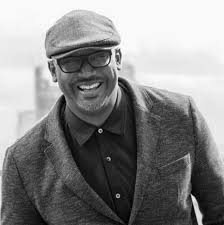
Jamye Wooten is the founder and CEO of CLLCTIVLY.
CLLCTIVLY is a Baltimore-rooted ecosystem cultivating collective imagination, mobilizing resources, and amplifying stories that shape liberated Black futures. Our work is grounded in ancestral imagination, the inherited capacity to dream, build, and care for one another across generations. To date, CLLCTIVLY has deployed more than $7 million into Baltimore’s social economy.
Inspiring call to action. Each one use what you’ve got — “what’s in your hands?” — to liberate us from fear and complacency to achieve greater human possibilities: Spirit, mind and community. Thanks for sharing your insights. Keep the faith and focus on “Futures”. And to sustain the work of CLLCTUVLY.
It’s an honor to be a part of this project!
I can’t wait to hear what everyone’s been cooking up over these next 28 days!