
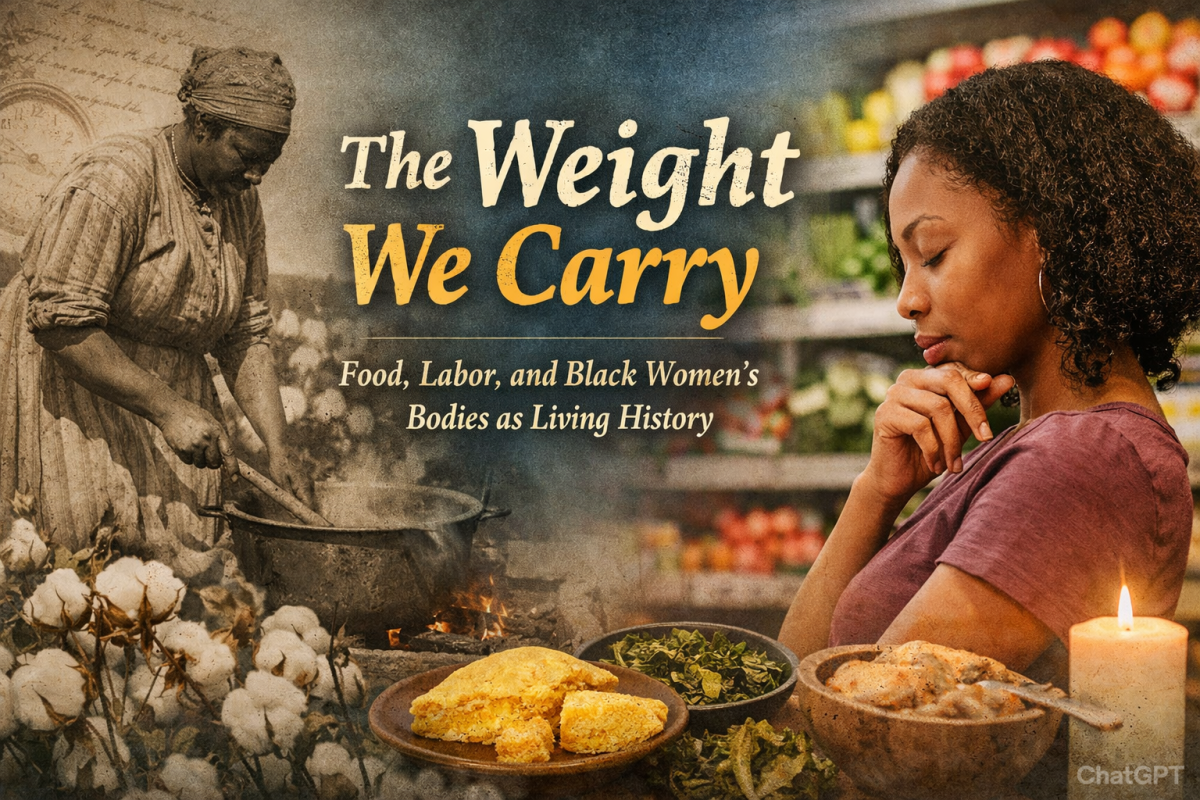
Black History Month invites us to remember, but remembrance is not only about names and dates. It is also about the stories our bodies hold.
For Black women, food is never just food. It is history, labor, survival, creativity, resistance, and, too often, blame.
Last September in Atlanta, at the Association for the Study of African American Life and History (ASALH) conference, I presented research on Black women, food, and labor under the theme African Americans and Labor. What became clear in that room—and in the many conversations that followed—is that the way Black women eat, cook, nurture, and carry weight cannot be separated from the work we have done for generations.
From the plantation kitchen to the modern service economy, Black women have fed this nation while often being denied nourishment ourselves. We have prepared meals we could not sit down to eat, stretched ingredients to make something out of nothing, and turned scraps into traditions now celebrated as American cuisine. Our culinary creativity is a legacy of brilliance. But it is also a record of survival under constraint.
Food was labor. Food was currency. Food was control.
And that history did not end; it evolved.
Today, Black women are still overrepresented in caregiving, food service, and other forms of emotional and physical labor that revolve around feeding others. We are still expected to be strong, self-sacrificing, and endlessly resilient. That expectation—often called the “Strong Black Woman” trope—has consequences. It teaches us to carry stress as strength, grief as productivity, and exhaustion as normal.
Our bodies keep the score.
Rates of diet-related illness, stress-related conditions, and weight stigma among Black women are frequently discussed without context, as if they are individual failures rather than the cumulative result of historical, cultural, and economic forces. When we are told simply to “eat better” or “try harder,” the conversation ignores food deserts, healthcare bias, targeted marketing, time poverty, and the unrecognized labor that shapes our daily lives.
It ignores the weight we carry.
To study Black history is to study labor. To study labor is to study the body. And for Black women, the body is an archive.
It holds the memory of standing over hot stoves for hours.
The memory of feeding families before feeding ourselves.
The memory of using food as comfort when rest was not available.
The memory of being praised for our strength but rarely protected in our vulnerability.
Understanding this is not an excuse; it is liberation.
When we place how we manage food inside its historical and cultural context, shame begins to loosen its grip. We move from self-blame to systems, from isolation to collective understanding. We begin to ask different questions—not “What is wrong with my body?” but “What has my body been carrying?”
That question is an act of self-love.
Self-love, in this context, is not bubble baths and affirmations—though those have their place. It is the radical act of telling the truth about our history and refusing to pathologize our survival. It is recognizing that our eating patterns, our health challenges, and even our exhaustion are often adaptive responses to generations of labor without rest.
Black women have always transformed pain into creativity. The same ingenuity that turned scraps into feasts can now turn research into recognition, recognition into healing, and healing into new traditions rooted in rest, nourishment, and community
This is why I created The Weight We Carry, a research-based workbook that gives language to what so many Black women have felt but were never taught to name. It examines the historical roots of food and labor, the emotional labor performed in our kitchens, and how systemic inequities shape our bodies over a lifetime. Most importantly, it reframes our experiences from personal failure to historical reality.

Addressing the heavy weight of our history with food is not about fixing our bodies. It is about finally understanding them.
Black History Month is a time to honor legacy. For Black women, part of that legacy lives in how we manage food—how we have used it to survive, nurture, celebrate, and sometimes cope. When we study that legacy with compassion and context, we reclaim power over narratives that were never ours to begin with.
Our bodies are not problems to be solved.
They are stories to be heard.
They are histories to be honored.
And when we listen to them with truth and tenderness, we practice a form of self-love that is as revolutionary as any movement that came before us.
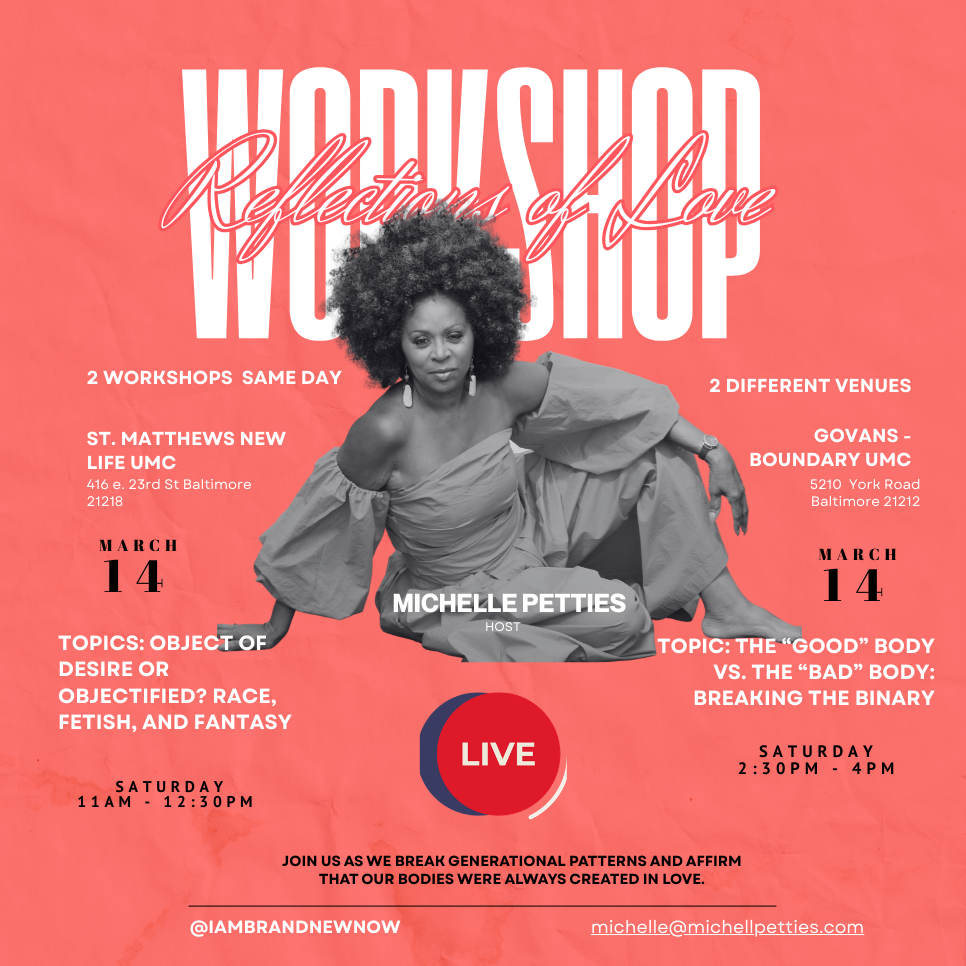
Michelle Petties is a TEDx speaker, Food Story coach, and award-winning memoirist whose work explores the intersection of food, trauma, culture, and healing. After gaining and losing 700 pounds, Michelle discovered the secret to overcoming stress and emotional overeating. Her free workbook, Mind Over Meals, reveals her core principles for losing weight and keeping it off. She is available to customize The Weight We Carry workshop for churches, sororities, civic organizations, and community groups.
For me this is one of the most powerful statements in this article:
“The memory of being praised for our strength but rarely protected in our vulnerability.” It speaks for itself. Strength does not rule out the desire to be protected in our vulnerability.