
Every April, Minority Health Month invites us to look honestly at the health disparities that disproportionately affect Black communities. The conversation is familiar: heart disease, diabetes, hypertension, and certain cancers. These are real, urgent, and worthy of every column inch devoted to them. But this April, I want to open a door we don’t open nearly enough. I want to talk about sexual health — not as a separate, uncomfortable topic whispered around the edges of wellness, but as the fully integrated, deeply human dimension of health that it is.
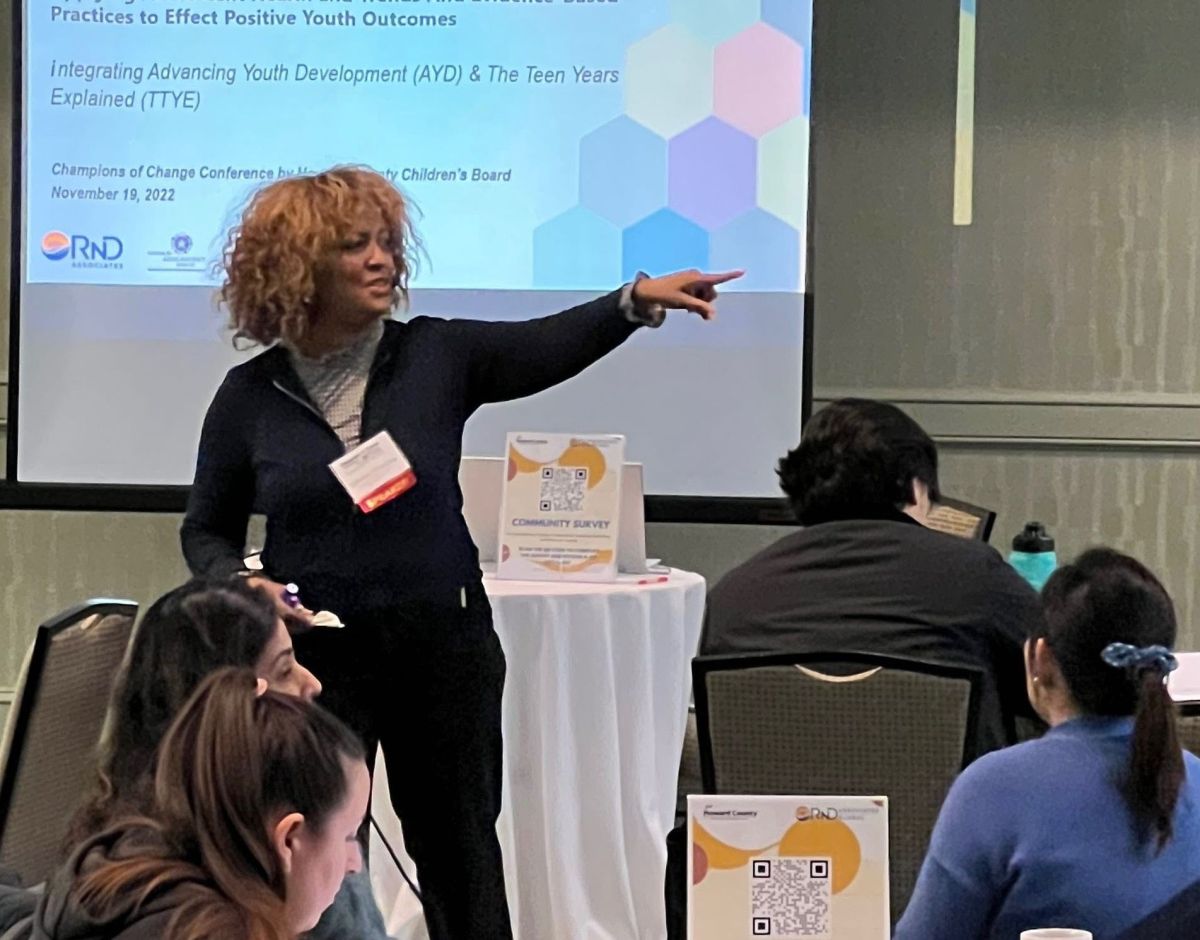
To help me do that, I sat down with Rebkha Atnafou, MPH, executive director of RnD Associates, a nonprofit working in partnership with the Baltimore City Department of Health to promote sexual health across our city. What she shared was both sobering and inspiring — and it set the tone for a month-long series that will take us to college campuses, houses of faith, barbershops and beauty salons, community organizations, and into the living rooms of people who are doing this essential work.
When I asked Atnafou what comes to mind when she hears the words “Minority Health Month,” her answer surprised me — in the best way. “I immediately think about the African American community and the health disparities that affect us,” she said. “But before I go to our difficult conditions, I think about positive health promotion. I think about our joy, our connectedness, our sisterhood, our brotherhood. And then from there, we go on to diseases and conditions.”
That framing — starting with joy, not deficit — matters. It shapes everything about how RnD Associates approaches its work.
Sexual Health Is Not a Sidebar
One of the biggest obstacles Atnafou and her team face is the deeply rooted belief that sexual health is somehow separate from overall health — a private matter, perhaps a moral one, but not a medical one. She pushes back on that firmly.
“Sexual health is really every aspect of who we are,” she told me. “We have our sexual organs with us all the time, 24/7.” She describes sexual health through the lens of eight dimensions of wellness — physical, emotional, financial, social, environmental, and more. When someone chooses a romantic partner, she explains that the choice can touch every single one of those dimensions. A financially irresponsible partner, for instance, can devastate a person’s economic stability. A partner who introduces an untreated infection can affect physical health in ways that ripple outward for years. “Sexual health is not separate,” she said plainly. “It’s part of the overall.”
Forty Years on the Front Lines
Atnafou’s commitment to this work runs deep — deeper than a job title. She traces it back to 1985, the year she graduated from graduate school and found herself in New York City at the epicenter of the HIV/AIDS pandemic. With no effective treatment in sight and a diagnosis that felt like a death sentence, fear was everywhere. She was among the first cohort of HIV counselors hired by the New York City Department of Health.
“People were committing suicide just from the diagnosis,” she recalled. That experience forged her calling. She has been doing this work, with only a short break, for more than forty years.
What’s changed since 1985? In some ways, everything. Medical advances mean HIV is no longer the automatic death sentence it once was. PrEP — pre-exposure prophylaxis — is now available as a daily pill or a few injections per year and is approximately 99% effective in preventing HIV transmission. PEP, or post-exposure prophylaxis, taken within 72 hours of potential exposure, carries roughly 88% effectiveness. These are remarkable tools.
But Atnafou sounds a clear alarm about what hasn’t changed, and what has gotten worse: complacency. “People feel like, ‘What if I get an STI — I get treated and go on with my life,'” she said. “But treatment doesn’t mean cured.” Herpes and HIV, once acquired, remain with a person for life. Approximately 20 million STI cases occur in the United States every year. Half of those are among young people between the ages of 15 and 24. Some 23,000 women become infertile annually as a result of undiagnosed STIs — sit with those numbers for a moment. And in a development that surprises many people, rates among seniors are rising too. We are, as Atnafou reminds us, sexual beings across the entire arc of our lives.
African American women, she notes with particular urgency, are disproportionately underrepresented in PrEP enrollment — even as HIV rates in our community remain high. Getting the word out is not optional. It is a matter of health equity.

Trusted Voices, Trusted Spaces
This is where RnD Associates’ ambassador model comes in — and it’s a model worth celebrating. Funded by the Baltimore City Department of Health, RnD has built a coalition of roughly 10 organizations spanning institutions of higher education, youth development programs, reentry and incarcerated populations, substance use programs, churches, youth development and rites-of-passage programs, and networks of barbers and beauticians. These ambassadors gather monthly for training, networking, and planning, and they take the message directly into the communities where they already hold trust.
“These are trusted people,” Atnafou said. “Their messages are well taken, and they’re well established in the communities they serve.” RnD also amplifies its reach and message of prevention, testing, and treatment on the podcast, Be More Unfiltered, available on YouTube and Instagram, and through a newly produced PrEP PSA they’re working to air on local media. Atnafou is hopeful that the right contacts will come forward.
Over the next several weeks, I’ll be sitting down with several of these ambassadors — hearing their stories, their communities’ stories, and the front-line realities of sexual health promotion in Baltimore. This conversation with Rebkha Atnafou was the beginning. And like all good beginnings, it ended where it started: with the radical, necessary idea that positive, healthy relationships are the foundation of everything we call wellness.
Stay with us this month. The conversation is just getting started.
____________________________________________________________
Michelle Petties is a TEDx speaker, Food Story coach, and the award-winning memoirist of Leaving Large: The Stories of a Food Addict. After gaining and losing 700 pounds, Michelle discovered the secret to overcoming stress and emotional overeating. Her free workbook, Mind Over Meals, reveals her core principles for losing weight and keeping it off.