
Race Work
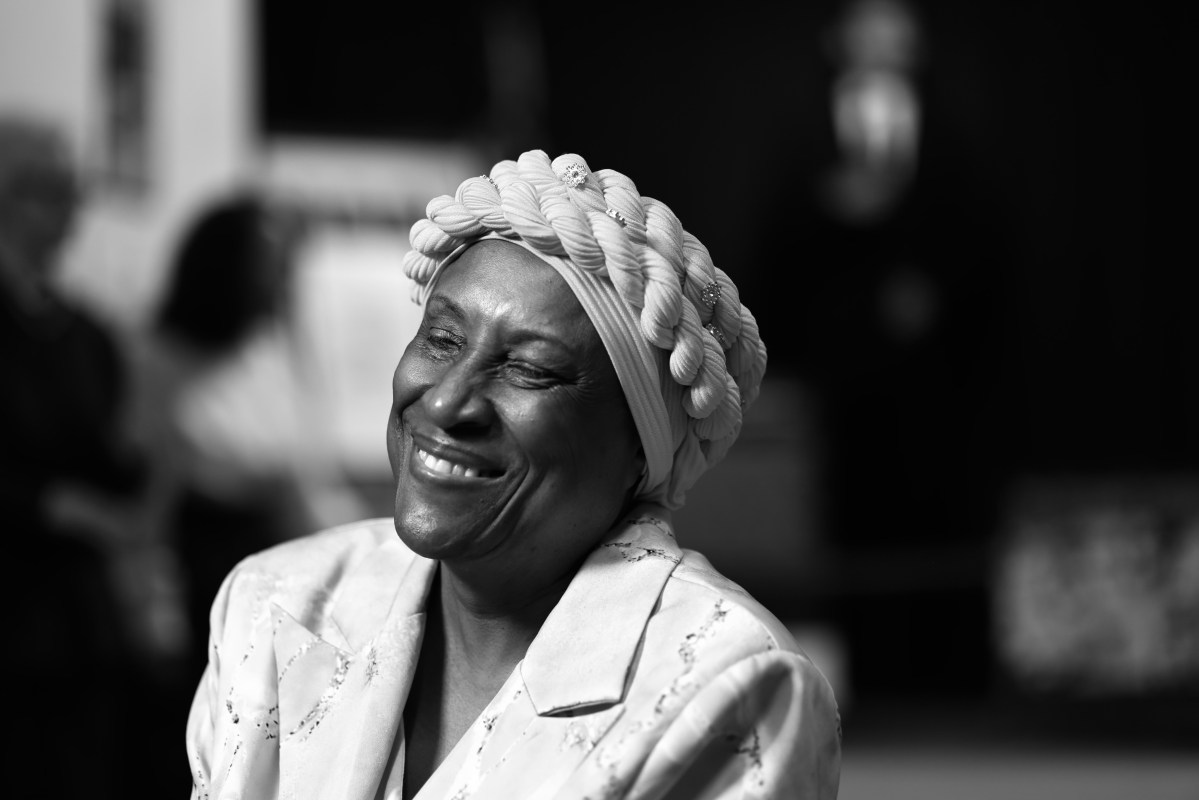
The first time that I was introduced to Dr. Joanne Martin was through her scholarship; one of the four books that she co-authored with her husband; Dr. Elmer Martin who is now an ancestor. The book is Spirituality and the Black Helping Tradition. It was in this book that I first learned about “race work”, a tradition of Black-led social change. In the book the Martins explain how race workers throughout history from Africa to America and beyond incorporated sacred practices into community empowerment and tackled systemic adversity.
Not only did I read every word, but as a professor I taught from this book for four years. As an elder scholar she preserves not only the images of our ancestors, but their wisdom, theories and methodologies. More than a custodian of memory to be called upon to recount what was, she is a scholar and an educator, you can count on her to interpret what it means.
The Museum
I have visited the Great Blacks in Wax Museum more times than I can count and there are still pieces of history that I have yet to explore. I have also had the pleasure of interviewing Dr. Martin for the Baltimore Legacy Project. I took three things away from our interview; one, she safeguards sacred memory; and in a world that wants us to forget, and in a city where Black museums have recently received unfair scrutiny from the media, this is not a passive endeavor. Two, she doesn’t just write scholarship about race work she actively practices it, and three, this museum was built in and with love and great sacrifice.
In conversation, Dr. Joanne Martin spoke with the unhurried clarity of someone who has carried a vision across decades. She traced the origins of the Great Blacks in Wax Museum to 1976, when she and her husband, Dr. Elmer Martin, undertook what might have seemed an improbable endeavor; to render Black history in wax, vivid and unignorable. The early years were marked less by certainty than by improvisation, financial strain was a constant companion, and even the question of who might fashion the figures themselves required persistence, until they found a collaborator in Rob Dorfman.
The museum, in its infancy, was a traveling exhibit that moved where it could, before settling, in 1983, into a modest storefront. By 1988, it had found a more permanent home on North Avenue. These milestones, however, were less the result of institutional momentum than of personal sacrifice. Dr. Martin recalled with great sentimentality, the decision to pawn her wedding ring,
“He gathered up our wedding gifts and all these things, and we went into an area where there were pawn shops, and he intended to pawn those items. And he went in, and they told him that they didn’t, none of the toasters and things like that. Nobody wanted those things, and what they would sell would be guns and rings. And when he said ring, the word kind of hung on ring, and I realized that that’s what he was asking me to do, to pawn my ring, and I saw this look on his face that was so pained, and I knew that it was a painful moment, and I didn’t want him to feel that. And so I’m trying to pull the ring off, and it doesn’t want to come off, and I’m pulling and pulling, and I give it to him. And he went in and pawned it and came back still so apologetic. And he told me that we had 30 days to get the ring back, and that he would see to it that I didn’t lose the ring. And he came home one day with a calendar. And every day he would circle a day off of this calendar. And one day I was at Coppin, he walked in, this big, six foot six person, as my students are looking at, who is this coming toward? Miss Martin. I was Miss Martin and not Dr Martin. And he took my finger, put the ring back on it, and said, “Don’t you ever take this ring off.”
Such choices, sacrifices and love accumulated, quietly in the background of the museum’s growth.
Dr. Joanne Martin is what it looks like when your scholarship and passion for Black people meet real life application. The Martin’s dreams, convictions and love didn’t rest in books, it lives beyond the pages and every time we are walking in the museum we are walking into a dream, a dream they dreamed long ago, not for themselves but for future generations that they may never meet. Sustained by a devotion to never give up. Fueled by a desire to both counter negative stereotypes and teach future generations their history. Given what I’ve learned from her scholarship, it is difficult to regard the institution as merely civic or educational. Its foundation rests on something more intimate; an act of devotion sustained over time. Sitting across from Dr. Martin, one senses that the museum is not only a repository of history but an extension of a shared purpose. Dr. Elmer Martin remains not a figure of the past but a continuing presence, a partner in a mission that is, at its core, both spiritual and enduring.
At a time where Black culture is under attack and there is an effort to erase our contributions, people and institutions that protect, preserve and safeguard that heritage should be protected.
Dr. s. Rasheem
Dr. s. Rasheem is an Independent Scholar and Social Scientist whose scholarship encourages a critical examination of society and culture through the lens of race, gender, and class. Her educational background is interdisciplinary, and includes a Bachelors degree in Social Science, a minor in Sociology, a Masters’ in Nonprofit Management and a Doctorate of Philosophy in Social Work. She has been a Principal Investigator on at least five different qualitative research initiatives and has spoken on the topic of equity at over 30 academic and professional conferences.
The Baltimore Legacy Column is dedicated to uncovering and preserving the cultural memory of Baltimore through connecting the stories, reflections, and experiences of residents who witnessed and shaped the city’s evolution to the city's historical records. Ultimately, the Baltimore Legacy Column serves as a foundation to inform, inspire, and guide future generations of leaders in Baltimore City.
It’s interesting how memory shapes identity. What inspired Dr. Martin’s focus on this aspect of race work?