
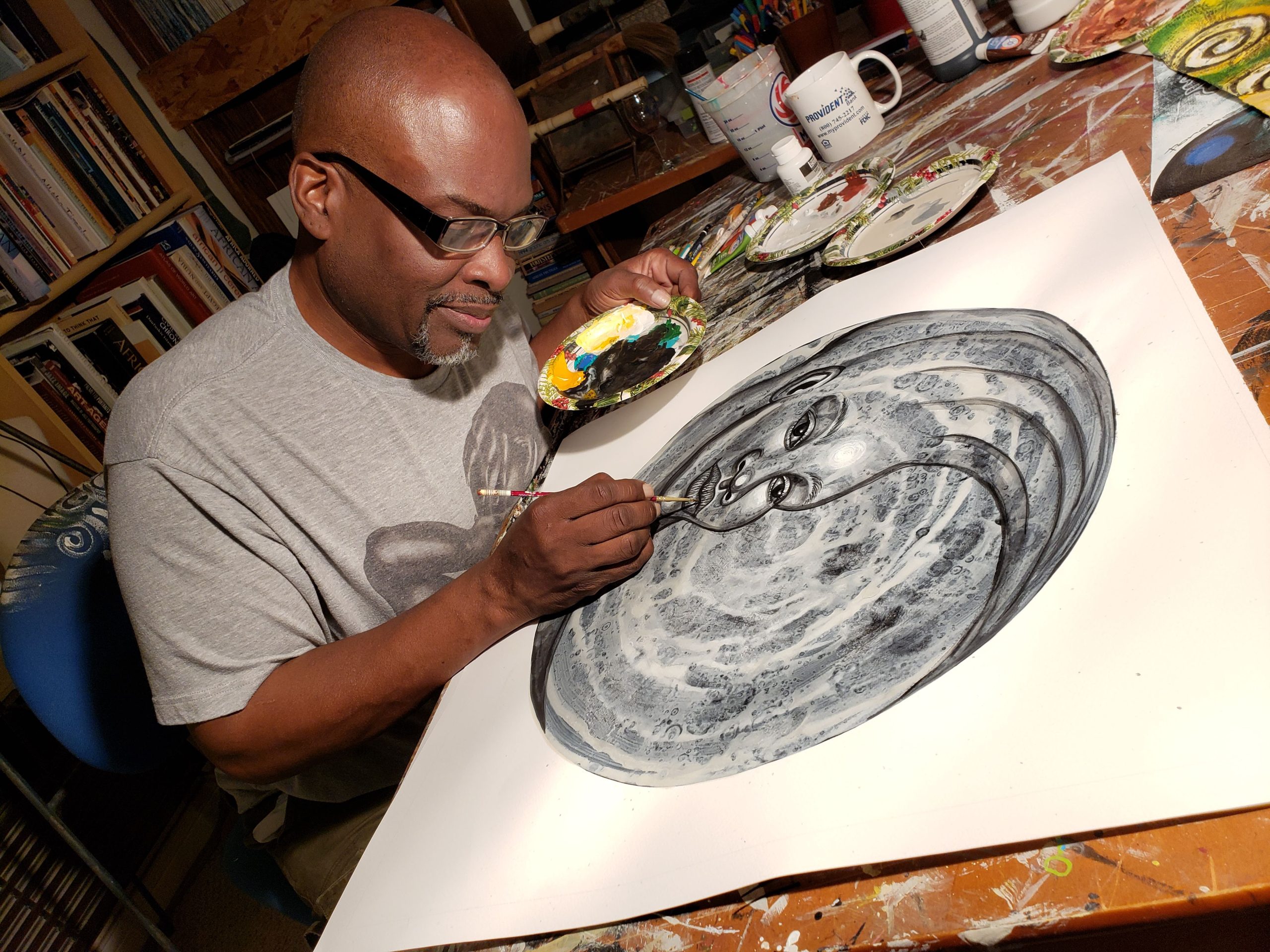
On paper, Baltimore reads as a place that would have a vibrant art scene. Some of that is true. Baltimore is home to the Baltimore Museum of Art, The Walters Art Museum, The Reginald F. Lewis Museum of Maryland African American History & Culture, American Visionary Art Museum, and several other vested arts institutions. As I traveled internationally, the one question that I was asked the most was how is the art scene in Baltimore? Specifically, what is the Black art scene in Baltimore? I would often render a vague response. The truth is, Baltimore has a deep legacy of African American art and artists. It seems that there are more creatives in Baltimore than anyone could ever acknowledge, whether just as a hobbyist, an emerging artist, a mid-career artist, or an established artist, they all must compete for the same exposure and opportunities.
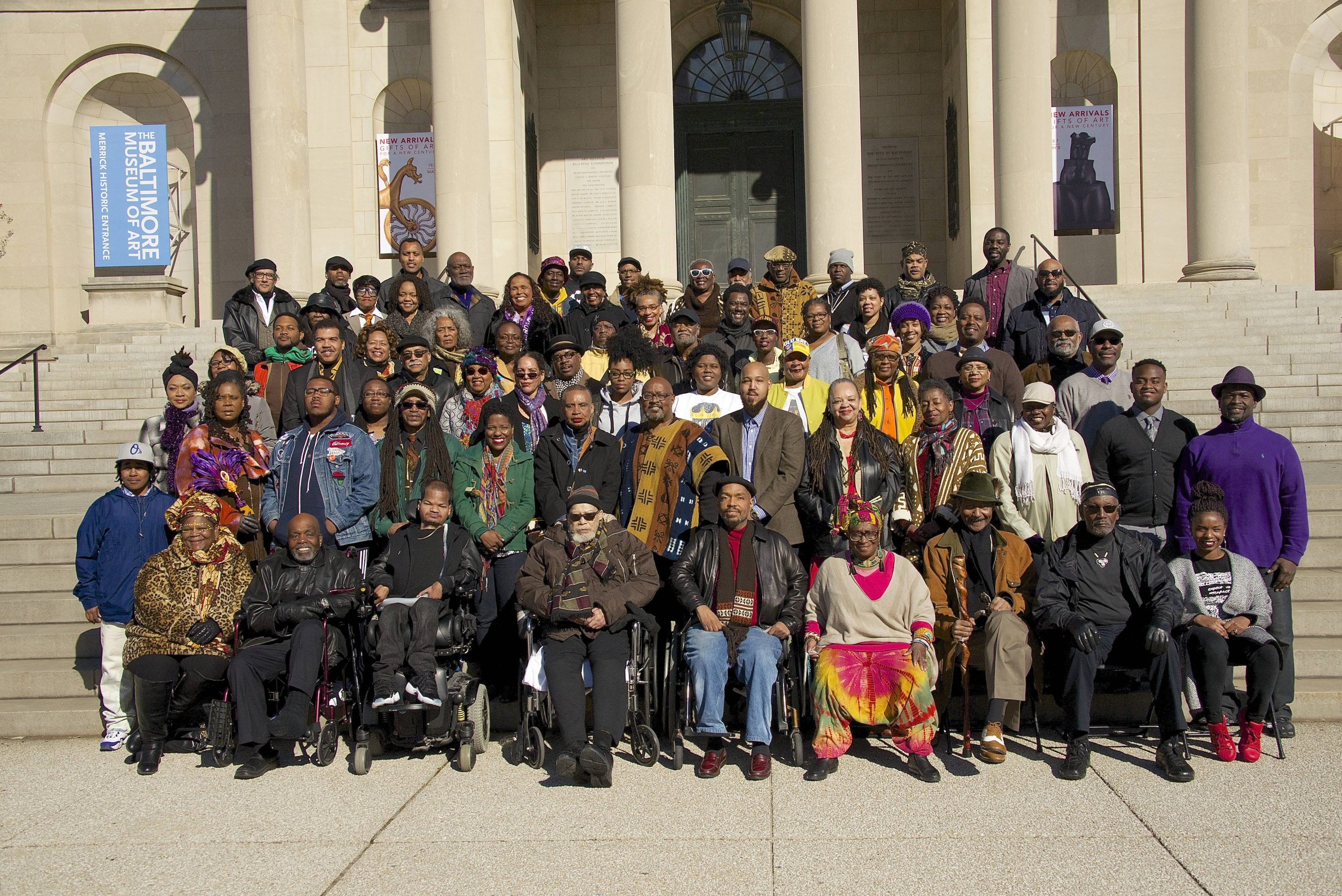
Photo credit: by L.A. Randall
Local arts agencies and arts organizations typically insufficiently service or support BIPOC creatives. Baltimore also is home to one of the top ten art institutions in the United States, the Maryland Institute College of Art, as well as the Baltimore School for the Arts, and many other inner-city arts institutions. Morgan State University has an impressive museum at the Carl J. Murphy Fine Arts Center, whose private collection can contend with any other HBCU museum nationwide, and Coppin State University has a gallery named after the late Cary Beth Cryor. Both HBCUs have presented and supported art by African American Artists. Yet, how many cities have five art supply stores?
The real question is what happens to a cross section of Black artists in Baltimore who never get exposure? Raised and educated in Baltimore City, I’ve met many local creatives and we now have a cascading generational group of African American creatives in Baltimore. Hats off to our many community arts organizations such as resident curator Kibibi Ajanku at the Frederick Douglass-Isaac Myers Maritime Park Museum, whose central focus is bringing attention to social justice issues in the works displayed in the Herbert Bearman Gallery. She dedicates upwards of four to six exhibitions per year to African American artists, primarily from Baltimore City and the DMV.

Photo credit: Larry Poncho Brown
I have also personally experienced the tireless work of Derek Price, executive director of the Eubie Blake National Jazz and Cultural Center, which has acted as an artistic venue for many African American artists within the city who have consistently focused on representing the works of African American artists. Motor House has also become a hub for African American artists, and other creatives offering community art exhibition space as well as a performance venue. We also have several arts districts designated in the city like the Station North Arts District along the North Avenue corridor, and The Black Arts District in the historic Pennsylvania Avenue corridor which is responsible for organizing the new generation of African American creatives in Baltimore City. Baltimore is also home to fine art galleries like Galerie Myrtis, and Apperson Home Gallery which have done a stellar job of promoting African American artists for several decades. We are also blessed to have “How Great Thou Art” in Historic Fells Point and “Shalom Gallery” in Hamden by Baltimore artist, Loring Cornish. There’s always room for more representation and opportunity in the support of Black artists.

Photo credit: Linda Tucker
In a world where the current trend of diversity, equity, and inclusion are the aspiration of many arts agencies, often African American artists get lost in the shuffle of social and political correctness. In a time where we have social networking and other means of communication, it appears that with all the social movements including LGBTQ+ have all affected the exposure rates for African American artists. We have been fortunate to have seen the contributions of many creative history makers at the very fabric of artists that have represented Baltimore like the late artisans: Thomas Stockett; Larry O. Brown Sr.; William Joyner; Robert Torrence; Tom Miller; Bill Strong; Pontella Mason; Leroy “Miki” Jones; Irving Phillips, Sr.; Elizabeth Scott; Cary Beth Cryor; Luke Shaw; O’Neill Hammond; Anderson Piagett; Gerald Hawks; James Barefoot; Hosea Solazaro; Ernest Kromah; and Valerie J. Maynard, to name a few. This includes many extraordinary living contemporary talents like Joyce J. Scott; Amy Sherald; Loring Cornish; Jeffrey Kent; Ernest Shaw; Jerry Prettyman; M. K. Asante; Terrance Hinton; and various noteworthy artists that have made Baltimore their home base while keeping the torch lit to light a pathway to other artists. We have artists like Ernest Shaw whose mural work far surpasses most mural work in Baltimore City, in a place that could use more community arts projects that benefit African American artists On the national stage, Joyce Scott has done much to pivot the expectations of what art is by the narratives and stories in her work. We’ve been blessed to have artists like Amy Sherald reside in Baltimore, who left her mark on Baltimore City and is now being embraced globally.

Photo credit: Kirth Bobb
We are at a time now where globally African American artists are being recognized both in the fine art realm and commercially successful art avenues. While all this is happening, there is still room for more focus on the development of the African American artists in Baltimore City. For many years, Artscape was known as the largest art festival in the region, but even Artscape has had a history of restricting African American artists from participation and while they have done their best to provide equity with Black artists, it appears that so many artists have grown tired of being rejected from shows and being overlooked to the point where participation and artists opportunities in the city were often ignored. How do we re-stimulate interest in the arts in Baltimore City from African American artists? Baltimore has proven to be a town of resilience. The future of African American artists in this town relies on those with the intention to see the current climate change.
The time is now for us to shout loud and proud to all the talents that we have in this city, and finally rally around our African American artists.