
By Andrea Blackstone
Hopeful organ transplant recipients across America eagerly wait to receive calls that needed organs are available to help them have a chance to improve or save their lives. According to the CDC, approximately 100,000 people are on the active waiting list for organs in the United States, yet there were only approximately 14,000 deceased organ donors in 2021, with each providing on average three and a half organs.
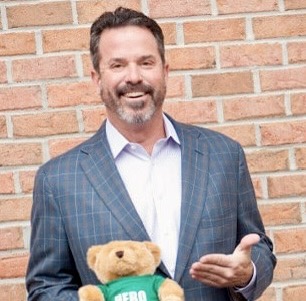
The clock never stops for people who advocate for lifesaving transplantations. Charlie Alexander is one of them.
Alexander, Infinite Legacy’s president and CEO, also serves on the Board of Directors for Donate Life Maryland (DLM), the state-authorized nonprofit organization. Alexander supports organ, eye, and tissue donation from dual facets. He remains passionate about serving people who face health challenges. Infinite Legacy, a nonprofit organ procurement organization (OPO), serves individuals in Maryland, Northern Virginia and Washington, DC. DLM works closely with Infinite Legacy.
“Donate Life Maryland manages the donor registry in Maryland where people can go either through the Motor Vehicle Administration, or directly onto a website and designate their wish to be an organ and tissue donor. It’s a very powerful tool for us in supporting families at very difficult times. If, unfortunately, someone passed away and they had made their wish known that they wanted to be a donor, then it… relieves that burden of decision-making from the family. So, it’s a really important partnership that we have where Donate Life Maryland educates, operates and runs the Maryland donor registry,” said Alexander.
Alexander has been active in the field of transplantation since 1995. His passion to serve on the DLM Board and uplift individuals in need at Infinite Legacy is rooted in his critical care nursing background.
“I worked in Shock Trauma in Baltimore at Johns Hopkins,” he said.
Alexander was intrigued by the good that was being done and wanted to be a part of it. He observed how amazing transplantation is while witnessing people within his own community receive help.
When he hears stories about people who were once tied to dialysis three days a week, then they are not after receiving a donated kidney, they never get old.
Alexander noted organ donation trends in Maryland.
“So, the number of donors has steadily increased year-over-year for several years. It’s kind of like a wave— a little bit of up, a little bit of down— but the net has been increasing in organ donation for probably 15 years now. The percentage of people who choose to designate on the donor registry has been kind of flat. About half of people who carry a Maryland State ID have designated their wish to be an organ donor on that state identification card or in our registry. So, we would love to see growth in the registry.”
He further noted an unfortunate trend in the Black community is more predisposition to hypertension and diabetes.
“We know that those things cause kidney failure at higher rates than anything. So, it’s always going to be our African American community that’s in the greatest need for kidney transplant. There have been times on and off in the last 15-20 years where people of color represented 50% of our waiting list for kidney [transplants],” Alexander revealed.
He added, “We know that we can put a donated kidney into a recipient, and the more likely they are in their genetic makeup, the more likely they are to receive that organ and not kind of fight it as an outside visitor into their body. I think anytime people can donate to like people, it’s definitely helpful for the system in getting people transplanted.”
This year’s priorities within Infinite Legacy and DLM’s partnership include taking a grassroots approach to educate the public in Maryland, DC and Northern Virginia. Alexander mentioned the importance of people having accurate information about organ, eye and tissue donation to enable them to decide if they want to be a donor. A prevailing myth about donation is that sometimes people think they are too old or too sick. Another myth is that medical professionals will not attempt to save a registered organ donor’s life who goes to the hospital during a medical emergency because their organs are wanted.
“Having worked in trauma for seven plus years, I can assure you, the last thing we’re doing is looking for people’s driver’s license when they come in critically injured or sick. We’re trying to save a life every time,” Alexander said.
Finally, people can give many lifesaving and life-enhancing gifts through tissue donation. Burn patients and sometimes diabetic ulcer patients benefit from them. Skin grafts are used in breast reconstruction surgery for cancer patients who endure mastectomies.
Alexander is a DLM Board Member who stays on the move.
“It’s been almost 30 years [working in the transplantation field] and I jokingly told my kids I’ve never gone to work a day in my life… because this has never felt like work!” he said.
Visit https://www.donatelifemaryland.org to learn more about becoming an organ, eye and tissue donor in Maryland.