
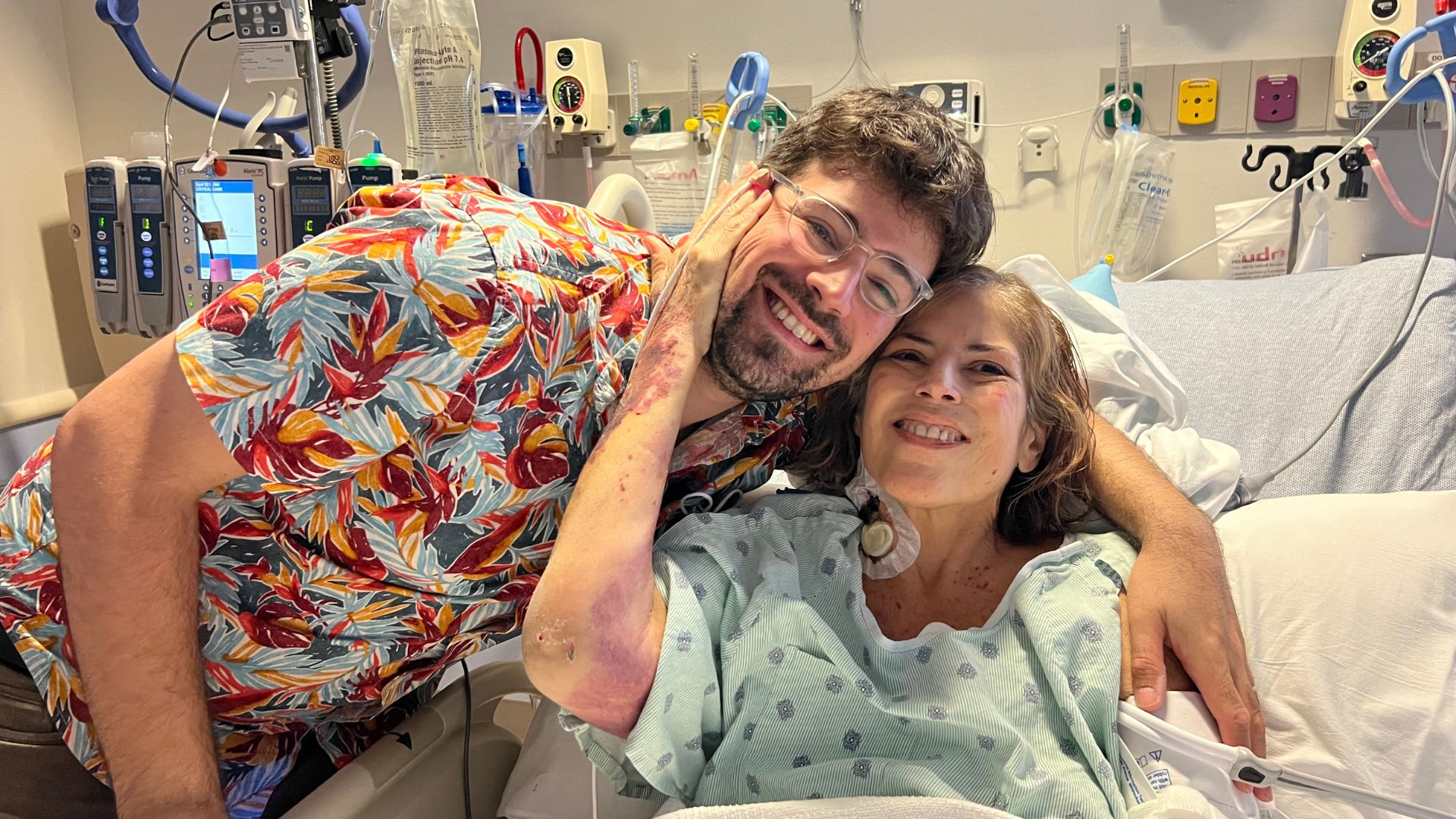
Before Annabel Guillén was informed that she had end-stage liver disease, she was already registered as an organ, eye, and tissue donor. Unbeknownst to her, Guillén’s health would later reach a critical state due to end-stage liver disease, leaving her in need of a lifesaving gift herself.
“I found out during an initial hospital visit after my son [Pedro Cerame] insisted on taking me. What started as abdominal pain led to a series of tests, which quickly revealed that my liver was failing,” Guillén explained.
Before Guillén’s shocking diagnosis, Cerame noticed his mother was dealing with recurring abdominal pain, nausea, and swelling in her legs. Over time, Cerame noticed that the symptoms increasingly impacted his mother’s daily life. Her abdominal pain became too much to ignore in January of 2023. Cerame insisted that they head to the hospital to find answers. When Guillén took a couple of tests at the hospital, she was informed that her liver was failing.
“I was admitted to Johns Hopkins Hospital, where the team of specialists provided intensive care and managed my symptoms while preparing me for the possibility of a liver transplant. I ended up spending 18 days there, including the time before and after the transplant surgery,” Guillén recalls.
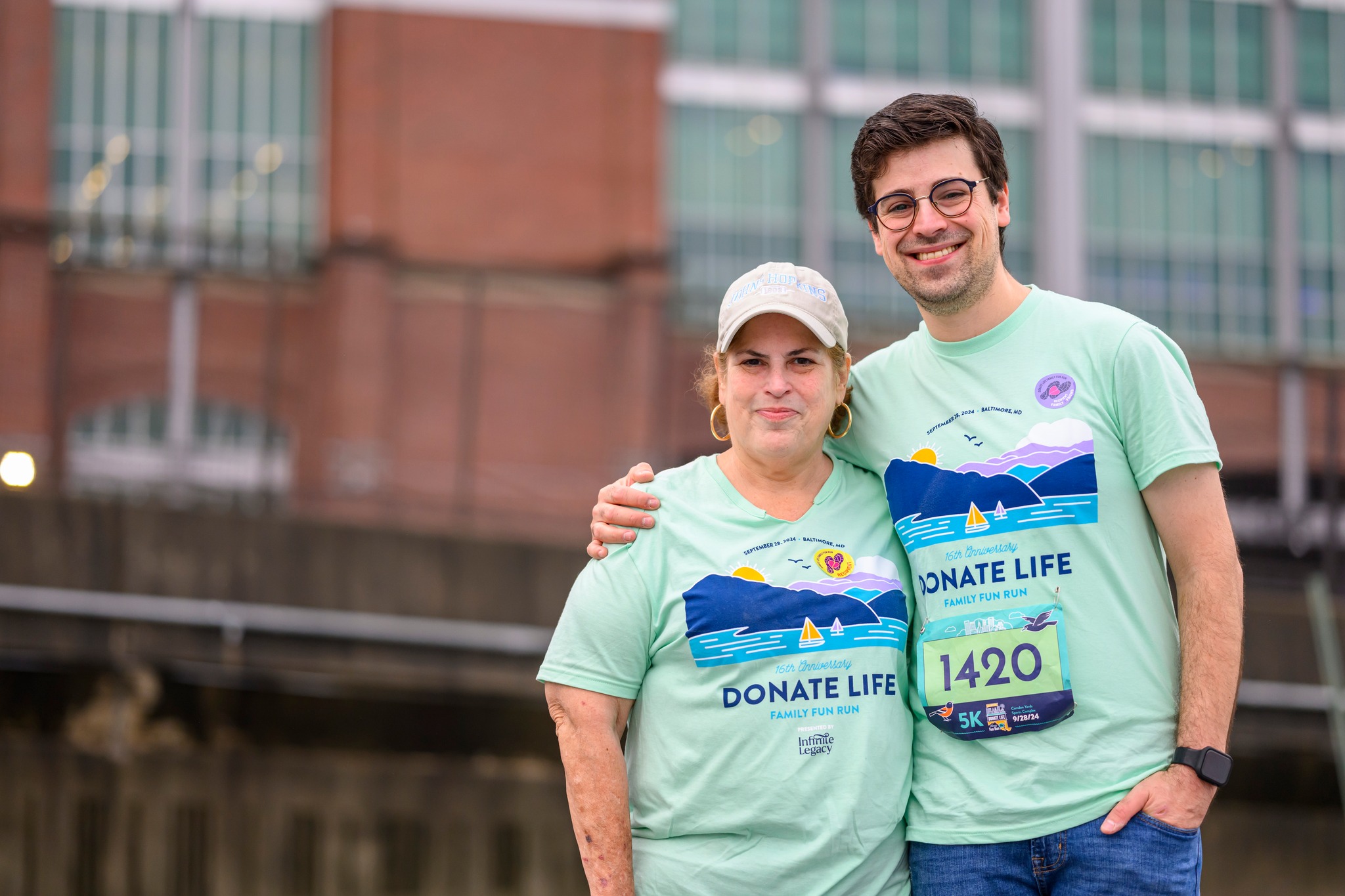
Photo credit: Courtesy photo
During Guillén’s journey, she was urged to see a hepatologist as soon as possible.
“Even then, I didn’t feel gravely ill – my symptoms still seemed mild, and I certainly didn’t feel like I was dying. But after we saw the hepatologist the very next day, he told me bluntly that I wouldn’t survive without a liver transplant. I was shocked. My son asked for a referral to Johns Hopkins Comprehensive Transplant Center in downtown Baltimore, close to where he lives,” she explained.
Guillén’s son was willing to care for his mother. However, about three months after her diagnosis, she developed severe complications.
“Blood clots formed in the veins supplying my intestines; my abdomen filled with fluid (ascites) that had to be drained multiple times a week; and I had enlarged veins in my esophagus (varices) that required banding to prevent life-threatening bleeding,” she recalls.
The most alarming symptom was hepatic encephalopathy. Guillén’s liver could not filter toxins which can build up in a person’s bloodstream and eventually reach the brain and cause confusion. If left untreated, it can lead to coma and even death, according to Guillén.
Thankfully, Guillén’s time on the liver transplant waiting list was short. Guillén mentioned that she was informed by her transplant coordinator that a matching liver had been located.
“The severity of my liver failure and complications put me at a high priority, and I only waited about a week before a matching liver was found. It was an incredible blessing because, for many people, the wait can be much longer,” she stated.
Guillén added, “Everything happened so fast that I didn’t have much time to process it all – just that my life could be saved by a heroic individual and their family. While I don’t have specific details about my donor, I think of them and their family often and hope they know how much of a miracle they’ve given me.”
Cerame, then 32, stated that hearing that Guillén needed a liver transplant was terrifying. He suddenly became his mother’s primary caretaker. Guillén remains thankful to God every day for her attentive son.
“Without his insistence and support, I wouldn’t be here today. Liver disease can be unpredictable, and it wasn’t long before things took a serious turn,” she added.
Both Guillén and Cerame are involved as ambassadors with Donate Life, sharing their story to encourage people to consider organ, eye, and tissue donation. They attend events, speak with community members, and support educational campaigns.
Cerame, a registered organ donor, wants minorities to understand that organ, eye, and tissue donation can be a matter of life and death for our communities.
“People from similar ethnic backgrounds are often the best matches for each other. So, when more of us register as donors, we increase the chances that a patient in need – someone’s parent, sibling, or friend – will find a suitable match more quickly. There’s often hesitancy or lack of awareness about organ donation in minority communities but knowing that it could one day save the life of someone close to you can be powerful.
Cerame added, “I hope more people realize that they have the power to be a hero for others, simply by registering and talking about their wishes with their families.” Please visit Donate Life Maryland via https://www.donatelifemaryland.org to learn more about organ, eye and tissue donation.