

This Juneteenth, we highlight the importance of Black freedom by diving into Black culture.
“That is unprofessional.”
“That’s too ghetto.”
For many Black people, these are not just insults — they are deeply rooted reminders of how our culture has been judged, policed, and suppressed. Among the most scrutinized aspects of our identity is our hair.
To avoid discrimination, many Black women turned to perms that chemically straightened their curls, often striving to resemble European beauty standards. Straight hair became the symbol of professionalism, while afros, braids, and especially locs were labeled “unacceptable” or “distracting.”
This was not just a matter of personal style — it was survival. Corporate America, schools, and even some Black households adopted the belief that success meant assimilation. And so, for generations, natural hair was hidden or altered to fit into a narrow definition of beauty that left little room for our culture.
But times are changing.
Today, locs, curls, and coils are not just accepted — they are celebrated. As a student at Morgan State University, I witness it every day. Students walk confidently across campus wearing their natural hair with pride. Many of them are scholars, leaders, and entrepreneurs — doing big things with their crowns fully intact.
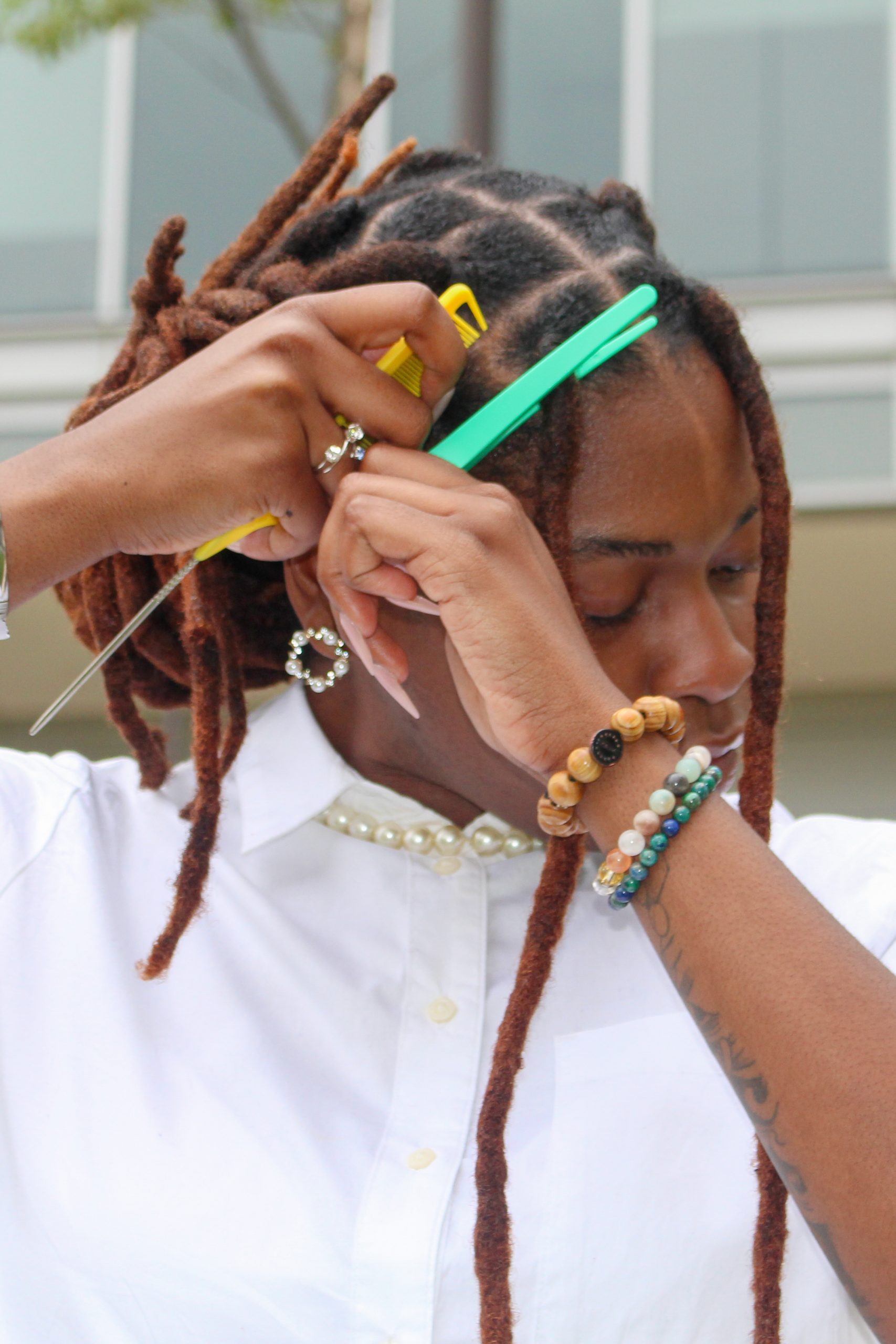
Photo credit: Sheedvisuals via Instagram
Locs are more than just a hairstyle. They’re a statement. A spiritual connection. A declaration of pride. To wear your natural hair in a world that once tried to shame is a revolutionary act.
Black hair is not a trend — it is heritage. It carries the legacy of our ancestors, the strength of our history, and the brilliance of our future.
As we celebrate Juneteenth, let’s also celebrate this truth:
Our hair is not unprofessional.
It is bold.
It is beautiful.
And most importantly — it is ours.
Rasheed Soumas is a student leader at Morgan State University, majoring in Multiplatform Production. He is a proud member of the NAACP, Bear TV, and other student organizations that empower youth and elevate Black voices through creative media.