
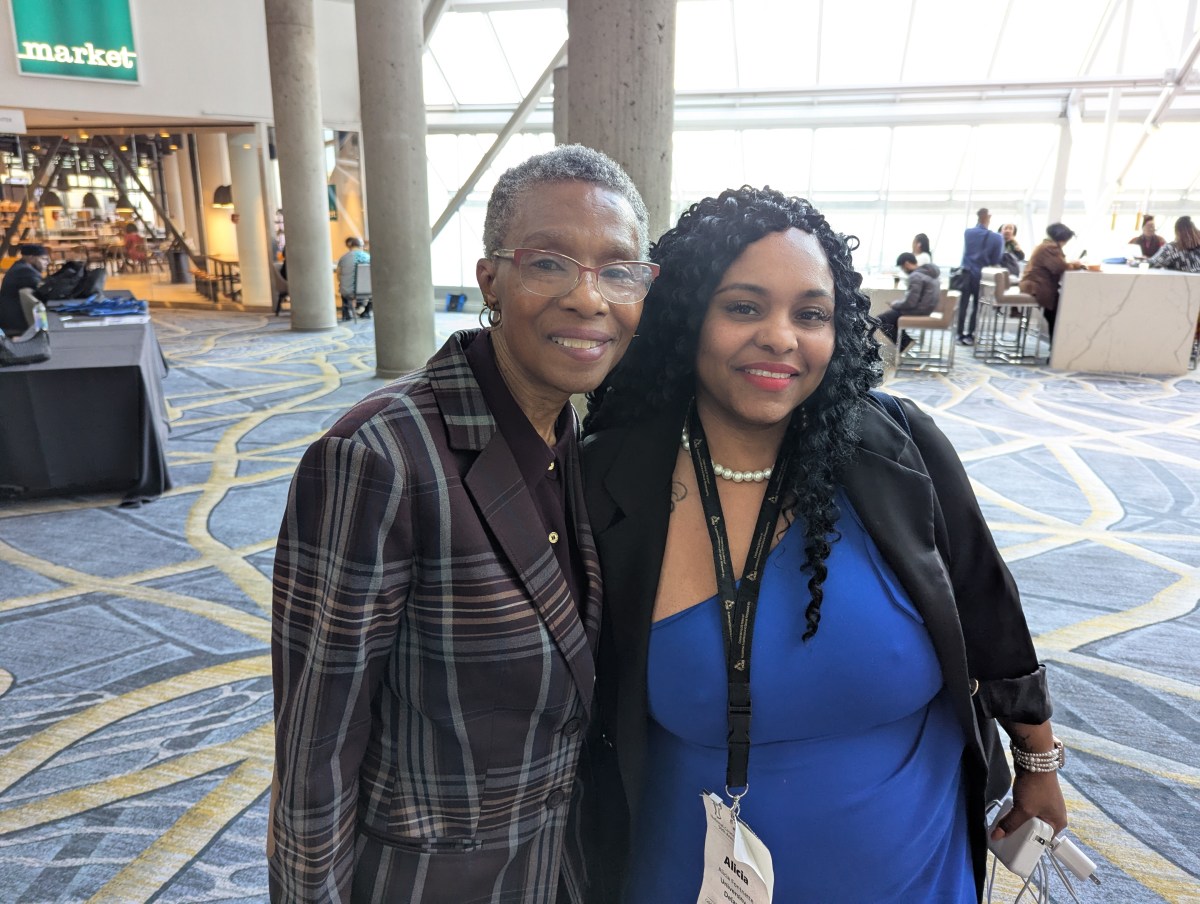
There are conferences, and then there are convocations — gatherings where something beyond the scheduled programming is alive in the room. When I walked into the Hyatt Regency Inner Harbor last week for the 50th Annual Conference of the National Council for Black Studies (NCBS), I felt the difference immediately. Everybody was smiling.
I attend a lot of conferences. But this one felt special — and as I soon learned, that feeling was entirely by design.
The milestone conference was co-hosted by Morgan State University’s Office of the President, College of Liberal Arts, and African American and African Diaspora Studies Program, Howard University’s Department of Afro-American Studies, and the University of Delaware’s Africana Studies Program — a coalition that speaks to both the depth of the organization’s reach and its particular resonance here in Baltimore.
The 2026 conference theme, “uMkhonto we Sizwe (Spear of the Nation): Black Studies as Uncompromising Liberation,” honors NCBS’s history since its founding in 1975 and marks the milestone of its 50th annual conference, while emphasizing the continued importance of global unity, historical reflection, and resilience within Black communities.
Between the Presidential Plenary and the evening’s closing gala, I had the privilege of sitting down — or rather, being gently escorted out of the conference room — with the two powerhouses behind this convening: NCBS President Dr. Valerie Grim and Executive Director Dr. Alicia Gobert-Fontnette. What followed was a rich and purposeful conversation, one that spoke to the very thing I wanted to write about when I pitched this story: health.
Not physical health, exactly. Something wider. The health of a people. The health of their(our) story.
“NCBS is a living discipline,” Dr. Grim told me, her words landing with absolute certainty. “We are concerned with the daily lives of Black people as they live it — and our work is to intellectualize it in ways that make it possible for their stories to be included in academic media.” The mission, as she described it, isn’t merely scholarly preservation. It is survival. “If we don’t tell this story,” she said, “it could stop being told. Or it could be badly told. Or mistold.”
That phrase stayed with me, particularly given this political moment, when history is being pulled from textbooks and Black Studies programs face renewed attack. Dr. Daryl Michael Scott of Morgan State noted that the 50th gathering “comes at a time when Black Studies is both under attack and more necessary than ever.” NCBS, in that light, is not just an academic organization. It is a form of resistance — and a form of care.
When I asked Dr. Grim and Dr. Gobert-Fontnette how they sustain themselves while carrying this work, they were clear. “We don’t have the option not to love each other,” Dr. Grim said simply. “We don’t have the option not to keep this going.” Dr. Gobert-Fontnette, who admitted her conference days begin before 7 a.m. and rarely end before midnight, described her fuel this way: “I get full from seeing people I love enjoy this work. Seeing them hug each other. Seeing them smile.” She serves, she said, at the pleasure of the president — and as long as Dr. Grim is smiling, she is full.
That kind of nourishment — the sustenance that comes from purpose and community — is exactly what I wanted to write about. And it was everywhere at this conference.
The conference drew over 500 registrants and featured 140 panels — no small task, as Dr. Gobert-Fontnette admitted when I mentioned it. High school students from Baltimore public schools were also invited to participate in Friday’s programming, engaging with college-aged peers, attending sessions, and experiencing the field of Black Studies firsthand, passing the torch, as one attendee put it, to the next generation of scholars.
Dr. Dana Hammond of Coppin State University emphasized the importance of introducing young people to the discipline early, noting that engaging with scholars helps cultivate a stronger sense of self and purpose. That is health work. That is wellness work — even if no one calls it that.
As for next year, NCBS will take its convocation to Atlanta, Georgia, with dates to be announced. If the spirit of Baltimore follows them south, Atlanta is in for something remarkable.
Michelle Petties is a TEDx speaker, Food Story coach, and the award-winning memoirist of Leaving Large: The Stories of a Food Addict. After gaining and losing 700 pounds, Michelle discovered the secret to overcoming stress and emotional overeating. Her free workbook, Mind Over Meals, reveals her core principles for losing weight and keeping it off.