
During nationally recognized historical months, many cities around the U.S. borrow their heroes from the same national shelf, polished and preapproved. In Baltimore, we don’t have to look beyond Maryland or even Baltimore City to find historical figures of national note. There is an embarrassment of riches in this regard. Despite this wealth of ancestry, persists the continual and almost exclusively elevation of the same people every year.
It is one of the lingering effects of the co-optation of the civil-rights movement, a gradual smoothing of its edges, a preference for figures who are legible to the mainstream and nonthreatening to power. They are usually credentialed, clergy, elected official or some other conveyer of respectability.
What is discussed less are the working-class, everyday Black people who may not have graduated high school, let alone college, they may identify as queer or live in public housing who have quite literally transformed the fabric of our city for the better.
Last year I read Rhonda Y. Williams’ 2001 article titled “We’re Tired of Being Treated Like Dogs: Poor Women and Power Politics in Black Baltimore“, about Baltimore women, labor and housing. What I learned from reading her article is that when state level targeting of welfare recipients intensified in the late 1960s, the women of Baltimore pushed back.
For example, in 1966, a coalition of low-income women (Margaret McCarty, Daisy Snipes and Zelma Storey, three African-American women who were recipients of Aid to Families with Dependent Children (AFDC)) formed Baltimore’s first welfare rights coalition called Mother Rescuers from Poverty. They were not lawyers. They were not clergy or credentialed. They were mothers. Within the first six months of existing, the organization had 75 active members and a mailing list of over 200 people within the first three months. All this without the advent of social media or viral videos. Back when grassroots meant literal ‘boots on the ground’.
Margaret McCarty, a public housing resident and Black mother of seven, was their lead organizer. What struck me about Ms. McCarty’s was that she didn’t really see herself as political. By her own telling, simply tired. Tired of arbitrary rules. Tired of indignities. Tired of watching neighbors navigate a maze designed to exhaust them. Yet in refusing to accept those conditions, she mobilized lower-income housing residents in a movement that changed the material conditions for hundreds of Black Baltimore families.
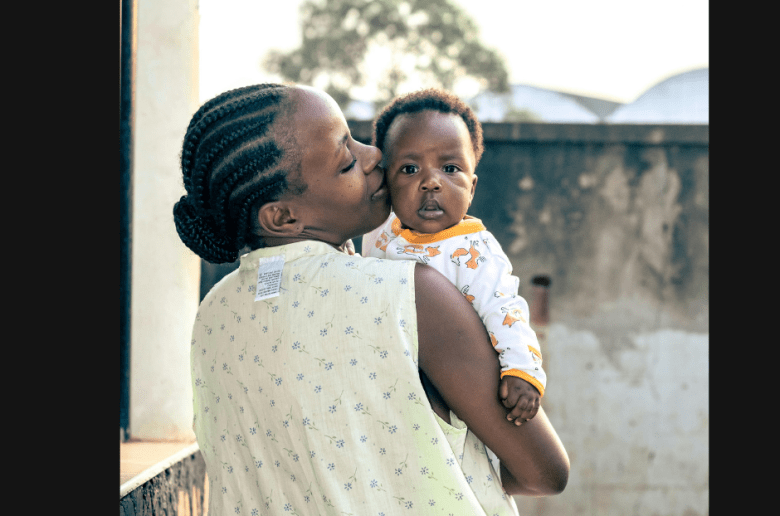
Mother Rescuers from Poverty informed tenants of their rights, collected their complaints and organized protests and attended government meetings with babies balanced on hips and toddlers tugging at their skirts. Their presence alone unsettled the choreography of bureaucratic power.
From Protest to Policy
Out of these confrontations came a breakthrough: AFDC recipients would have seats on the state’s Department of Public Welfare board. Women who had been treated as case numbers would now help shape policy.
It is difficult to overstate the audacity of this shift. The women most surveilled by the welfare system had forced their way into its governance. They had traveled from protest to policy without abandoning their base. They did not ask merely to be heard; they demanded structural inclusion.
What makes them unusual sheros? These women were poor. They were Black. They were mothers navigating a system structured to control them. They had little institutional backing. Change did not arrive because someone exceptional ascended into power. It came because ordinary women organized one another. They built a coalition capable of altering state policy.
What makes their story feel urgent, rather than archival, is not simply its drama. It is its method. When we reduce historical reflections to empty platitudes or first-Black facts we miss the method… and the method is where the magic is.
The Lesson:
Without such examples, we risk misunderstanding the mechanics of transformation. We begin to believe that change depends on singular genius, on charismatic leadership, on respectability politics. We forget the power of coordinated pressure. We forget that coalitions built in public-housing courtyards can reverberate in statehouses.
Baltimore does not lack for heroes, all it needs to do is widen its frame; to remember that some of the most consequential architects of justice carried grocery bags and diaper bags, not briefcases. That they learned procedure by challenging it. That they rewrote policy not because they were invited to the table, but because they refused to leave the room.
Dr. s. Rasheem
Dr. s. Rasheem is an Independent Scholar and Social Scientist whose scholarship encourages a critical examination of society and culture through the lens of race, gender, and class. Her educational background is interdisciplinary, and includes a Bachelors degree in Social Science, a minor in Sociology, a Masters’ in Nonprofit Management and a Doctorate of Philosophy in Social Work. She has been a Principal Investigator on at least five different qualitative research initiatives and has spoken on the topic of equity at over 30 academic and professional conferences.
The Baltimore Legacy Column is dedicated to uncovering and preserving the cultural memory of Baltimore through connecting the stories, reflections, and experiences of residents who witnessed and shaped the city’s evolution to the city's historical records. Ultimately, the Baltimore Legacy Column serves as a foundation to inform, inspire, and guide future generations of leaders in Baltimore City.