
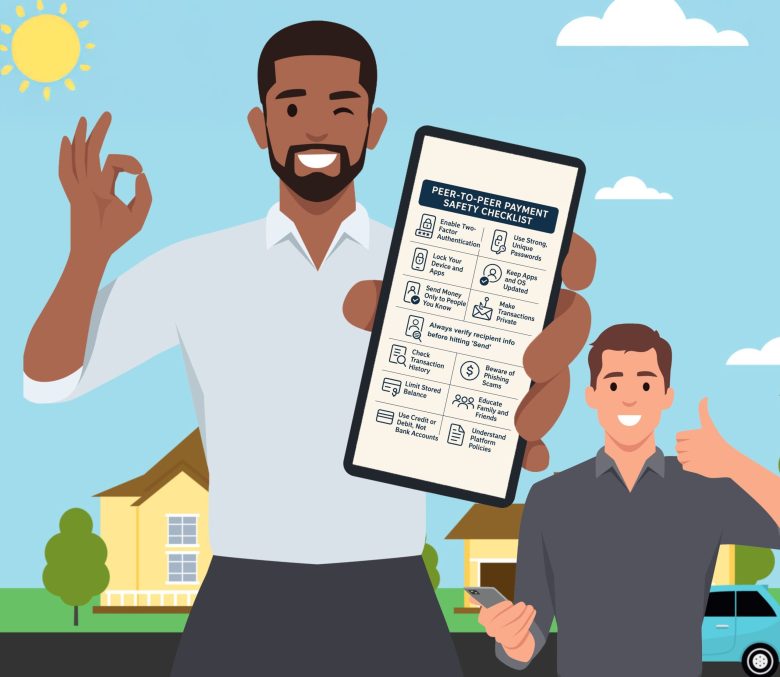
We’ve come a long way from the days when everything was paid with cash, check or credit card. Keeping a check register and manually balancing your checkbook has virtually become a thing of the past. The latest options now for paying for certain goods and services is via peer-to-peer (P2P) payments. This includes options such as Zelle, CashApp, Venmo, PayPal, and Apple Pay. Sending money to friends and family, paying for in-game tokens, and making other purchases are just some of the things that we now routinely accomplish via these methods of payment. As convenient as this is, there are risks about which we need to be aware. The growing presence of P2P payments in our everyday lives, particularly when children are involved, makes it essential to understand how to use them wisely.
Given the ubiquitous nature of these options, it’s important to know the risks associated with their use and how you can safeguard your and your child’s accounts. Fraud, mistaken transfers, and account breaches can all cause financial headaches when you or your child don’t have the proper mindset or don’t take the proper precautions.
Here are five critical considerations in making decisions about the use of P2P payments:
- Assess Your Child’s Readiness Before Granting Access: Children as young as 13 can legally use some P2P payment platforms with parental approval. That, however, doesn’t mean every teen is ready. Consider whether starting with a platform that offers parental oversight, like Apple Cash Family or a banking app with teen account options, is a viable way to go before transitioning them to full independence. In making the decision, consider your child’s:
- Financial Maturity: Do they understand the value of money? Have they managed a savings or spending account responsibly?
- Impulse Control: Are they likely to make in-app purchases or send money without thinking it through?
- Digital Awareness: Can they recognize a phishing attempt or avoid sharing personal details online?
- Enable Strong Security Settings for Everyone: Most P2P apps offer enhanced security features so take advantage of them. Enable two-factor authentication (2FA) on all of your accounts so that even if someone gets hold of your password, they can’t access your account without a second verification step. Use a strong, unique password for each P2P app, and avoid using passwords that are easy to guess, like your birthday or pet’s name. Teach and require your children to do the same.
- Double-Check Recipient Information and Only Transact with People You Know and Trust: Before you hit “send,” pause to make sure you’re sending money to the right person. A typo in a username, phone number, or email address can send funds to a complete stranger, and in many cases, these transactions are irreversible. Encourage your child to verify payment details with their friends or recipients before confirming any transfer.
- Monitor Your Accounts Regularly: Make it a habit to review your transaction history. Look for any unfamiliar charges or transfers and report them immediately to the P2P provider. Many P2P platforms also allow you to set up transaction alerts, so you’re notified in real time when money is sent or received. Be sure to monitor your child’s activity by:
- Supervising usage and setting clear boundaries for your child by establishing clear rules and spending guidelines for P2P payment use.
- Starting your child with limited access, setting transaction limits, restricting who they can send money to, and reviewing their contacts.
- Checking their transaction history regularly via weekly or monthly check-ins with them to go over their activity.
- Educate Your Family on Scams and Phishing Attempts: Scammers are becoming increasingly sophisticated, and children are especially vulnerable to social engineering tricks. Teach your family to be wary of unsolicited messages requesting money, even if they appear to come from a known contact. If something feels off, verify the request with a phone call or text. Also, remind everyone never to share their login credentials or verification codes with anyone.
Peer-to-peer payment platforms offer incredible convenience and are becoming part of everyday life for teens as well as adults. With convenience, however, comes responsibility. This is especially true when minors are involved. By staying informed and proactive, you can enjoy the benefits of digital payments while minimizing the risks. Start by modeling safe behavior yourself and engaging your children in these conversations, as it’s never too early to build smart digital money habits.

Courtesy, Karen Clay