
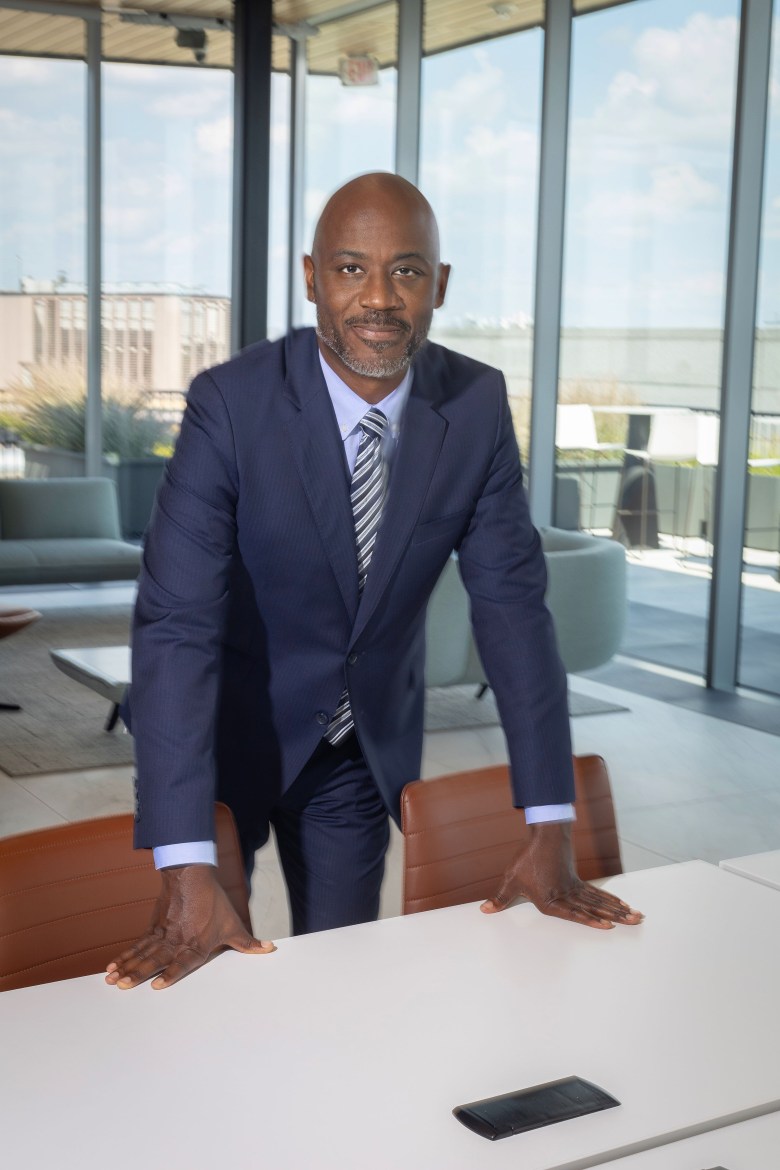
When Otis Rolley stepped into his new role as President and CEO of the Baltimore Development Corporation in June 2025, it marked more than a leadership transition—it was a homecoming.
After decades of public service and philanthropic leadership, Rolley’s return to Baltimore is both personal and purposeful. “I came back because I believe in Baltimore and in what’s possible here,” he said. “This city gave me so much when I first arrived in 1998. I planned to stay two years and ended up falling in love with the people, the neighborhoods, the culture, and the sense of community.”
Now, he’s focused on implementing the city’s comprehensive Baltimore Together strategy—a shared vision for inclusive growth that puts people at the center of development. For Rolley, success is measured not by announcements or tax breaks but by results. “We’re putting people over place,” he says. “That means investments must lift neighborhoods, support small businesses, and deliver real community benefits.”
Redefining Economic Development
The BDC plays a critical role in Baltimore’s economic ecosystem as a quasi-public agency linking government, business, and community stakeholders.
While organizations like the Greater Baltimore Committee focus on the wider region, BDC’s work is concentrated within city limits—helping local businesses start, stay, and scale. Under Rolley’s direction, that mission is rooted in equity: ensuring small and mid-sized firms receive the same support and visibility as major corporations.
“Baltimore only succeeds when all of Baltimore moves forward,” he says.
Experience Meets Action
Rolley brings deep experience in managing large-scale, equity-driven initiatives. He previously led a $100 million workforce initiative at the Rockefeller Foundation, directed $300 million in annual investments at the Wells Fargo Foundation, and managed billion-dollar budgets as a Baltimore City administrator.
That experience now fuels BDC’s push to expand access to capital, especially for Black-owned and minority-owned businesses. The need is clear: though Baltimore’s population is 62% Black, only 12% of its businesses are Black-owned.
Through Commercial District Assessments, BDC is identifying neighborhood-specific challenges and opportunities—from infrastructure needs to foot traffic data—ensuring resources are directed where they’ll make the biggest difference.

Progress, Not Promises
This year’s Baltimore Together Summit will highlight measurable progress since the plan’s launch. According to Rolley, Baltimore’s partners achieved 95% positive progress across shared goals—covering innovation, workforce, and neighborhood investment.
Notable 2025 milestones include:
- Syngene International opening a major life-sciences facility at Bayview.
- Greenlight Networks investing $100 million in citywide high-speed fiber expansion.
- The Baltimore Peninsula welcoming 18 new retail tenants, 30% of them minority- or woman-owned.
- The Mill on North launching seven new minority-owned culinary concepts, creating jobs on West North Avenue.
- Baltimore’s Black labor-force participation rate rising by over five points since 2019.
- The launch of a $150 million TIF grant program to revitalize long-vacant buildings and lots.
Baltimore’s population, long in decline, has also begun to grow again—a small but powerful signal that confidence is returning. “People believe in this city again,” Rolley says, “and that belief is backed by action.”
Taking the Conversation to the Neighborhoods
In an effort to deepen community engagement, the 2025 Baltimore Together Summit will expand into neighborhood-based workshops from October 27–30.
“Economic development has to be built with people, not just presented to them,” Rolley says.
Sessions will focus on supporting Black-owned small businesses, creative industries, and local markets, while gathering real-time data from BDC’s Commercial District Assessments. Each event will give residents and entrepreneurs a direct voice in shaping policy and investment priorities.
“When we bring these conversations to the community,” Rolley adds, “we get better ideas, stronger partnerships, and solutions that reflect Baltimore’s diversity and talent.”

Building a Bigger Table
Rolley is clear that Baltimore’s path forward depends on collaboration, not competition. “The scarcity model is dead,” he says. “The pie is big enough for everyone in Baltimore to have a slice—because we made the pie.”
That means attracting national and global companies while simultaneously investing in the city’s small business ecosystem—the backbone of its economy. “Most of our growth comes from small and mid-sized businesses,” he notes. “They deserve the same level of energy and investment.”
Baltimore’s Future Is in Our Hands
For Rolley, Baltimore Together isn’t just a plan—it’s a movement grounded in collective ownership. “We have the right strategy, the right leadership, and the right partners,” he says. “Now it’s time for everyone to move in the same direction.”
His message for residents and business owners is clear: believe in Baltimore, take action, and be part of its next chapter.
“The future of Baltimore’s economy will be shaped by people who believe in this city and are willing to do the work,” Rolley says. “Baltimore is ready. Now it’s time to act.”
Harold Booker Jr.
Harold Booker Jr. is the founder and principal of DrewJenk Consulting, a boutique firm that specializes in project management, technology, and community engagement. He is also a frequent contributor to the Baltimore Times, writing about arts, culture, and social issues that connect personal history with community impact.