
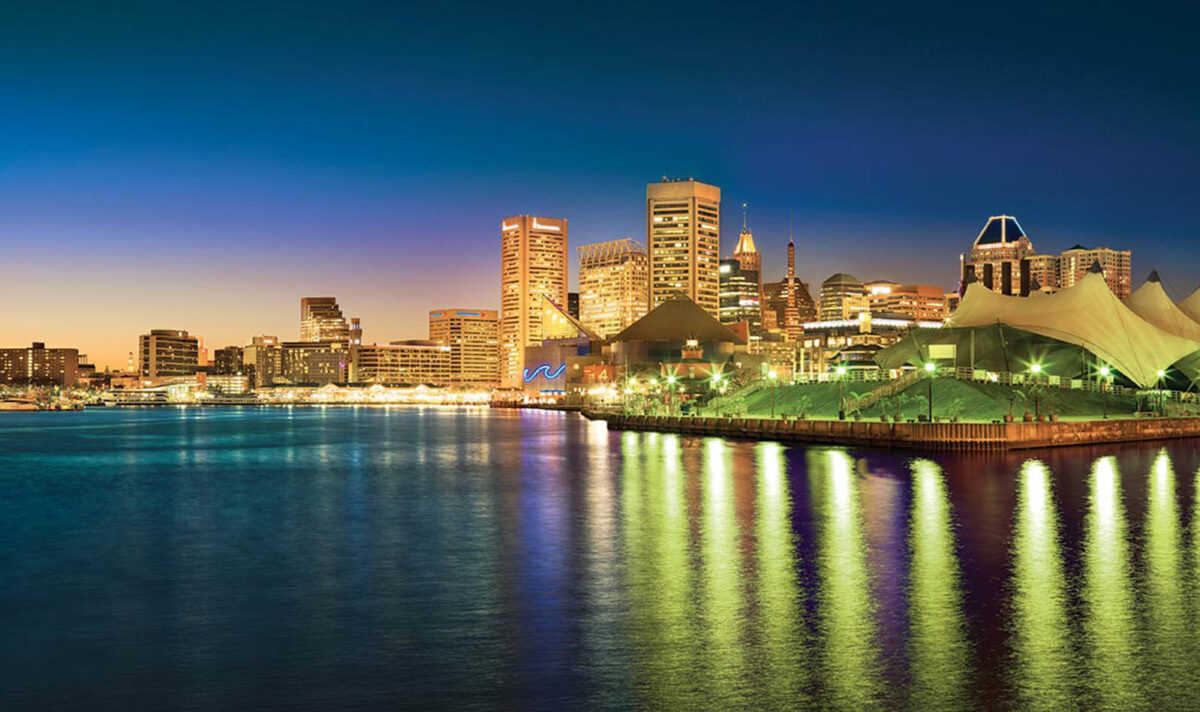
Annual report on the health of Downtown Baltimore highlights a strengthening urban core, record entertainment attendance, growing residential base, and an accelerating pipeline of private investment.
BALTIMORE, MD — The Downtown Partnership of Baltimore today released its much-anticipated 2025 State of Downtown Report, a comprehensive assessment of Downtown Baltimore’s economic health, quality of life, and economic development activity. The report presents a compelling case for continued investment in the city’s urban core, citing measurable progress in public safety, housing, hospitality, Downtown employment, and private capital deployment.
“The data tells a story of real and measurable progress,” said Shelonda Stokes, President of Downtown Partnership of Baltimore. “Downtown Baltimore is not waiting for its next renaissance, it’s in the making through increased public and private investment, a growing residential community, steady tourism and improved quality of life. While challenges remain, we have a clear roadmap as detailed in the Downtown RISE Masterplanand are fully confident that we will continue the momentum underway through shared focus and relentless execution of the priorities we continue to pursue.”
Key highlights shared this morning with over 500 participants in its annual State of Downtown Breakfast include:
A Strong Foundation: Population and Density
Downtown Baltimore supports a daytime population of 130,000 and a residential population exceeding 40,000. This density of both daytime and nighttime activity creates a year-round economic foundation that few peer cities can match at comparable price points.
Crime Is Measurably Down — and It Changes the Story
Overall crime fell 14% year-over-year, with homicides dropping 47% and auto theft declining 32%. These are not incremental improvements — they represent a meaningful shift in quality of life that strengthens the case for investment, attraction, and retention of residents, workers, and visitors.
A Residential Market on the Rise
With over 21,000 existing multifamily units and more than 1,000 units under construction, Downtown’s housing market signals sustained confidence. Over 36% of Downtown households earn more than $100,000 annually — a built-in consumer base supporting retail, restaurants, and services.
Office Transition Managed with Strategic Vision
While negative absorption reflects national trends, Downtown Baltimore is actively positioning itself for a more resilient future. Competitive asking rents, strong institutional anchors, and growing interest in adaptive reuse — converting underutilized office space to alternative uses — are diversifying the real estate portfolio.
Entertainment and Culture Driving Major Economic Impact
CFG Bank Arena hosted 90 live performances with over 814,000 attendees. Since 2022, the CIAA Tournament has generated nearly $110 million in economic impact. These assets are not merely amenities — they are key drivers bringing people Downtown, generating spending, and showcasing what Baltimore’s core has to offer.
Private Investment Converting Plans into Progress
The 2025 investment map reflects projects at every stage across housing, entertainment, open space, cultural institutions, and mixed-use development. Byrnes & Associates’ Redwood Street redevelopment, MCB’s Harborplace reimagination, and multiple residential openings demonstrate that private capital is actively flowing into the Downtown district.
Tourism on an Upward Trajectory
Baltimore City welcomed 28.5 million visitors with $4.3 billion in visitor spending — a 7.5% increase year-over-year. With half of all overnight visits driven by friends and family travel, every resident serves as a de facto tourism ambassador, presenting a high-leverage opportunity for continued growth.
A Growing Workforce in the Right Sectors
Health Care and Social Assistance, Public Administration, and Professional Services anchor Downtown employment. Educational Services jumped from 5% to 8% of the employment base — adding roughly 4,000 jobs. Arts, Entertainment, and Recreation also grew, generating daytime activity and supporting retail and talent attraction.
Young, Educated, and Positioned for Growth
With 65% of Downtown residents under 40 and educational attainment well above city and state averages, Downtown Baltimore has the demographic profile that drives innovation, entrepreneurship, and neighborhood vitality. Targeted investments in family-friendly amenities, childcare, and public space can deepen and diversify this base further.
Favorable Conditions and Meaningful Public Incentives
Competitive asking rents, strong capital momentum, and financing tools including CHAP, High Performance, and Enterprise Zone credits — along with the Downtown PILOT program passed in the General Assembly and signed into law by Governor Wes Moore — are unlocking meaningful investment. The Downtown RISE Master Plan provides the strategic framework, while visible transformation of streets, storefronts, and public spaces signals momentum. Those who invest now are key to defining what Downtown Baltimore becomes.

My spouse and I moved to Downtown Baltimore two years ago as retirees and we love living here. It is the most walkable neighborhood in the state of Maryland. We gave our car away and don’t miss it. That makes our retirement income go much farther.