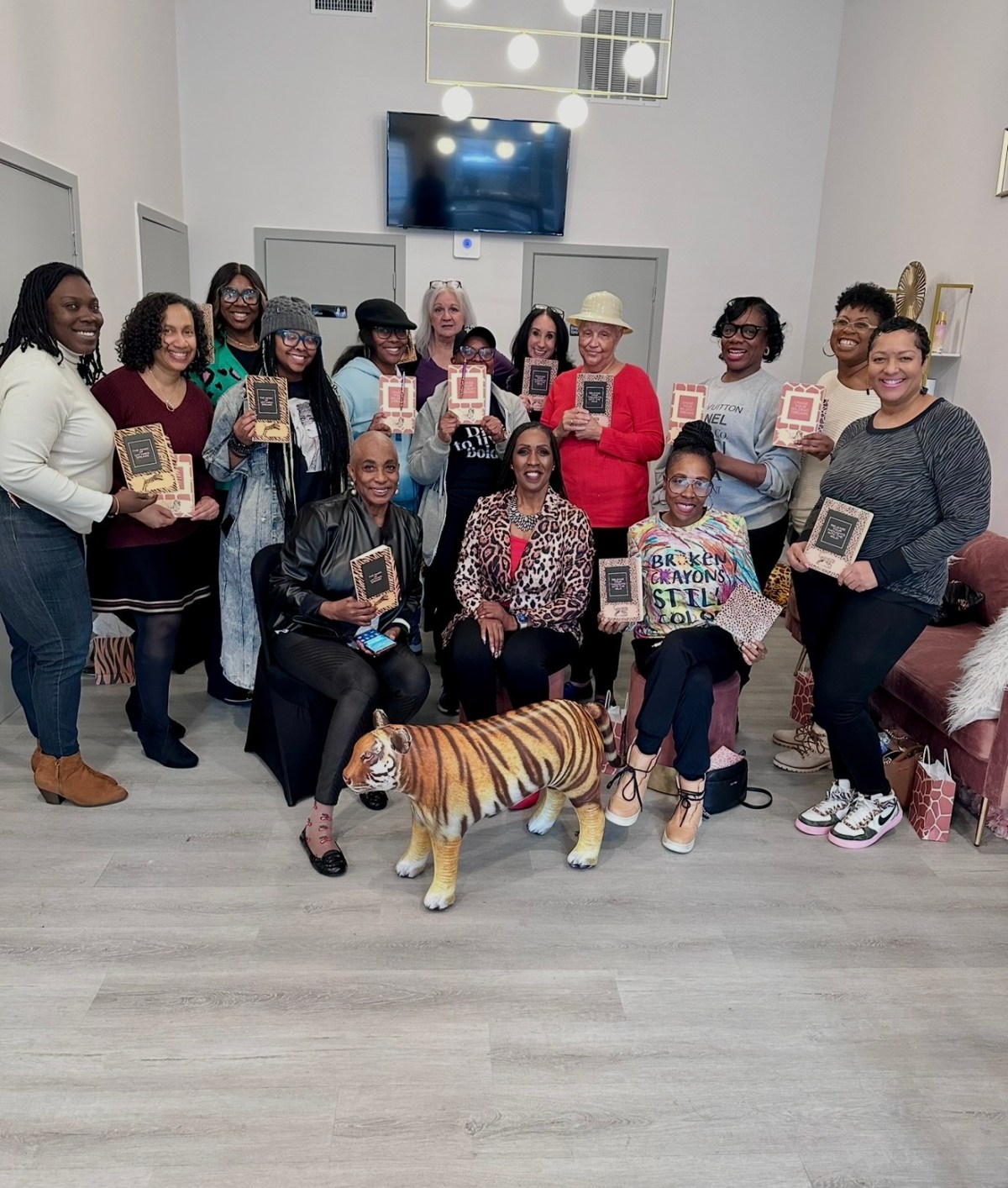
There is a word that Delayna Watkins chose with purpose. Not “clinic.” Not “office.” She chose “lounge.”
“When I came up with the Women’s Wellness Lounge, that word lounge was specific,” she explained. “I wanted it to feel like they were coming into another woman’s living room—another woman’s bedroom—so that we could have that conversation without judgment, without reservation.”
That intentionality—the kind that lives in the naming of things—tells you something essential about Watkins. A registered nurse, entrepreneur, health equity advocate, and sexual health ambassador with RnD Associates and the Baltimore City Department of Health, she has spent more than a decade building spaces where Black women feel seen, heard, and empowered to take charge of their own health. This Minority Health Month, her work stands as both a challenge and an invitation: to look honestly at the forces shaping Black women’s wellbeing, and to imagine something better.
The Thread She Couldn’t Ignore
Watkins’s path to advocacy began not in a boardroom but at a bedside. Early in her nursing career, she began noticing what she describes as a troubling pattern in the African American community—a “copy, paste, repeat” cycle of preventable chronic illness that left her unsettled and searching for answers.
The moment that crystallized her calling came when she was caring for two patients who could have been her sisters. Their stories were strikingly similar. Their circumstances were not—one had financial means and access to care, the other did not. One was HIV-positive. By appearance alone, Watkins could not tell which was which.
“I knew that I had to do something different,” she said. “I knew that I had to reach women—whether they had access or didn’t.”
She invited both patients to her first community workshop. They came. And the Women’s Wellness Lounge was born.
Dropping the Shield
What began as a monthly workshop in a black-owned cafe—focused on the top three chronic conditions affecting African American women: heart disease, breast cancer, and diabetes—grew into something far more expansive. Watkins recognized early that education alone was not enough. Women were learning but not acting. So she went deeper, asking: what barriers were keeping knowledge from becoming change?
The answer, she found, was rooted in something cultural and emotional. Black women, she observed, are often the anchors of their households—scheduling doctor’s appointments for everyone else, doing the grocery shopping, keeping the family afloat—while quietly neglecting themselves. “We weren’t doing what was necessary for ourselves,” she said. “I had to show them that they were worthy, and that putting themselves first wasn’t just a cliché.”
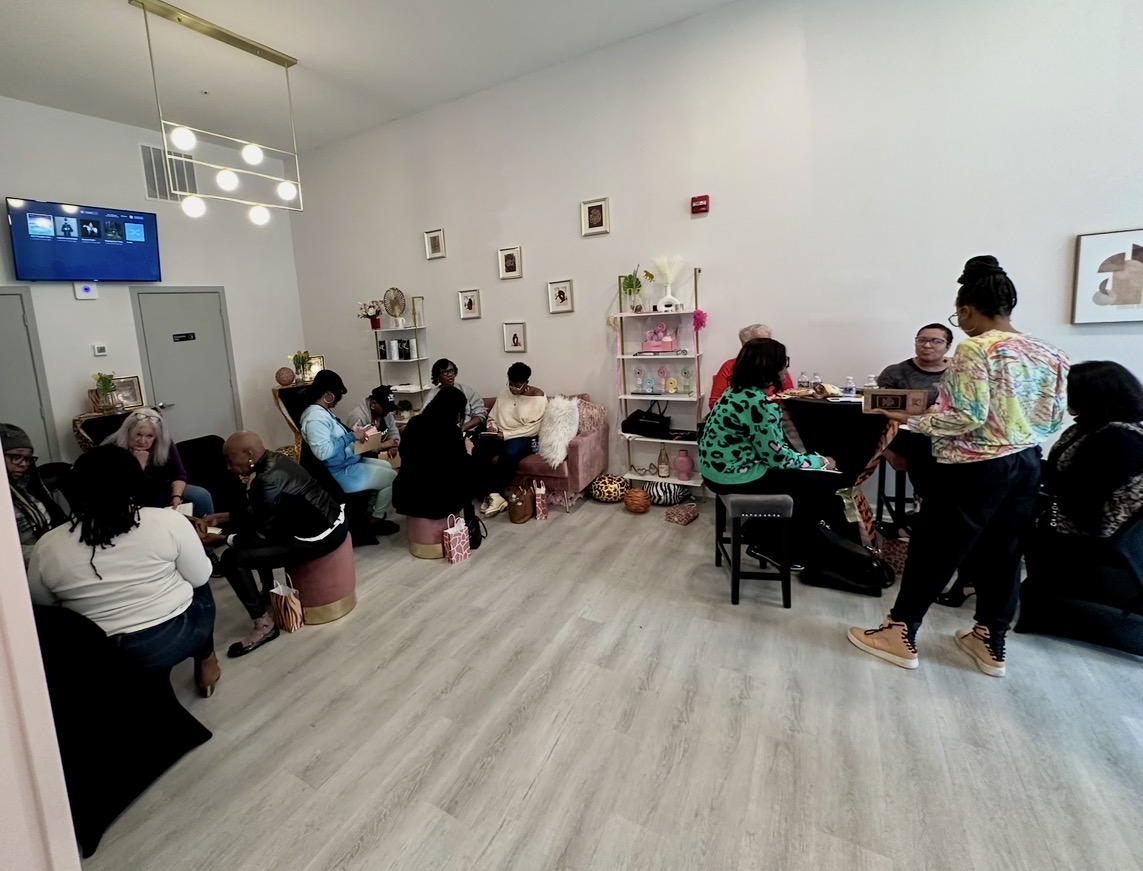
What happened when women entered Watkins’s carefully curated space was something she describes as a collective lowering of the guard. Women who had arrived composed and polished—maintaining what Watkins calls “the shield”—began, in the presence of others sharing their own stories, to let it down. They asked questions. They compared experiences. They reached across the table and said, “Girl, I need your help.”
“We were giving them permission to show up, to be empowered, to advocate for themselves,” she reflected. “They needed to look to their left and to their right and say: it’s okay—and I can get help.”
The Whole Picture: Reproductive Health and the Broader Conversation
One of Watkins’s most powerful contributions has been her insistence on expanding how we define reproductive health—a conversation she has advanced through her partnership with RnD Associates and her ambassador work with Baltimore City.
“When we look at the broader picture of reproductive health, we’re able to touch more things,” she explained. “Sexually transmitted diseases, STIs, HIV, PEP, PrEP, menopause, perimenopause, maternal health—all of that is under the umbrella of reproductive health.”
This framing matters because it disrupts the siloing that has long defined healthcare messaging—particularly for Black women, who are often treated for one condition at a time without any attention to the whole person. Watkins teaches that no system of the body operates independently. “You are mind, body, spirit, soul,” she said. “When you educate women that all of that is connected, they do better with digesting what’s occurring with them holistically.”
Her partnership with RnD Associates—which came about when the organization’s founder heard Watkins speak and share her testimony at a community event—has deepened her reach in the broader reproductive health space. “Partnering with them allowed me to broaden my reach around reproductive health and sexual wellness,” she said. Together, they have developed programming that meets women where they are, including an upcoming event called “Hot Girl Summer,” which uses culturally resonant language to open conversations about healthy relationships, protection, and sexual wellness.
Building the Pipeline: Certified Allied Health Solutions
Watkins’s commitment to health equity extends beyond community education into workforce development. Together with Dr. Tasha Brown, she co-founded Certified Allied Health Solutions, a training school dedicated to equipping aspiring healthcare professionals—particularly those from underserved communities—with the skills, confidence, and clinical knowledge they need to thrive.
Through hands-on programs, including the Certified Medication Technician (CMT) course and Certified Nurse Assistant (CNA) training, Certified Allied Health Solutions creates career pathways in a field that desperately needs more practitioners who reflect and understand the communities they serve. It is, at its core, an act of both economic and health equity—recognizing that diversifying who delivers care is inseparable from improving the care itself.
The Institute for Black Women’s Reproductive Health
Perhaps Watkins’s most ambitious undertaking is the Institute for Black Women’s Reproductive Health, a groundbreaking initiative dedicated to education, advocacy, and culturally responsive care across the lifespan. The Institute centers the experiences of Black women in a healthcare system that has too often dismissed, minimized, or misunderstood them—addressing critical gaps in reproductive and midlife health, including menopause, maternal health, and sexual wellness.
The Institute also trains professionals and equips communities with the tools to reclaim autonomy and whole-person wellness—a dual approach that works from both inside and outside the system simultaneously. Its impact is already expanding: through connections made via her RnD ambassadorship, Watkins has joined a national initiative with the University of Maryland that stands to bring this model to women across the country.
Who Shows Up—and Why It Matters
One of the more surprising lessons from Watkins’s years of community work is who actually shows up to her events. She had designed her programming for women with the least access—those on Medicaid or without insurance, those most visibly marginalized by the healthcare system. But what she found was that the women consistently arriving at her door were often those with the “good government job,” with education, with insurance—who nonetheless felt unseen and unheard by the very system that was supposed to serve them.
The revelation underscored what Watkins had long suspected: that the crisis in Black women’s health is not simply a crisis of access. It is also a crisis of being seen. Of being believed. Of having a space where the truth of one’s experience—the fatigue, the symptoms, the fears—can be spoken aloud without having to justify its existence.
“Women just needed a space,” Watkins said simply. “And a reason. To sit and talk about the things they didn’t stop during Monday through Friday to talk about.”
A Servant’s Posture, a National Vision
When asked what drives her, Watkins’s answer is immediate and unadorned: service. “I am always standing in a servant posture,” she said. “And so, because of that, I feel like I’m blessed—and I’m in certain spaces.”
Those spaces—community libraries, wellness events, hospital conference rooms, national university partnerships—reflect the expanding reach of a woman who began with a simple, urgent question: what is happening to us, and what can we do about it? The answers she has built, institution by institution, conversation by conversation, are as much about dignity as they are about data. About belonging as much as biology.
This Minority Health Month, Delayna Watkins invites us to consider that the most radical act of health equity might just be the one that started with a word: lounge. A place to exhale. A place to be known. A place to finally, fully, show up.
____________________________________________________________Michelle Petties is a TEDx speaker, Food Story coach, and the award-winning memoirist of Leaving Large: The Stories of a Food Addict. After gaining and losing 700 pounds, Michelle discovered the secret to overcoming stress and emotional overeating. Her free workbook, Mind Over Meals, reveals her core principles for losing weight and keeping it off.