
Baltimore City has officially moved one step closer to closing the local digital divide.
Last week marked a significant milestone in Mayor Brandon Scott’s tenure as Baltimore City’s chief executive.
Scott, along with the Baltimore City Office of Information and Technology (BCIT), announced the Baltimore City Digital Inclusion Strategy – a five-year plan (2024-2029) that will directly address the city’s digital divide with a measurable course of action designed to expand access to technology and digital resources for many of Baltimore’s most disadvantaged residents.
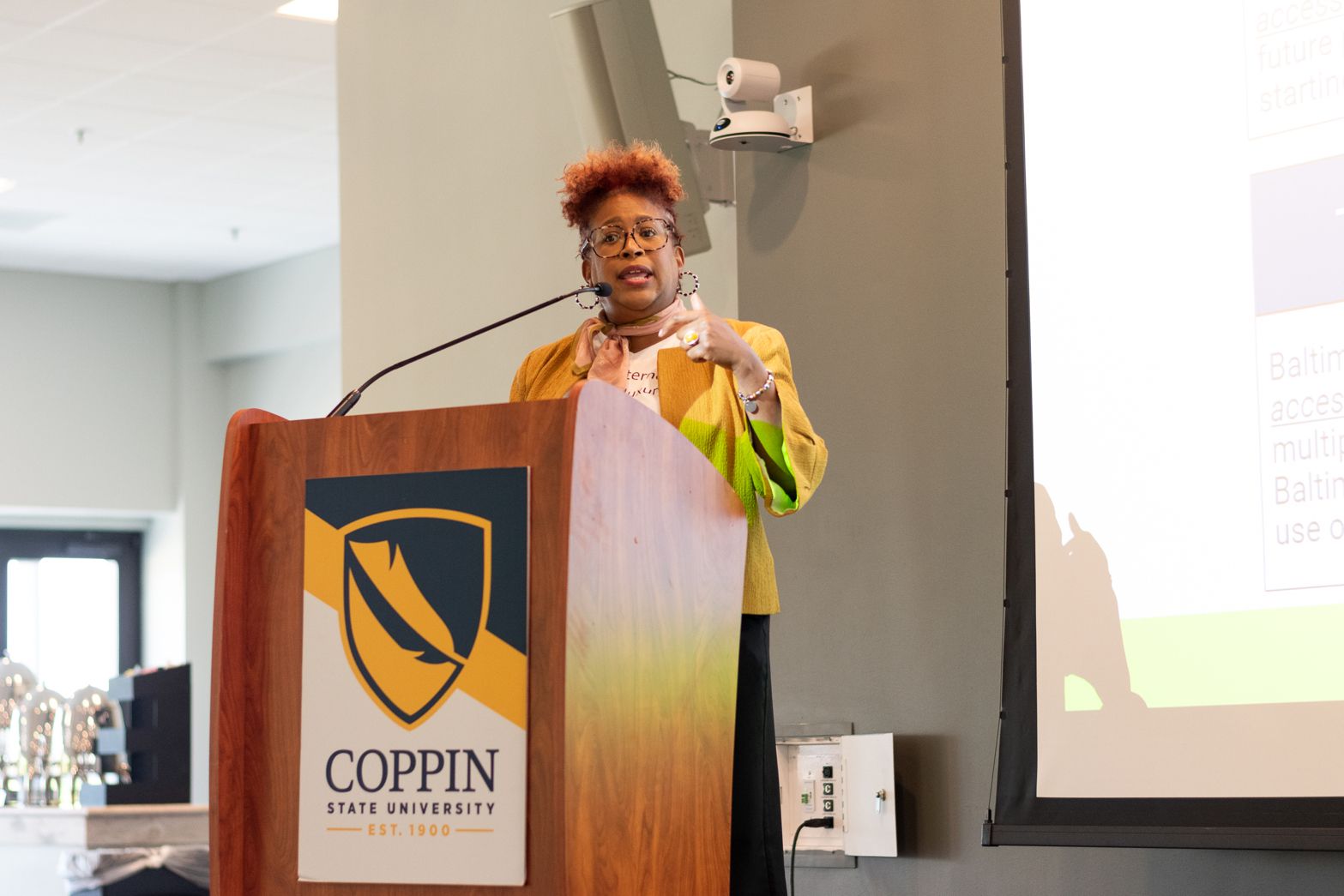
Photo Credit: Shelby Swann Photography
“Digital equity is not just a matter of fairness but also a catalyst for economic growth and community development,” Scott said.
“Our digital inclusion strategy encompasses a range of initiatives designed to eliminate the barriers faced by certain neighborhoods and individuals in accessing and benefiting from digital technology.”
The Baltimore City Digital Inclusion Strategy, released Dec. 13, 2023 outlines a thorough, progressive approach to further develop Baltimore’s digital infrastructure and help residents and businesses harness the power of technology for their well-being and the betterment of the city.
BCIT’s Office of Broadband and Digital Equity (BDE) will oversee the development, and subsequent implementation, of the digital inclusion strategy. The strategy would not have been possible without extensive collaboration between city leaders, residents, community organizations, federal and state agencies, technology experts and other stakeholders.
As part of the strategy’s planning process, BDE gathered resident and stakeholder input from dozens of canvassing conversations, focus groups, interviews, surveys and town hall meetings. These feedback opportunities happened in-person and virtually between August 2022 and September 2023.
“Baltimore City has an unprecedented opportunity to narrow the digital divide. The digital revolution changed the way we live and work. But not all of Baltimore’s residents share in the opportunities this digital age offers,” says the digital inclusion strategy’s executive summary.
Photo Credit: Shelby Swann Photography
“In a world where we rely on technology, we recognize the urgency of ensuring all Baltimore residents can access digital resources. Our Digital Inclusion Strategy rests on a belief that digital equity can support a thriving, prosperous, and equitable city.”
Providing a clearer picture of the city’s digital divide, the strategy cites research from the Abell Foundation indicating that 73.3 percent of white households in Baltimore City have wired broadband, compared to 50.2 percent of Black and 46.4 percent of Hispanic households. Additionally, 80.7 percent of white households have desktop or laptop computers, compared to 60 percent of black and 47.5 percent of Hispanic households.
The plan also highlights four actionable goals that will help anchor the city’s activities and investments in the digital ecosystem:
- Reliable High-Speed Internet: Starting with the most underserved communities, Baltimore City residents will have access to affordable, reliable, high-speed internet based on investments in future-proof fiber optic networks.
- Technology and Devices: Baltimore City residents will be able to get a modern computing device.
- Digital Skills Training: Baltimore City residents will have access to digital skills training, helping them use computing devices and safely navigate the internet.
- Technical Support: Baltimore City residents will receive technical support — in multiple languages — to master internet access and devices.
The 73-page plan also details strategies to achieve the aforementioned goals; the planning and community input process; feedback; equity considerations; solutions; aligning strategies and actions to goals; fiber as a technology solution to support digital equity; Baltimore City broadband profile; and more.
“We were very thoughtful in ensuring that we had a comprehensive approach to reaching our goals; this is actually something that we’re very excited about because it’s the first time that Baltimore City has very clearly articulated a path forward,” said Kenya Asli, who serves as the director of BDE.
“This plan is a commitment to build a Baltimore that leaves no one behind in the digital age. The strategy will not only help enhance the quality of life for our residents, but also make Baltimore a more competitive and resilient city.”
Early on in his administration, Mayor Scott announced plans to close the digital divide by 2030. In 2021, he allocated $35 million of Baltimore City’s $461 million in ARPA (American Rescue Plan Act) funding toward broadband and digital equity, Asli highlighted, adding that the BDE office was successful in securing additional funds from the Office of Statewide Broadband that will enable city officials 50,000 Chromebooks to income-eligible households.
Partnerships with Enoch Pratt Library, Baltimore City Recreation and Parks, and several other city agencies and organizations will equip BDE to successfully implement the digital inclusion strategy.
City leadership didn’t waste time in putting the digital inclusion plan into action.
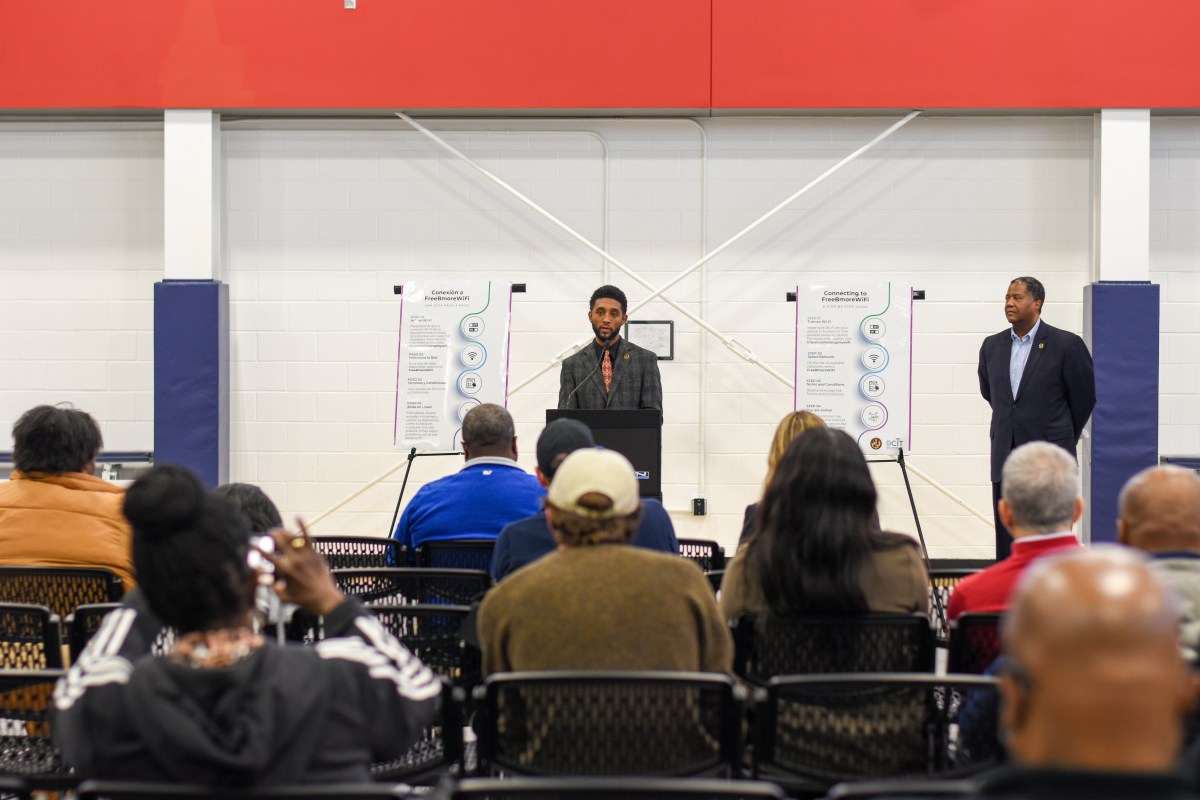
On December 18, 2023, Scott and the BDE office hosted an event to announce the launch of Baltimore City’s public-facing Wi-Fi network, “FreeBmoreWiFi,” at Cherry Hill’s Middle Branch Fitness and Wellness Center.
The network is a major component of the digital inclusion strategy to provide affordable, reliable and accessible internet to all residents.

We all benefit when we make serious efforts to address the digital divide. The digital inclusion strategy is worth reading: it’s a thoughtful document that outlines actions that the City and its partners can take.