
Listen to a short summary
Read by

Dana G.
Molly Williams was the first known female firefighter in the United States, breaking barriers for women in a male-dominated occupation. She worked as a volunteer firefighter in New York City in the early 1800s, even during a blizzard when male firefighters were scarce. Williams knew how to operate the equipment and was respected by her fellow firefighters. Her legacy paved the way for other women to become firefighters, including Judith Livers, Toni McIntosh, and Annette Nance-Holt. Today, only five percent of all career firefighters are women, but organizations like Women in Fire are working to recruit more women into the profession. Firefighters, both men and women, face physical and mental challenges while responding to emergencies and helping others. Remembering the legacy of Molly Williams and other trailblazing female firefighters is important during Women's History Month and beyond.

How many women have you seen driving and operating a firefighting vehicle or climbing a ladder to extinguish a fire? Never say never, even if you have not seen a woman maneuvering heavy fire equipment.
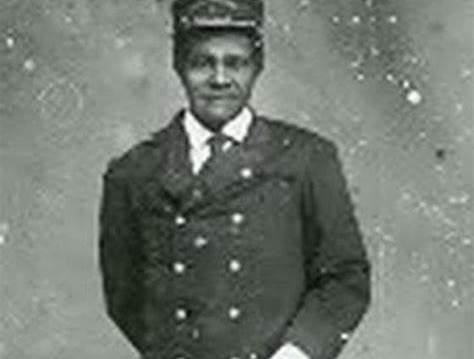
Molly Williams, the first known female firefighter and also the first known Black female firefighter in the United States, was an enslaved woman in New York City who laid the foundation for more trailblazers to follow. Around 1815, she became a member of Oceanus Engine Company #11 and often accompanied Benjamin Aymar, a merchant who owned her, to the location in Lower Manhattan where he was a volunteer firefighter.
During the blizzard of 1818, male firefighters were scarce because of a cholera outbreak. Williams knew how the equipment worked. The tough woman who was dressed in her checked apron and calico dress worked among men while pulling the huge water pumper to the fire through the deep snow.
“Williams cleaned and cooked and, on the noted occasion, she was tending to the men of Oceanus 11, who’d been stricken by an unusually virulent flu. The alarm bell sounded. There was a fire, and she was the only one well enough to go,” according to the Journal of Emergency Dispatch website.
Following Williams’ impressive contribution in extinguishing a fire, the firefighters of Oceanus 11 made Molly an unofficial member of Oceanus 11’s firefighting crew. She was soon referred to as Volunteer No. 11 around the firehouse.
“I belongs to ole ’Leven,” Williams once said, referring to her role.
While the courageous leader opened a historical door for women firefighters, other women were able to make contributions while climbing the career ladder.
Women in Fire, a 501(c)(3) tax-exempt charitable organization, reported that the women “made their way into the ranks of seasonal wildland firefighters in the early 1970s, and the first female career firefighter was hired in 1974.”
History was made in Arlington, Virginia, when Judith Livers was hired to join the Arlington County Fire Department. Later, Toni McIntosh of Pittsburgh, Pennsylvania became the first African American career firefighter in 1976. Annette Nance-Holt was appointed to become Chicago’s Fire Department commissioner. According to the City of Chicago, she was the first woman and African American to serve in that capacity.
Despite progress that has been made, just five percent of all career firefighters are women, according to the U.S. Fire Administration.
Locally, Captain Shanntel Wilkins and EMT Tiffany Randolph are among two African American women in the Baltimore City Fire Department who want to recruit more women to work amongst them.
Firefighters must retain the desire to help people, even if they are not thanked or praised. They are often unsung heroes who respond to a variety of situations which range from fighting fires to responding to medical emergencies, making presentations to the public for safety education, engaging in search-and-rescue operations and providing help during traffic accidents. Volunteer firefighters address local needs on a part-time basis. Whether rendering paid or unpaid assistance to community members, firefighters of both genders endure an inherent risk of becoming injured while encountering situations that require physical demands and assisting others. Although robust research is lacking, firefighters are at a higher risk of being diagnosed with cancer, compared to other women in the general population.
When individuals from the public dial 911, firefighters are expected to render service until the challenging job is done, regardless of exhaustion or risk.
During Women’s History Month, and even after the month ends, do not forget the legacy of Williams—a confident firefighter who arguably broke barriers for volunteer and career firefighters. She enabled more women of all races to blaze the trails in a male-dominated occupation, despite the physical and mental challenges that are required by individuals who are suited for the tough job. Williams earned respect, but her legacy is not as widely known as it should be. Everyone and anyone who spreads the word about her story plays a part in honoring her, although some details about her life remain unknown.
“Molly, by Golly!: The Legend of Molly Williams, America’s First Female Firefighter” is a book written for young children about Williams. Additionally, Triple F (Fierce Female Firefighters), founded by Lieutenant Tina Guiler, will offer a plush doll called “Molly.” A portion of the proceeds will support female firefighters and women in the emergency medical services who are battling cancer and other medical challenges. Visit https://triplefrescue.com/product/female-firefighter-plush-doll-molly/ for more details.