

Tucked behind the Reginald F. Lewis Museum in downtown Baltimore lies a narrow, nondescript passage called Slemmers Alley. Few realize that in 1865, Harriet Tubman’s brother-in-law, Tom Tubman, lived here. The bricks hide secrets of the Underground Railroad. It was in houses along this very alley that plans were laid, including the daring escape of an enslaved woman named Tilly, and where our tour began.
Amateur historian and tour co-host, Aaron Rice reminded us that freedom was often plotted in hushed tones behind closed doors and carried out under the cover of night. From Slemmers Alley, our group retraced Harriet’s path to Pier 4 at the Inner Harbor. As the water glistened quietly in the morning sun, Rice painted a vivid picture of what it must have felt like to climb into that small boat—cold, afraid, wrapped in a tarp, undoubtedly accompanied by vermin, with no guarantee of survival. I closed my eyes as he spoke and imagined Tubman and Tilly drifting into the darkness. Harriet was risking her life for someone she barely knew. Tilly’s fiancé was free and living in Canada and had gotten word to Tubman that he needed her help. The weight of her courage hung in the air, and for a moment, when I opened my eyes, I could see the boat gliding gently out of sight.
Where Rice’s story brought history to life in Baltimore, Alex Green’s gave it a heartbeat in Cambridge, Maryland. Alex is a griot – a storyteller dedicated to preserving a history dear to his heart. He and his wife Lisa, were born and raised in Dorchester County and started Harriet Tubman Tours to ensure that the legacy of Harriet Tubman and Frederick Douglass, who spent time in Easton and Cambridge, is not forgotten.
As a child, Alex remembers sitting in the barbershop listening to the elders tell stories of the Underground Railroad, and a woman who escaped to freedom, but instead of staying far away, she risked her life numerous times to help secure freedom for dozens more. What Alex is doing today is not unlike what our ancestors did when history was passed on through storytelling around open fires and quiet conversations around dinner tables under candlelight. Back then, reading or writing was forbidden.
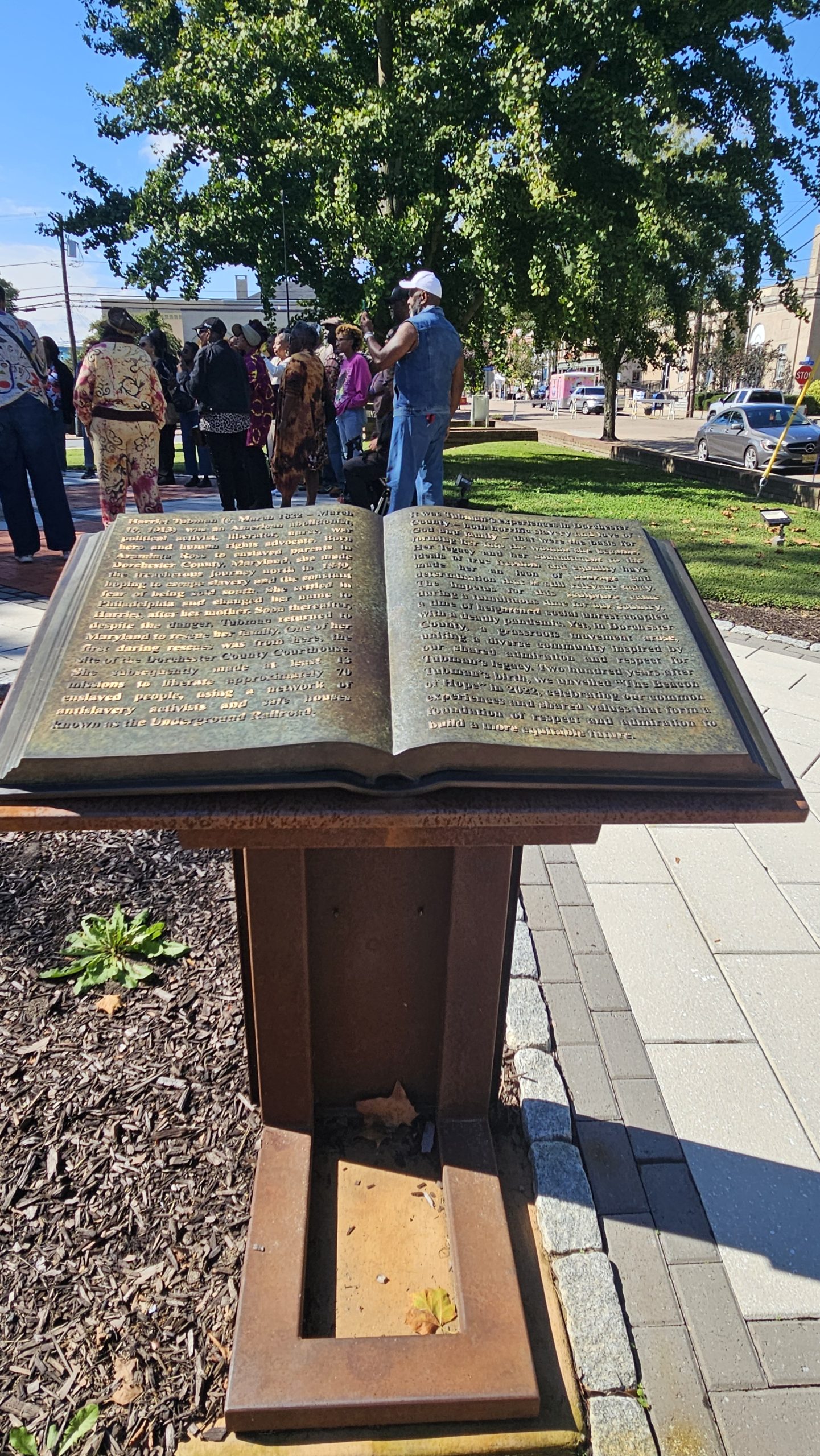
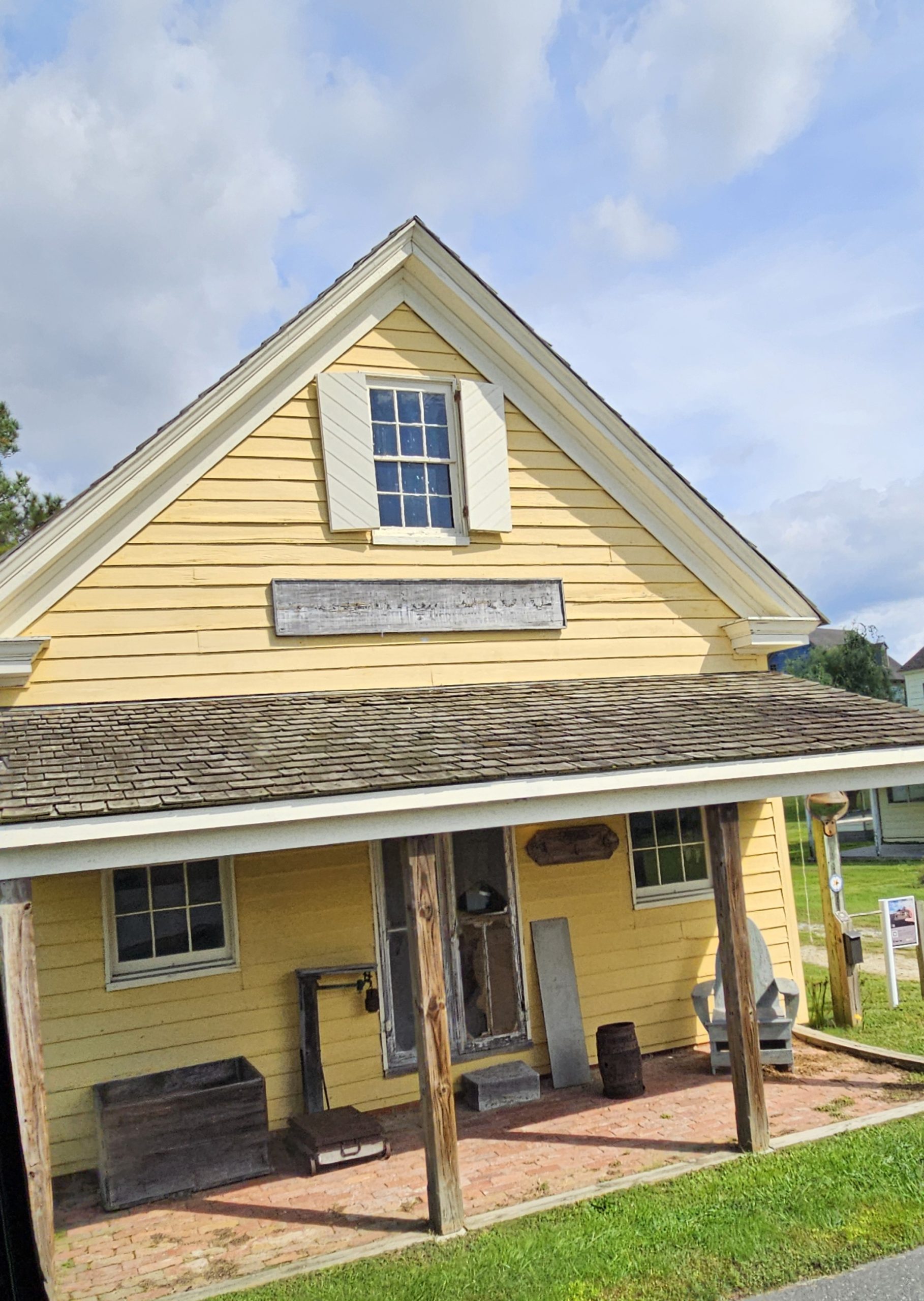
Alex’s tour led us through the city. Each stop is another chapter in Tubman’s life: the courthouse where her statue stands with young “Minty” as she was affectionately called, reaching up to take the hand of the woman who followed the north star to freedom. Additional sites included the general store where she sustained a near-fatal head injury, the Underground Railroad Museum, and the one-room schoolhouse where Lisa’s grandmother once taught.
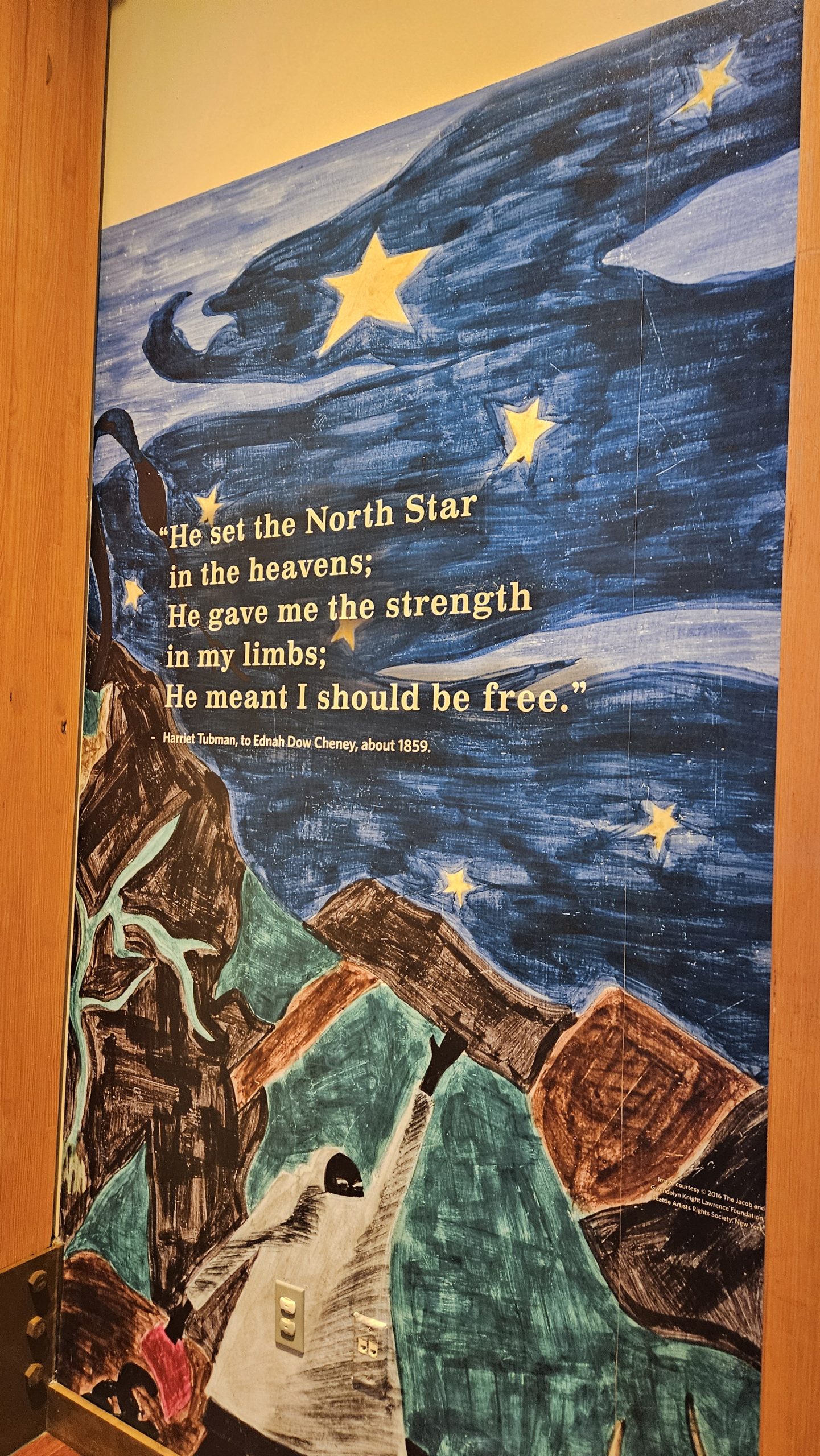
But it was in the marshes, as the bus slowed and Alex asked us to look out across the still water mixed with tangled roots, muskrats and bramble, that Harriet’s struggle hit me. “No North Face jacket, no Timberland boots,” he reminded us, “just thin, worn clothing and a will stronger than fear.”
For Alex and Lisa, the tours were only the beginning. As Alex explained, people often needed space to process, reflect, and continue learning after such an emotional experience. They envisioned a space that would serve as a hub, gathering place and educational center where visitors could extend their experience. That vision became reality less than two years ago when the couple opened the Harriet Tubman Freedom Center.
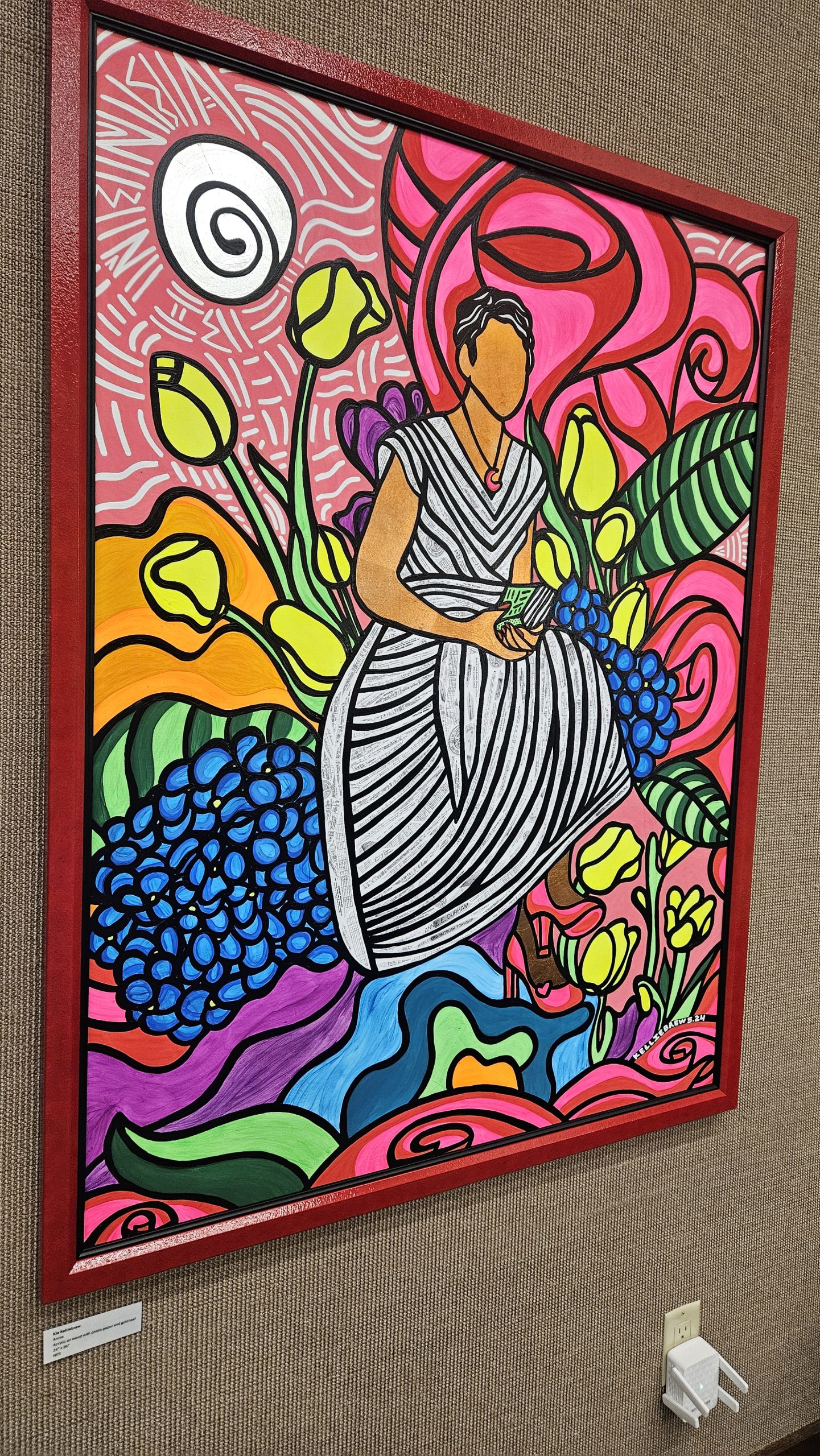
It was there that our three-hour journey concluded, surrounded by “A Taste of Freedom,” a breathtaking collection of Tubman-inspired art curated by Baltimore native and tour cohost Larry Poncho Brown. More than 50 artists from around the world contributed paintings, quilts, mixed media, dolls and sculpture. Many of them joined us, spoke about their work and the ways Tubman’s legacy shaped their creativity.
“They can burn our books and change what’s on paper,” Alex said, tapping his forehead. “But as long as I have what’s in here, our history will not be forgotten.”
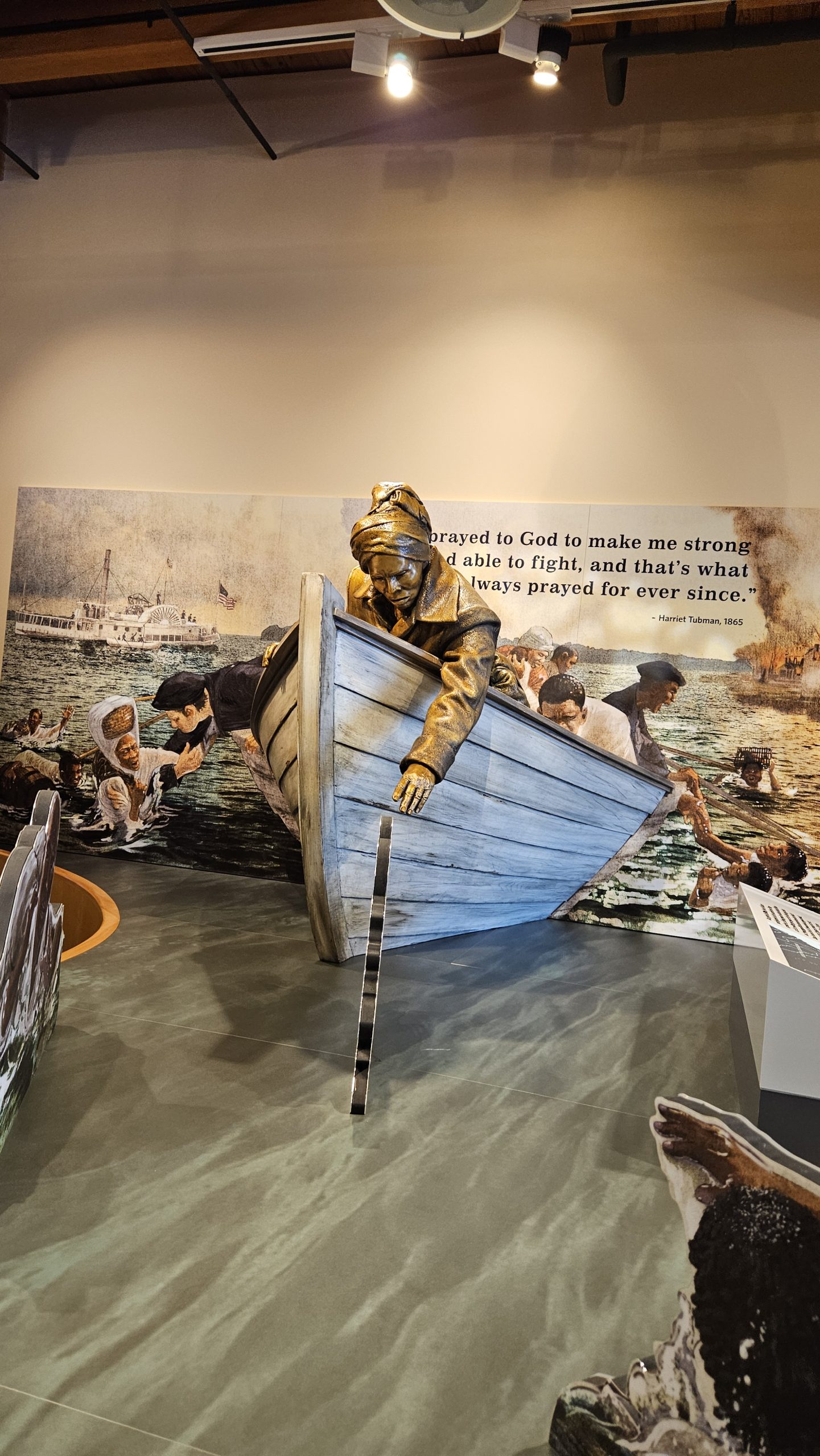
The exhibit has been extended through December 2025. The Harriet Tubman Freedom Center is located at 3030 Center Drive in Cambridge. To learn more about the center or book a tour, visit their website at www.harriettubmanfreedomcenter.com
Glenna E. Cush is a local entrepreneur and founder of Maker to Mogul, providing coaching and community for women makers and creatives.
I truly enjoyed the article. These little hidden gems are the things I like to explore and learn more.
I was unable to take the tour due to a prior commitment; however, after reading this article, I feel as though I had been there. Hopefully I will be notified when the next tour will be held. It’s important given the current administration’s “cancel culture “ that as many people of color as possible experience this history and thereby keep it alive for future generations. Slavery was a blight on America. We can’t pretend it didn’t happen. The current blight is another form of racism. Let’s erase black people from our history and fire all those black managers working in government and the military. Racism is the blight on America that continues to hold this country in its grip. Articles like this one are a part of America’s history, culture and legacy. Bravo for your excellent writing Ms. Cush!
Really informative article. I knew some of this history but not all of it. I want to visit exhibit now! We need more stories like this.
Amazing the history here in our backyard! So glad it’s been extended. Now I have time to visit!
This is a great article! And the art is awesome. I plan to visit the Harriet Tubman freedom center now that I know it’s there.
This is a beautiful article that brought back all the emotions I felt during the tour. I was humbled, proud, and sometimes speechless as I learned about Harriet Tubman and the incredible people who helped her. The experience deepened my appreciation for their courage and sacrifice — something I’ll never forget.
What a beautifully written tribute to the Greens and their commitment to keeping Harriet Tubman’s spirit alive through storytelling, art, and place. Glenna’s vivid narration makes readers feel as though they’re walking alongside Tubman herself—through alleys, marshes, and moments of courage. The Greens’ work at the Harriet Tubman Freedom Center is a powerful reminder that history isn’t just preserved in museums, but in the voices and hearts of those who retell it. This piece is both a celebration of legacy and a call to remember that freedom’s story still lives among us.
Yes! Yes! I feel their apprehension and their fear. Then I feel their determination. Their commitment to find a better place in this world. And, then I feel strengthened, empowered, and committed. Yes, life isn’t always fair. That’s when we have to “stand up”.
This article was well written and surprisingly left a sense of peace and empowerment, and a desire to be a better and stronger humanitarian.
Wow! Such a moving and thought provoking article. I’ve been near that town not knowing that treasure was right under my nose.
A compelling introduction to griot Aaron Rice. The narrator brings the Tubman Douglass story to life and shares with us a piece of Baltimore history. Superbly written.