Dr. Joanne Martin, co-founder and president of the National Great Blacks in Wax Museum, Inc. in Baltimore, Maryland, continues one of the museum’s missions “to stimulate an interest in African American history by revealing the little-known, often neglected facts of history.”
Martin provides insight about Juneteenth and other freedom holidays.
“Juneteenth is the most popular freedom celebration. It’s not the first and that’s information in terms of the history that we want people to know. It’s an important celebration and it represents when, in 1865, troops arrived in Galveston, Texas, to alert the slaves that slavery had been abolished. So, people consider this to be significant because of the whole idea that the Civil War was over, but these people had no notion that they were free and were still being held in slavery, illegally, actually. And so, people have found that story, so compelling and it occurred on June 19 [in 1865],” Martin said.
Additionally, the National Museum of African American History & Culture mentioned that June 19, 1865, was an especially significant day for more than a quarter of a million African Americans who lived in Texas. Though the date marked nearly two years since President Abraham Lincoln emancipated enslaved Africans in America, Union troops DID not arrive in Galveston Bay, Texas, with news of that freedom until June 1865. Union General Gordon Granger delivered the news that all slaves had been emancipated.
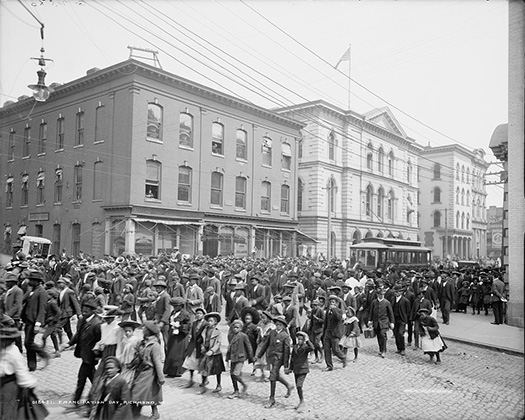
Dr. Martin stated that in Maryland, many people refer to Jubilee Day, Freedom Day and Emancipation Day to signify the time when people were free in this state and other states. This occurred before Juneteenth.
“During the Civil War, President Abraham Lincoln’s Emancipation Proclamation of 1863 freed slaves in Confederate states but not in the Union state of Maryland. To end slavery, Maryland had to write a new constitution,” according to information provided by the Maryland State Archives’ website.
A third state constitution abolished slavery in Maryland. It did not go into effect until November 1, 1864.
“This was a year after the Emancipation Proclamation and there were some states that declared slavery abolished when Abraham Lincoln declared the Emancipation Proclamation. There were some states like Maryland that declared slavery abolished on a particular day and celebrated that day,” Martin said.
The historian continued by stating that “when Abraham Lincoln issued the Emancipation Proclamation, he said that it would become official on January 1, New Year’s Day.”
“President Abraham Lincoln issued the Emancipation Proclamation on January 1, 1863, as the nation approached its third year of bloody civil war. The proclamation declared ‘that all persons held as slaves’ within the rebellious states, ‘are, and henceforward shall be free,’” per information provided by The U.S. National Archives and Records Administration.
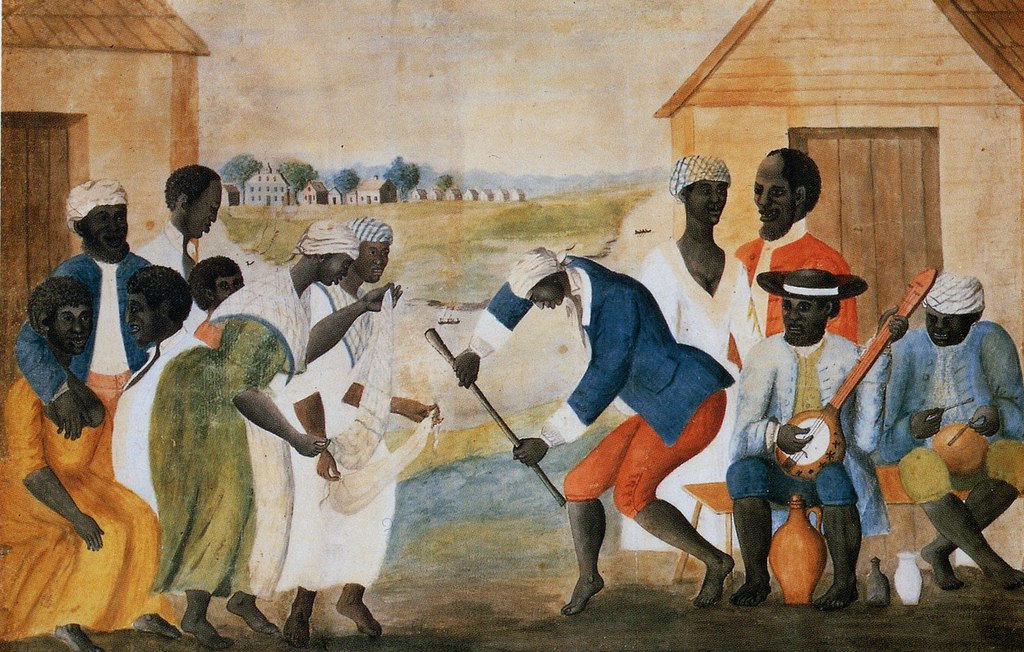
ca. 1785-1795. watercolor on paper, attributed to John Rose, Beaufort County, South Carolina. Abby Aldrich Rockefeller Folk Art Museum, Williamsburg, Virginia, (Image in the public domain)
Martin said that this is the reason why Watch Night Services became known as a celebratory time in Black churches.
“The Watch Night service typically begins around 7 pm on December 31 and lasts through midnight, as faith leaders guide congregants in praise and worship. Many congregants across the nation bow in prayer minutes before the midnight hour as they sing out “Watchman, watchman, please tell me the hour of the night,” according to the Smithsonian National Museum of African American History and Culture.
The minister’s reply included a countdown to freedom arriving for the purpose of blessing “their transition into the new year.”
Martin stated that Watch Night has been very prominent in the Methodist Church. It spread to other churches. Food, singing and praise were included.
“That was something that happened in the Black churches during the slavery era and continues today, because it is very much grounded in tradition,” Martin said.
Former President Joe Biden signed the Juneteenth National Independence Day Act into law on June 17, 2021. The act was a formal declaration of Juneteenth as a federal holiday, which is now celebrated annually on June 19.