According to the Childhood Bereavement Estimation Model, one in 12 children nationally experience the death of a parent or sibling by the time they are 18 years old.
“One hundred percent of children will grieve something during their childhood or come in contact with individuals who are grieving,” said certified child life specialist (CCLS), Jessica Correnti. “Yes, even infants, can grieve.”
Correnti, founder of Kids Grief Support, supports grieving children and families one-on-one with in-person or virtual grief support services through her private practice. She works with children of all ages up to 18.
“I also provide parent/caregiver consultations to help adults support the grieving children in their lives,” Baltimore County-based Correnti said.
Correnti further explained that children can grieve because of death, but also due to divorce; medical diagnosis; a move; natural or manmade disaster; friendship changes and other losses. Her practice also publishes children’s books related to grief topics and collaborates with organizations and businesses as a consultant for grief programming or projects.
Correnti, who has clients who also see her virtually from all over the country, explained that adverse childhood experiences (ACEs), are potentially traumatic events that occur during childhood.
“The more ACEs that someone has, the more potential and correlations there are with things like chronic health problems, mental illness, substance abuse, incarceration, and other issues as the child grows into adulthood,” she added.
Children frequently show that they are grieving through their behavioral changes, sleep changes and themes in their play.
The CCLS added, “Children will grieve in bursts over time, often re-grieving as they get older and go through different developmental stages. Children need the opportunity to process their grief situations and develop coping skills, so it lessens some of the potential risk of having an adverse childhood experience.”
Specifically, a CCLS is a healthcare professional with expertise in child development who provides support to children and families who are navigating stressful life experiences to reduce stress, anxiety and psychosocial trauma.
“This may look like helping a child understand and cope with a new diagnosis, preparing them for what to expect with a procedure at the hospital, providing normative play during a lengthy hospital stay, or supporting a child through a death experience or funeral,” said Correnti.
They utilize a variety of creative, play-based tools to support children and teens with navigating new and potentially anxiety-producing situations. Correnti has been a CCLS for 16 years and has worked within the hospital setting.
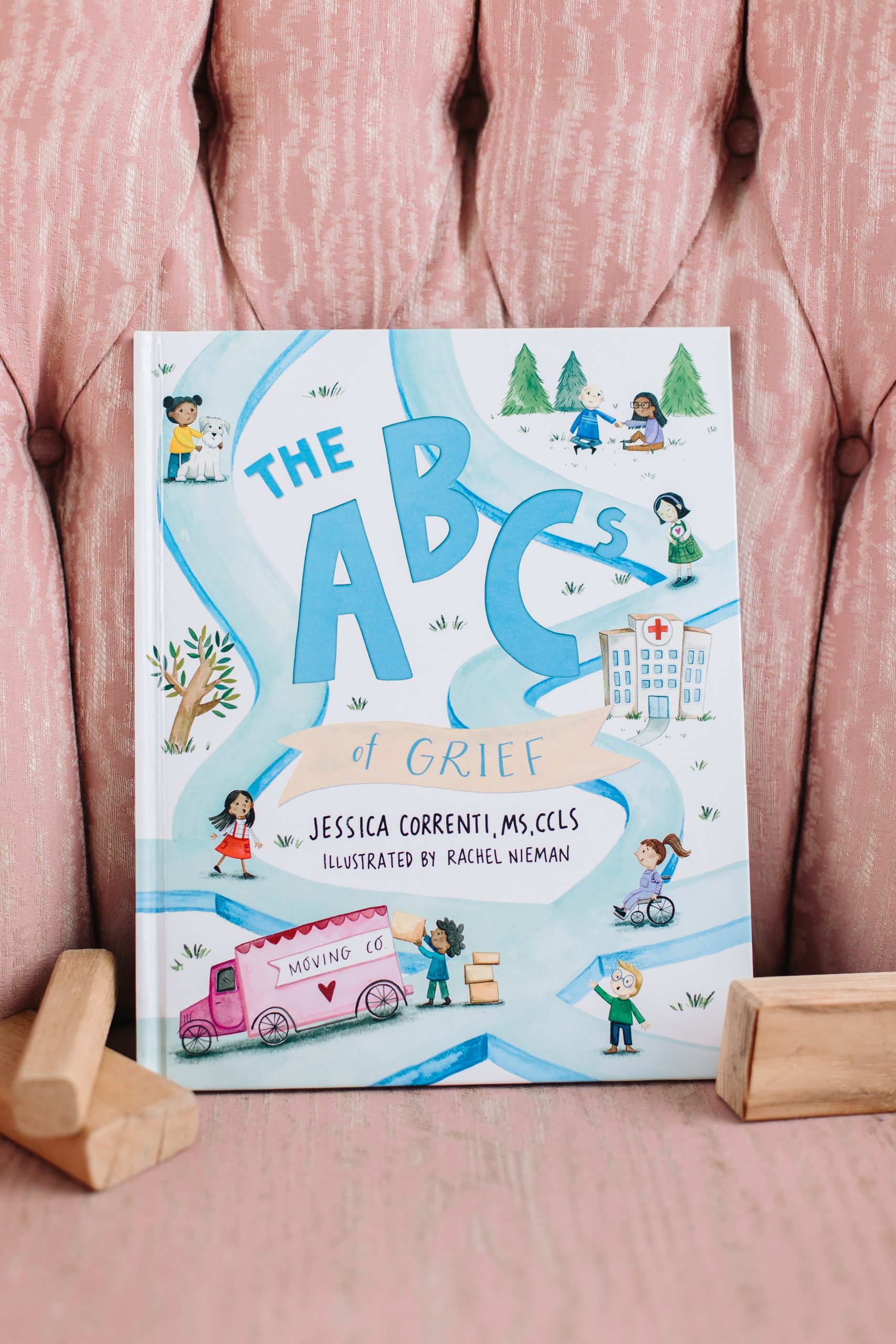
She also penned “The ABCs of Grief in 2024 and Forever Connected?” to fill a gap in the current children’s grief literature. The children’s grief book was published in February of 2024. It is intended for all grieving children, not just ones who are experiencing death losses. The book can be utilized for children ages three and up.
Correnti added, “While the writing is simple enough for young children, the concepts can lead to deep and multi-layered conversations for older children, teens and even adults.
She further stated that any child would benefit from this book since all humans are grievers.
“We grieve moving schools and towns, changes in relationships or family dynamics, changes in our homes or communities, and yes deaths of friends, pets, and family members,” Correnti added.
Correnti also pointed out that adults can validate emotions and experiences and help children learn coping skills and ways to express their grief and emotions in ways that are healing.
“We can do this through the use of children’s books on grief and emotions, expressive activities, grief support groups, grief counseling or therapy sessions, and meeting children truly where they are in the moment emotionally,” she said.
Correnti wants people to know that we can and should be educating children about grief from the youngest of ages. A beginning point is one that fosters simple, direct, truthful conversations that naturally come up.
“For example, if you are on a walk in the fall and see dead leaves, flowers, or an insect/animal, you can talk about the life cycle of that once-living thing and how it is now dead and will never come back.”
Correnti added, “Grief is not synonymous with death. One can grieve anything. There are hundreds of scenarios that a child or adult could grieve. We can normalize and validate that grief is felt in so many different situations, not only death.
Visit www.kidsgriefsupport.com to obtain more information about Kids Grief Support and “The ABCs of Grief.”