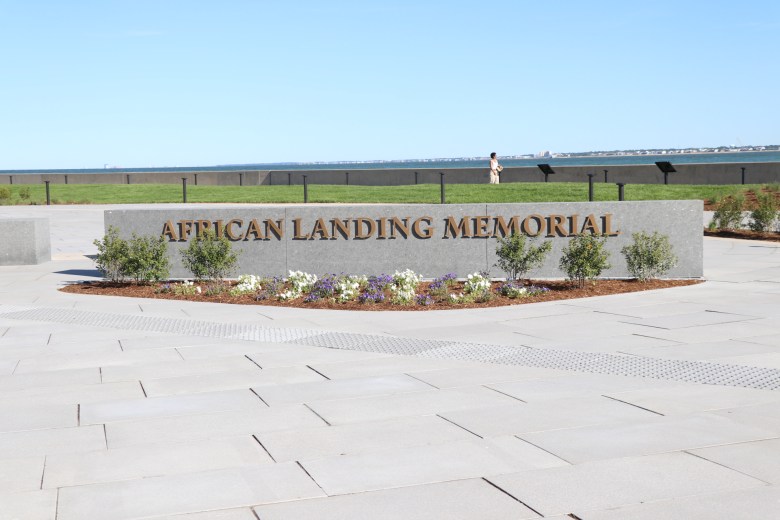
Ft Monroe Memorial Commemorates First Captive Africans from Angola
The 1619 landing of the first documented Africans in Colonial Virginia was formally recognized during the dedication of the African Landing Memorial Plaza on April 24, 2024 in Hampton, Virginia, while marking the place of their arrival.
According to fortmonroe.org, the African Landing Memorial at Fort Monroe “seeks to interpret this historical event beginning with the origins of the people—what their life might have been like prior to their abduction, the journey across thousands of miles of ocean– to their landing at Point Comfort and the lives they made for themselves (https://fortmonroe.org/place_to_visit/1619-african-landing-memorial).”
During Fort Monroe’s sharing of historical events, it was stated that “highly advanced societies were invaded by the Portuguese in the late 1400s, who in the ensuing decades meddled in the affairs of the African continent and eventually set in motion the trans-Atlantic slave trade.”
The São João Bautista sailed from the Port of Luanda, Angola, with more than 350 enslaved individuals who were bound for Vera Cruz in the colony of New Spain. However, when the slave ship passed through the Bay of Campeche, the White Lion and Treasurer attacked the São João Bautista and captured 60 Africans. A ship flying a Dutch flag called the White Lion, and a couple days later the Treasurer, landed at Point Comfort looking to trade “20. and odd” enslaved Africans for supplies, in late August of 1619.
“This was the first documented trade of enslaved Africans in English-speaking North America,” Aaron G. Firth, Park Ranger at Fort Monroe National Monument, said in 2024. “Some of the Africans are thought to stay here and the remainder taken on to the Virginia Colony capital at Jamestown.”
Old Point Comfort transformed into Fort Monroe, which was constructed on the land known as Old Point Comfort, beginning in 1819, following the War of 1812.
The African Landing Memorial incorporates reflection; learning; truth; empathy; respect; and hope while drawing attention to men and women who were forcibly brought to Point Comfort. A listening tour that can be heard allows visitors to make emotional and intellectual connections to the history of the African landing by exploring three forthcoming sculptured elements: the Relief, the Figures and the Arc. The Line to Angola connects two continents and people who should be remembered.
Anticipated summer 2028/2029, the Relief sculpture tells the true story of the origins of the first enslaved Africans brought to Virginia in August 1619. Fourteen depicted scenes include the origins of their life in West Central Africa; the violent kidnapping and horrific Middle Passage across the Atlantic Ocean; and the African’s arrival at Point Comfort while being forced into a labor system.
“The relief shows the truth of this traumatic journey while honoring their humanity and acknowledging their contributions and skills to the survival and wealth of the colony,” according to additional information provided on signage.
Anticipated summer 2026, figures of the mother, father and child shown in the sculpture symbolize the resilience of Africans who were brought to present-day Fort Monroe, and the creation of a new ethnic group and culture.
“Inspired by Antoney and Isabella, two of more than thirty enslaved men and women brought to Virginia in 1619, and their child William,” signage also revealed.
The rough-hewn surface of the Arc mimics the general shape of the Relief while reaching towards the sky. ‘It suggests hope or vaulting dreams, perhaps calling on the visitor to ponder the meaning of freedom and the cost borne by those who came before us,’” per information provided at the African Memorial Landing Plaza.
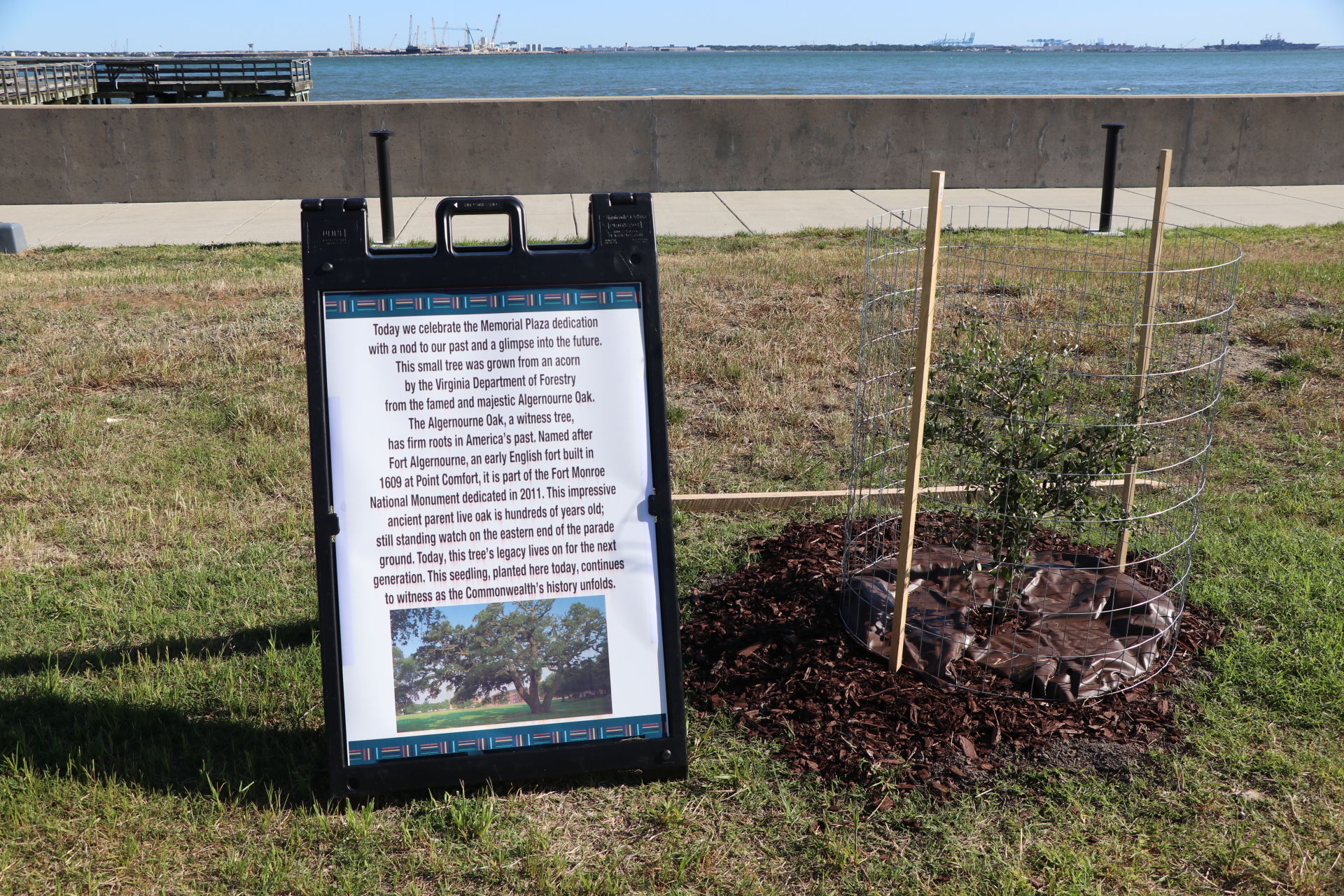
Finally, a sapling from the Algernourne Oak helps to commemorate the history of the African Landing Memorial, in partnership with the Virginia Department of Forestry.
“The Algernourne Oak, a witness tree, has firm roots in America’s past. Named after Fort Algernourne, an early English fort built in 1609 at Point Comfort, it is part of the Fort Monroe National Monument dedicated in 2011. This impressive ancient parent live oak is hundreds of years old; still standing watch on the eastern end of the parade ground,” according to signage at Fort Monroe.
During the Civil War, Fort Monroe’s history came full circle. Thousands of enslaved people sought refuge in “Freedom’s Fortress,” a safe haven where Blacks sought freedom during the Civil War, while being regarded as “contrabands of war.”
Visit https://1619landing.org to learn more about the African Landing Memorial at Fort Monroe.