
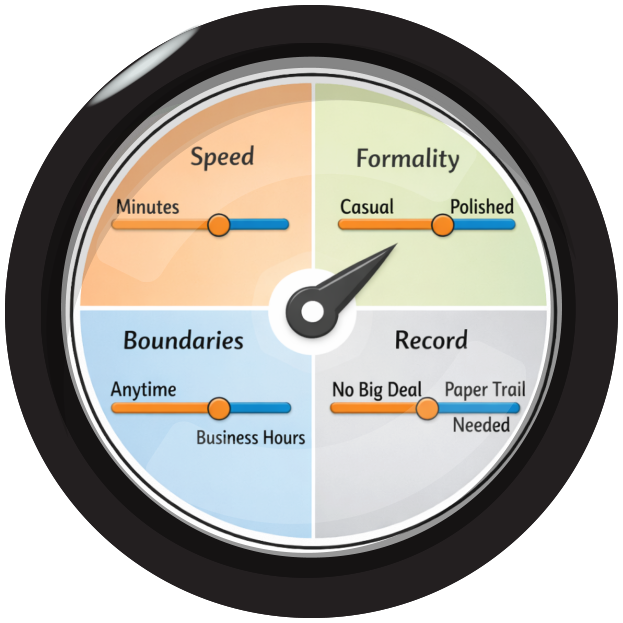
As a child growing up in the 50s, 60s, and 70s, the concept of 24-hour, daily programming never entered my mind. The notion of anyone contacting someone after bedtime wasn’t considered rude because it rarely occurred to anyone to do so. The exception was if it was an extreme emergency, otherwise it could wait. TV and radio stations actually signed off at night (generally midnight as I recall). The screen went dark, the airwaves went quiet, and the world basically said, “Goodnight. Try again tomorrow.”
Today, however, is a different story! Your phone never signs off. It just stares at you from the nightstand like a tiny, glowing coworker or friend who doesn’t understand boundaries. It may even beep, buzz, or chime during the night from the numerous vendors with whom you have opted to receive text messages and/or email notifications. That then, gets compounded by the fact that, as I, you have set your phone to notify you when you have received said email or text message.
No wonder so many of us share the same modern complaint! It’s not that we hate communication, we just hate being reachable by five different methods for the same conversation 24 hours a day. Consider whether you’ve experienced the following or a similar scenario:
One Message, Communicated Five Ways:
- You get a text: “Hey.”
- Then an email: “Following up.”
- Then a chat/DM: “You there?”
- Then a voicemail: “Call me back.”
- Then a phone call: “I’ve been trying to reach you.”
At this point you’re not a person, you’re more like a 24/7 customer service line. This constant “ping economy” isn’t just in your head. Microsoft has reported that (for high-volume users in their Microsoft 365 environments) employees can be interrupted so frequently during core work hours that on average, about every two minutes they are receiving some sort of notification concerning meetings, emails, or chats. I have noticed that for me, I receive so many notifications that I am becoming somewhat immune to them. They just represent additional “noise” in my noisy day.
Why Our Pet Peeves Are Getting Louder
Most communication pet peeves fall into five predictable categories:
- Timing Friction: The message isn’t wrong… the hour is wrong. A “quick question” at 10:47 pm hits different than one at 10:47 am
- Urgency Inflation: Everything sounds like a five-alarm fire. “ASAP” has become a personality trait. These days, “As Soon As Possible,” has become “Always Sending Another Ping.”
- Channel Mismatch: Some people send novels via text. Others email a one-line question that would’ve taken ten seconds as a call. Neither is illegal, but both can be irritating.
- Clarity Debt: The Vague Opener (“Hi”) with no follow-up. The voicemail that says “call me” without saying why. The message that makes you do detective work.
- Audience Mistakes: “Reply All” when you meant “Reply.” Group chats where half the people don’t know why they’re there, or they are grouped with people they don’t know.
If you’ve ever felt your blood pressure rise from a single notification sound, you’re not alone. The Pew Research Center, in a survey done over 10 years ago commented on the rise of text messaging. They noted that text messaging users send or receive an average of 41.5 messages on a typical day, with the median user sending or receiving 10 texts daily.
The Real Issue: We Are Using Different “Default Settings”
If you think about it, a lot of conflict isn’t about manners, it’s about mismatched expectations. Different age groups, plus different workplaces, families, and friend circles, have different expectations around when, how, whether, and what mechanism is used to communicate with friends versus family versus co-workers. Pew Research has shown big differences in texting habits by age (younger adults tend to text more; older adults less), which can naturally shape response-time expectations. Everyone has a different “default” in their method and style of communication. When we assume everyone shares our defaults, pet peeves are born.
Another pressure point to consider is that many of us are dealing with blurred work-life lines. The American Psychological Association has reported that constantly checking electronic devices can be linked to higher stress, especially for employed people who constantly check work email/texts on days off.
So, you might ask, what is the solution? Stay tuned for “Part 2” to discover a simple “peace treaty” of sorts for texting, email, chat, voicemail, and calls. After all, the goal isn’t silence. The goal is sanity.

Courtesy, Karen Clay

Great article Karen! I’m looking forward to Part 2.