
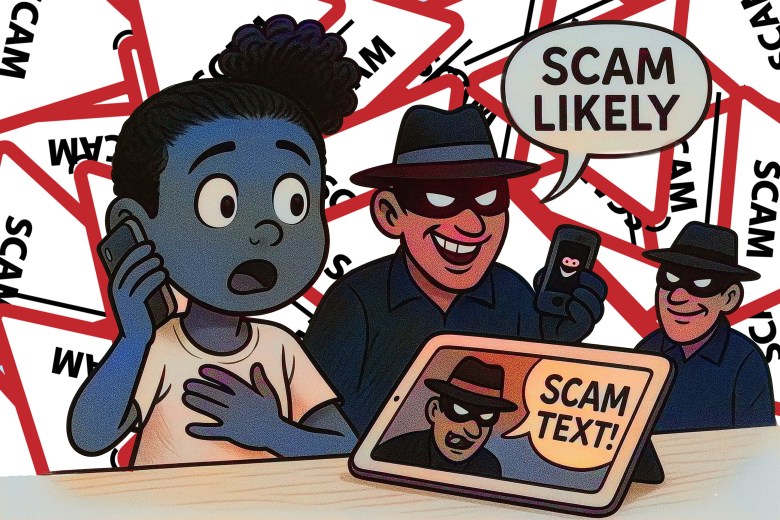
Lately, I’ve noticed that I am receiving unsolicited phone calls and text messages at a frequency unparalleled from previous years. Maybe it’s because I answered a call that I thought was a return call I was expecting. Maybe it’s because I signed up to receive text messages from a candidate for office during the 2024 election. Given we are heading into the holiday season, I’m taking inspiration from the 1991 made-for-television Christmas movie, “Yes, Virginia, There is a Santa Claus” for the title/tone of this article. The impetus for the movie was an 1897 editorial by Francis Pharcellus Church of the New York Sun, written in response to a letter by Virginia, an eight-year-old, asking whether Santa Claus was real. Mr. Church’s response focused on the values embodied by the notion of Santa Claus such as love, joy, and hope, which represent the intangible but real values that make our lives meaningful. This article borrows the tone of Church’s editorial to serve as a hopeful, practical reminder that we don’t have to accept “peace” as the cost of having a phone.
So, what is the “out clause” for regaining our digital peace? What are the practical tools/habits that can help us reclaim our phones and bring joy back to that part of our digital lives? Well, try these steps to reclaim your digital peace.
Recognize the nature of robocalls/robotexts.
Unwanted calls and texts come in patterns, so learn the signals:
- Caller ID is not always proof of a legitimate call. Scammers often “spoof” numbers to look local, familiar, or official.
- Pressure is a red flag. “Act now,” “verify your account,” “you’ll be arrested,” “claim your refund,” “your account is on hold” are all classic manipulation hooks. Be mindful of phishing emails and smishing texts that use alarming language and bogus links to lure you into action.
- Tax-season themes are common. Examples include illegal robocall campaigns pushing fake “National Tax Relief Programs,” designed to capture sensitive information like Social Security numbers.
Use the “Out Clause” immediately.
When the phone rings or you receive a text, your best defense is pretty boring.
- For robocalls:
- Don’t answer unknown numbers when you can avoid it. A left voicemail is a fairly good indicator that the call was real.
- If you answer and it’s a recording, hang up.
- Don’t press buttons to “opt out” unless you are 100% sure the caller is legitimate as doing so can confirm your number is active.
- For robotexts:
- Don’t click links in unexpected texts, even if they seem official or urgent.
- Don’t provie any personal information (e.g. DOB, SSN, passwords, bank details).
- Block and report such instances using your phone’s “Report Junk/Spam” feature if available.
Turn on call blocking and labeling.
A big part of the “Out Clause” is letting tools intercept the noise before it reaches your attention.
- Use your mobile carrier’s call-blocking tools and any built-in spam-labeling options. The FCC website (https://www.fcc.gov/) provides consumer resources on call blocking and related tools.
- Use a reputable call-blocking app if you need stronger filtering because you’re getting hit frequently.
- Enable “Silence Unknown Callers” or spam filtering, if it is available on your phone, so unknown numbers don’t ring.
Know what “verified caller” really means and what it doesn’t.
- The FCC has championed caller ID authentication standards to reduce illegal spoofing and help carriers identify suspicious calls before they reach you.
- Although authentication can help confirm whether a number is spoofed, it doesn’t guarantee a call is legit. You still need to use your own judgment.
Reduce future spam by changing a few habits.
This is where your “digital joy” returns in the form of fewer future interruptions.
- Add your number to the National Do Not Call Registry to reduce legitimate telemarketing calls, which helps cut down lawful nuisance calls.
- Don’t enter your number into random forms, giveaways, coupon sites, or sketchy “free trial” pages.
- Never “verify” your identity from an inbound call or text. If a bank, delivery company, or agency is involved, hang up and call them back using a number from their official website or your account statement. This is especially important with tax-related messages as scams happen year-round and often impersonate trusted tax entities.
- Don’t let embarrassment keep you silent! If you think a call/text was illegal, spoofed, or scammy, report it to the FCC at https://consumercomplaints.fcc.gov/. Doing so helps enforcement and blocking efforts improve.
Robocalls and robotexts can make our digital world dreary on purpose but we know there is an Out Clause. Used consistently, the “eternal light” of a peaceful ringtone can come back.

Courtesy, Karen Clay