
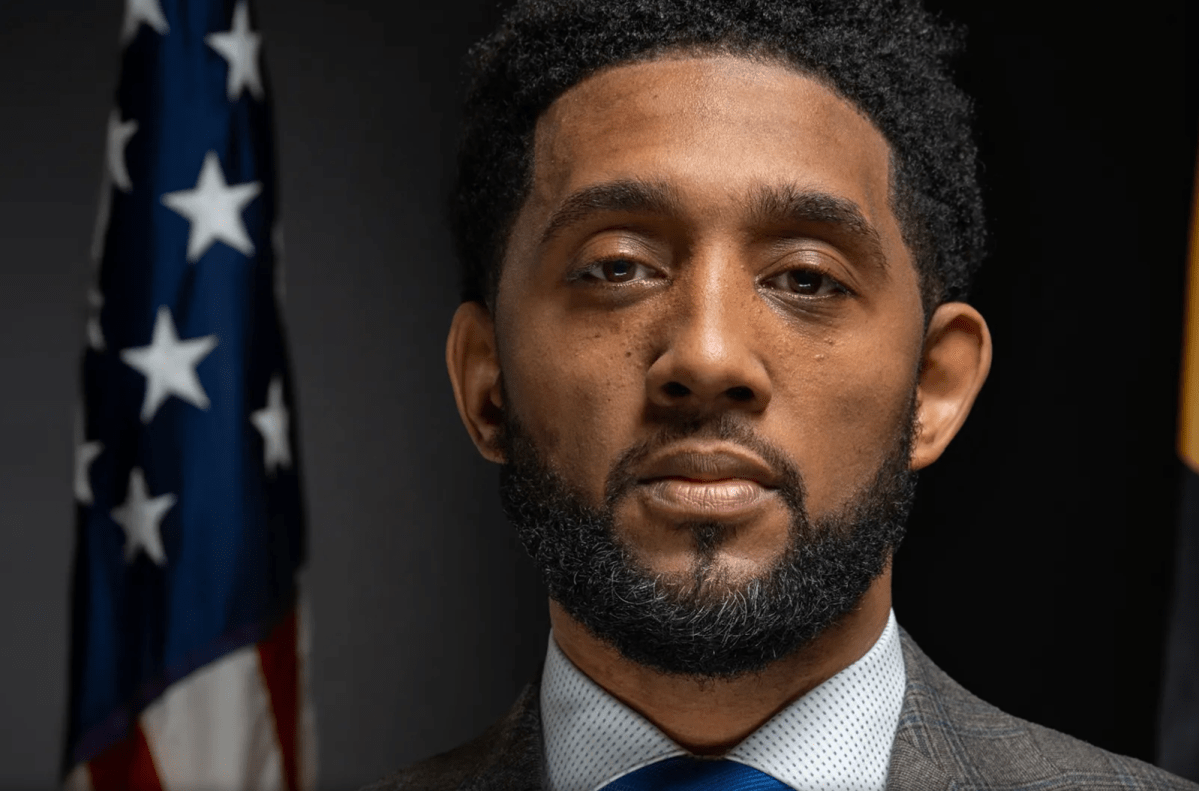
BALTIMORE, MD – Today, Mayor Brandon M. Scott delivered his sixth annual State of the City address at Baltimore Center Stage. The theme of this year’s speech was “Building Together, Block by Block.”
“When we talk about the ‘State of the City,’ we have to talk about so much more than what goes on at City Hall,” said Mayor Brandon M. Scott. “This is the greatest city in America because Baltimoreans are the greatest people on Earth. Baltimore’s potential is the potential of each and every person that calls her home. And the future of Charm City – your city, my city, our city – is one we’re building together.”
The speech, featuring residents personally impacted by Mayor Scott’s policies and priorities, outlined Baltimore’s historic progress and uplifted the work residents do to make Baltimore better every day.
The Mayor’s remarks as prepared can be read at www.baltimorecity.gov/sotc. A full recording of the speech can be viewed at www.baltimorecity.gov/live.
Mayor Scott made several significant announcements during his remarks, including unveiling a new map of city investments since December 8, 2020, the date of his inauguration. This map, while not inclusive of all city investments, includes key projects mappable to specific addresses across Baltimore and underscores Mayor Scott’s commitment to comprehensive, community-driven investment in neighborhoods across the city. A link to the map and information on the below announcements can be found at www.baltimorecity.gov/sotc.
Support for Legacy Residents and Renters
Mayor Scott made two housing-related announcements at State of the City: a pilot program to address property tax debt for legacy residents and a citywide security deposit assistance program. The $2 million support package for legacy homeowners will serve Baltimoreans who are 65 or over, have owned their home for more than 10 years, make under 80% AMI (Area Median Income), and enroll in the current Tax Sale Deferral Program by April 15, 2026. This program will be available while funding allows on a first-come first serve basis. Qualifying legacy homeowners will have their tax bills cleared next year, provided they take financial literacy courses and enroll in payment plans for future bills. Residents can visit Tax Sale Coordination and Prevention Services
https://www.baltimorecity.gov/dhcd/resources-for-homeowners/tax-sale-prevention) to apply. The Mayor’s Office of Older Adult Affairs and Advocacy will conduct coordinated, in-person and phone outreach through April 15 to older adults who may qualify.
The Mayor also announced the Security Deposit Assistance Program, which will provide one-time grants of up to $2,000 for renters who have identified a rental unit but need assistance with a security deposit. This program will specifically focus on residents transitioning out of homelessness or temporary housing. Residents can visit www.bmorechildren.com or stop by a Community Action Partnership (CAP) Center to determine eligibility and apply for funding.
Utility Assistance
As energy prices continue to rise around the country, Mayor Scott announced two programs aimed at lowering energy costs. The Energy Stability Fund (ESF) is a targeted fund that will provide up to $1,500 in assistance to residents who are struggling with utility bills. Residents can visit www.bmorechildren.com or stop by a Community Action Partnership (CAP) Center to determine eligibility and apply for funding.
Additionally, Mayor Scott announced that the Baltimore City Development Corporation (BDC) will award small- and medium-sized businesses up to $25,000 in grant funding to help with their utility bills. Businesses can visit www.baltimoredevelopment.com to determine eligibility and apply for funding after May 1.
Repave Baltimore and City Sprints
During the speech, Mayor Scott announced Repave Baltimore, a complete reimagining of the Department of Transportation’s (DOT) road resurfacing program. This new approach includes an analysis of all city roads so workers have up-to-date information and a public website to track progress. Residents can visit DOT’s Repave Baltimore website (https://www.baltimorecity.gov/transportation/repave-baltimore) for more information, and to see current and planned road resurfacing, alley paving, sidewalk replacement, and ADA ramp projects.
To build on the progress of Repave Baltimore, Mayor Scott challenged city agencies to a 90-day sprint, beginning mid-April. In that time, DOT will pave 25 lane miles of road and fill 25,000 potholes. Baltimore City Recreation and Parks will clean, weed, and mulch 500 tree pits, and the Department of Public Works (DPW) will sweep 25,000 miles of road, complete 6,000 graffiti removals and 12,000 bulk waste pickups. Residents are encouraged to report all city service requests to 311.
Public Health and Clean Communities
Mayor Scott uplifted Baltimore’s new goal to reduce overdose deaths in the city by 50% by 2040, outlined in the City’s updated Overdose Response Strategic Plan which he announced earlier this month. Building on this progress, Mayor Scott announced that Baltimore has joined the Partnership for Healthy Cities, a network of more than 70 cities supporting mayors in implementing proven, high-impact public health interventions. This is a partnership with Bloomberg Philanthropies, Vital Strategies, and the World Health Organization.
Further, Mayor Scott announced that his FY2027 budget will include $3 million to fund Clean Corps, a program that was set to lose funding after the expiration of ARPA (American Rescue Plan Act) funding. In combination with remaining ARPA funds, this investment supports twelve regional teams of crew members who have completed 15,000 vacant lot cleaning and mowing services, 19,000 alley cleaning services, 2,000 tree pit services, and over 7,000 street cleaning services as of March 2026.
Youth Investment
Investing in youth is investing in Baltimore’s long-term success. Mayor Scott announced that by the end of his term, the City will break ground on a state-of-the-art sports facility, featuring a competition-level indoor track as well as basketball and volleyball courts.
Mayor Scott also announced the City will create a coordinated apprenticeship ecosystem under the Department of Human Resources called the Baltimore City Joint Apprenticeship Program (BCJAP). Made possible through a partnership with the Annie E. Casey Foundation, this program will connect City agencies, contractors, and unions into a single pipeline, align capital contracts with apprenticeship utilization goals, and create clear entry points through pre-apprenticeship and training programs.
Mayor Scott also previewed his FY2027 budget, which will include funding for 6,600 YouthWorks positions.
YouthWorks connects young people aged 14 to 21 with paid work opportunities across the city, allowing them to earn money while gaining workforce skills and experience. The Mayor’s FY2027 budget will also include funding to build capacity of existing and new child care providers, creating an additional 500 quality child care seats in the city. As part of this investment, the City will develop a coordinated workforce pipeline that leverages existing city, state, and education systems to recruit, train, and place individuals into child care roles.