

Frederick D. Murphy spends considerable bandwidth pausing to put lesser-known stories on the map one mission at a time. The documentarian and collector of history shares unheralded history through social media and documentaries with passion, purpose and determination. His company, History Before Us, was founded in 2016. Murphy’s work is provided under this entity while recounting history.

Photo: Darrin Riddick-Davis
“ I have always been deeply engaged in history. I’ve been around history, because I’ve been around my great uncles, great grandmother, great aunties. So, I’ve always been connected to history in some way, shape or form. I was around people who were discussing things that transpired in the past. And I grew up in a Black church, and that’s kind of what shaped it,” said Murphy.
The storyteller and Tennessee State University and Bethune-Cookman University alum utilizes various components to elevate history.
“I can’t think of anything else I would rather do, to be honest with you,” Murphy affirmed. “I go a little here, there and everywhere.”
Murphy integrates videos, pictures, social media reels, and audio to share history on various platforms that range from YouTube to Facebook. He strives to bring heroes and sheroes in communities to light who deserve just as much acknowledgement and recognition as widely known historical figures. While Murphy acknowledges more prominent figures, he strives to ensure that living and deceased unheralded heroes receive attention.
“Their lives do matter, and their lived experiences matter,” said Murphy. “My target audience is the world. When we talk about some of the greatest individuals to walk this Earth…, we’ve touched every inch on the globe and so the greatness of our history can never be undertold. I don’t care where you’re at.”
Murphy’s work is not easy, but he wants to see it through. The majority of the time, his passion projects are self-funded. He has even used his credit card to keep pursuing his passion to tell and share stories that matter.
“I’m a mental health therapist by trade, and so this kind of just flows for me,” he stated.

Photo by Andrea Blackstone. Artworks courtesy of Florence Arts & Museums — Pope’s Tavern Museum (City of Florence, Alabama)
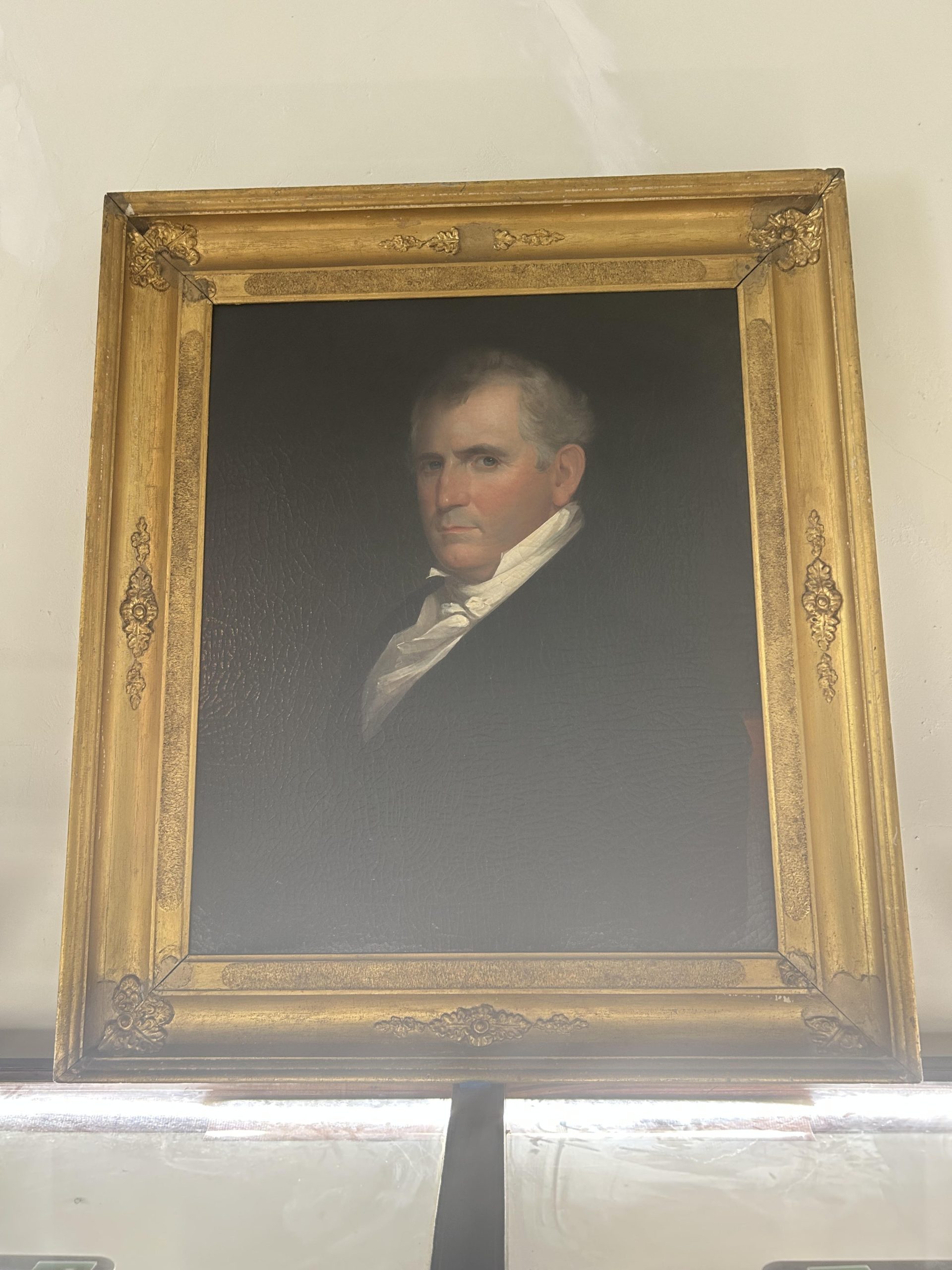
Photo by Andrea Blackstone. Artwork courtesy of Florence Arts & Museums — Pope’s Tavern Museum (City of Florence, Alabama)
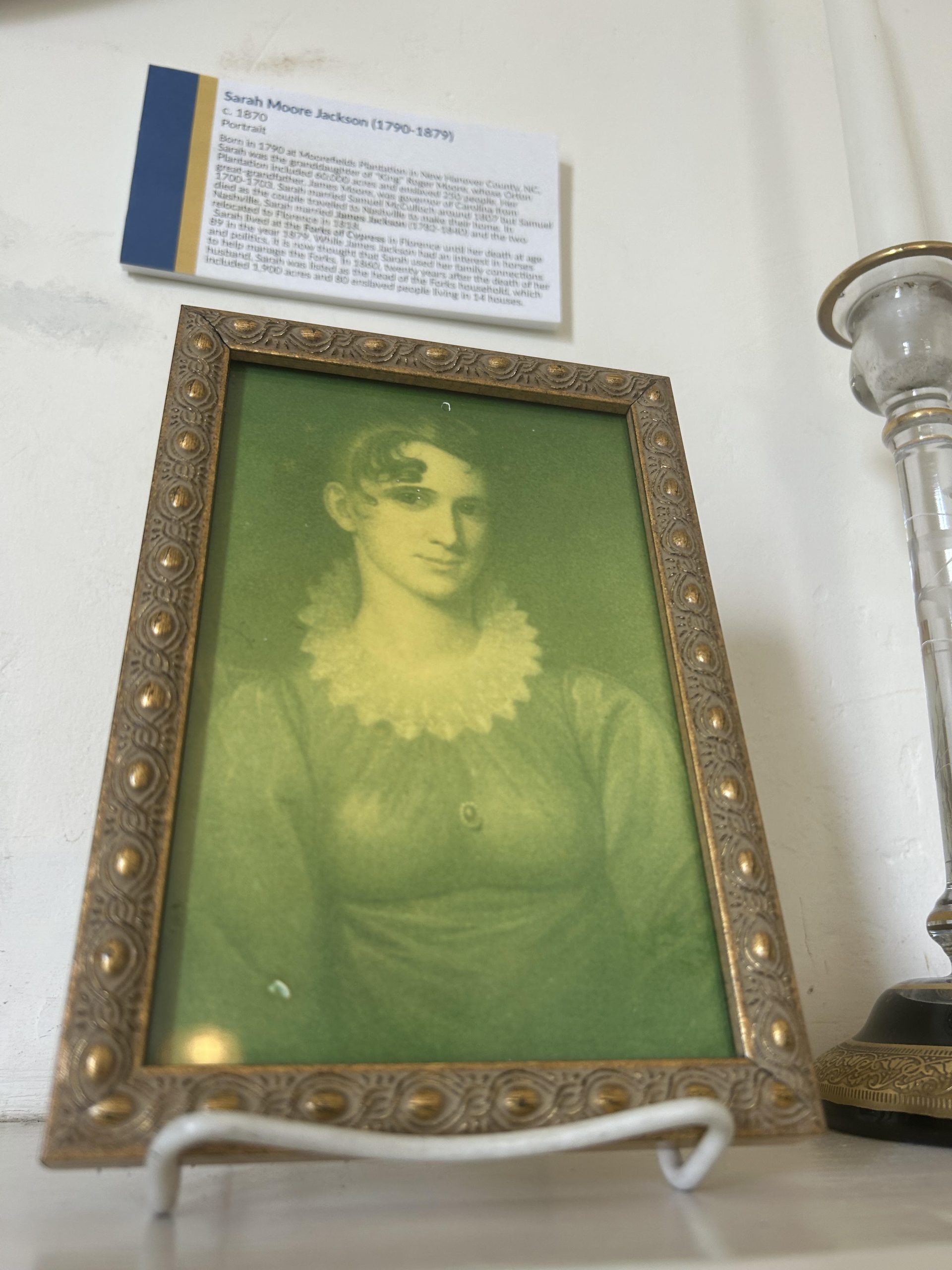
Photo by Andrea Blackstone. Artwork courtesy of Florence Arts & Museums — Pope’s Tavern Museum (City of Florence, Alabama)
Murphy added that pursuing work for hire through History Before Us helps him to create a sense of balance, push and receive a boost of fuel. Commissioned documentaries sometimes allow him to generate funds since he must cover everything for his projects, including hotel expenses and paying his camera guy and editor. In other instances, donors help to fund his historic adventures. Murphy has even turned to Cash App as a donation source.
However, the Alabama Humanities Alliance’s Healing History initiative partially funded Murphy’s documentary, “Echoes of the Forks of Cypress.” (https://alabamahumanities.org/newsroom_p/echoes-of-the-forks-of-cypress ). Murphy featured Black and white plantation descendants whose ancestors had ties to the iconic plantation, Forks of Cypress plantation located in Florence, Alabama (https://www.facebook.com/reel/). More than 120 people attended the premiere of the documentary on August 12, 2025, at the Florence-Lauderdale Public Library. One attendee was so moved by Murphy’s film that she popped open her umbrella and placed it on stage to raise donations.
Murphy gave a gift to Alabama, as well as to descendants on both sides of the coin, by fostering a conversation that intersects with slavery’s painful conversation, to cultivate needed healing and understanding. The trailblazing project that deeply examines the institution of enslavement, as well as the descendants of the Forks of Cypress who are living today, took six months to complete. Ahead of the documentary, Murphy created a Facebook group for African American Forks of Cypress descendants to connect. Ancestry.com was another tool that he used. Murphy is a descendant of Ferdinand Jackson, a man who was formerly enslaved at the Forks. Murphy typically stays behind the camera, but he felt that this story needed to be told about a place that was the “Darling of the South.”
“The truth needed to be told,” Murphy stated.
The Forks of Cypress burned down on June 6, 1966, after it was struck by lightning. Only the columns remain at the plantation site. Descendants had an opportunity to visit the Forks together before the film was shown. This writer has ties to the Forks of Cypress. “My great-grandmother, Queen Jackson Haley, and her biracial mother, Easter (Esther Jackson), were enslaved there.” Queen was allegedly fathered by James Jackson Jr., a Confederate Colonel whose family had deep ties to slavery, politics, and imported racehorses.
“With 600 cultivated acres and 81 enslaved people by 1860, the Forks may not have been the largest plantation in Lauderdale County. That distinction goes to John Peters’ plantation… which by 1860 had 5,760 cultivated acres and 313 enslaved people. But because of the late author Alex Haley, who wrote about his grandmother, Queen Jackson Haley, an enslaved woman from the Forks, the Forks is probably the most famous plantation of Lauderdale County, even among people who live here, but definitely people who are not from here,” said Lee Freeman, the library’s public historian.
Freeman appeared in the film, and he provided historical documentation regarding enslaved people and James Jackson Sr. for Murphy’s film. The Forks of Cypress was owned by Jackson Sr. and his wife, Sarah Moore Jackson.
Curtis Flowers, a Jackson descendant, stated in Murphy’s film that the Forks was where Flowers’ ancestors held Murphy’s people.
“I also want to say that with this film, even though it’s centered in Alabama, this is a descendant story across the globe, wherever enslavement was. This is Jamaica. This is Grenada. This is Alabama. This is New York. This is Delaware. This is Mississippi. This is about the institution of enslavement and the importance for descendants to gather, to put themselves in a position to advocate and keep the history alive of the individuals who shaped and molded who they are today, whether they are conscious of it or unconscious of how those individuals have shaped and molded their existence. That is very much a universal story,” Murphy concluded.
Visit https://www.facebook.com/HistoryBeforeUs to learn more about his work and where it will be screened in the future. Connect with Murphy by emailing historybeforeus@gmail.com.
- Andrea Blackstone
- Andrea Blackstone
- Andrea Blackstone
- Andrea Blackstone
- Andrea Blackstone
- Andrea Blackstone
- Andrea Blackstone
- Andrea Blackstone
- Andrea Blackstone
- Andrea Blackstone
- Andrea Blackstone
- Andrea Blackstone
- Andrea Blackstone
- Andrea Blackstone
- Andrea Blackstone
- Andrea Blackstone
- Andrea Blackstone
- Andrea Blackstone
- Andrea Blackstone
- Andrea Blackstone
- Andrea Blackstone
- Andrea Blackstone
- Andrea Blackstone
- Andrea Blackstone
- Andrea Blackstone
- Andrea Blackstone
- Andrea Blackstone
- Andrea Blackstone
- Andrea Blackstone
- Andrea Blackstone
- Andrea Blackstone
- Andrea Blackstone
- Andrea Blackstone
- Andrea Blackstone
- Andrea Blackstone
- Andrea Blackstone
- Andrea Blackstone
- Andrea Blackstone
- Andrea Blackstone
- Andrea Blackstone
- Andrea Blackstone
- Andrea Blackstone
- Andrea Blackstone
- Andrea Blackstone
- Andrea Blackstone
- Andrea Blackstone
- Andrea Blackstone
- Andrea Blackstone
- Andrea Blackstone
- Andrea Blackstone
- Andrea Blackstone
- Andrea Blackstone
- Andrea Blackstone
- Andrea Blackstone
- Andrea Blackstone
- Andrea Blackstone
- Andrea Blackstone
- Andrea Blackstone
- Andrea Blackstone
- Andrea Blackstone
- Andrea Blackstone
- Andrea Blackstone
- Andrea Blackstone
- Andrea Blackstone
- Andrea Blackstone
- Andrea Blackstone
- Andrea Blackstone
- Andrea Blackstone
- Andrea Blackstone
- Andrea Blackstone
- Andrea Blackstone
- Andrea Blackstone
- Andrea Blackstone
- Andrea Blackstone
- Andrea Blackstone
- Andrea Blackstone
- Andrea Blackstone
- Andrea Blackstone
- Andrea Blackstone
- Andrea Blackstone
- Andrea Blackstone
- Andrea Blackstone
- Andrea Blackstone
- Andrea Blackstone
- Andrea Blackstone
- Andrea Blackstone
- Andrea Blackstone
- Andrea Blackstone
- Andrea Blackstone
- Andrea Blackstone
- Andrea Blackstone
- Andrea Blackstone
- Andrea Blackstone
- Andrea Blackstone
- Andrea Blackstone
- Andrea Blackstone
- Andrea Blackstone
- Andrea Blackstone
- Andrea Blackstone
- Andrea Blackstone
- Andrea Blackstone
- Andrea Blackstone
- Andrea Blackstone
- Andrea Blackstone
- Andrea Blackstone
- Andrea Blackstone
- Andrea Blackstone
- Andrea Blackstone
- Andrea Blackstone
- Andrea Blackstone
- Andrea Blackstone
- Andrea Blackstone
- Andrea Blackstone
- Andrea Blackstone
- Andrea Blackstone
- Andrea Blackstone
- Andrea Blackstone
- Andrea Blackstone
- Andrea Blackstone
- Andrea Blackstone
- Andrea Blackstone
- Andrea Blackstone
- Andrea Blackstone
- Andrea Blackstone
- Andrea Blackstone
- Andrea Blackstone
- Andrea Blackstone
- Andrea Blackstone
- Andrea Blackstone
- Andrea Blackstone
- Andrea Blackstone
- Andrea Blackstone
- Andrea Blackstone
- Andrea Blackstone
- Andrea Blackstone
- Andrea Blackstone
- Andrea Blackstone
- Andrea Blackstone
- Andrea Blackstone
- Andrea Blackstone
- Andrea Blackstone
- Andrea Blackstone
- Andrea Blackstone
- Andrea Blackstone
- Andrea Blackstone
- Andrea Blackstone
- Andrea Blackstone
- Andrea Blackstone
- Andrea Blackstone
- Andrea Blackstone
- Andrea Blackstone
- Andrea Blackstone
- Andrea Blackstone
- Andrea Blackstone
- Andrea Blackstone
- Andrea Blackstone
- Andrea Blackstone
- Andrea Blackstone
- Andrea Blackstone
- Andrea Blackstone
- Andrea Blackstone
- Andrea Blackstone
- Andrea Blackstone
- Andrea Blackstone
- Andrea Blackstone
- Andrea Blackstone
- Andrea Blackstone
- Andrea Blackstone
- Andrea Blackstone
- Andrea Blackstone
- Andrea Blackstone
- Andrea Blackstone
- Andrea Blackstone
- Andrea Blackstone
- Andrea Blackstone
- Andrea Blackstone
- Andrea Blackstone
- Andrea Blackstone
- Andrea Blackstone
- Andrea Blackstone
- Andrea Blackstone
- Andrea Blackstone
- Andrea Blackstone
- Andrea Blackstone
- Andrea Blackstone
- Andrea Blackstone
- Andrea Blackstone
- Andrea Blackstone
- Andrea Blackstone
- Andrea Blackstone
- Andrea Blackstone
- Andrea Blackstone
- Andrea Blackstone
- Andrea Blackstone
- Andrea Blackstone
- Andrea Blackstone
- Andrea Blackstone
- Andrea Blackstone
- Andrea Blackstone
- Andrea Blackstone
- Andrea Blackstone
- Andrea Blackstone
- Andrea Blackstone
- Andrea Blackstone
- Andrea Blackstone
- Andrea Blackstone
- Andrea Blackstone
- Andrea Blackstone
- Andrea Blackstone
- Andrea Blackstone
- Andrea Blackstone
- Andrea Blackstone
- Andrea Blackstone
- Andrea Blackstone
- Andrea Blackstone
- Andrea Blackstone
- Andrea Blackstone
- Andrea Blackstone
- Andrea Blackstone
- Andrea Blackstone
- Andrea Blackstone
- Andrea Blackstone
- Andrea Blackstone
- Andrea Blackstone
- Andrea Blackstone
- Andrea Blackstone
- Andrea Blackstone
- Andrea Blackstone
- Andrea Blackstone
- Andrea Blackstone
- Andrea Blackstone
- Andrea Blackstone
- Andrea Blackstone
- Andrea Blackstone
- Andrea Blackstone
- Andrea Blackstone
- Andrea Blackstone
- Andrea Blackstone
- Andrea Blackstone
- Andrea Blackstone
- Andrea Blackstone
- Andrea Blackstone
- Andrea Blackstone
- Andrea Blackstone
- Andrea Blackstone
- Andrea Blackstone
- Andrea Blackstone
- Andrea Blackstone
- Andrea Blackstone
- Andrea Blackstone
- Andrea Blackstone
- Andrea Blackstone
- Andrea Blackstone
- Andrea Blackstone
- Andrea Blackstone
- Andrea Blackstone
- Andrea Blackstone
- Andrea Blackstone
- Andrea Blackstone
- Andrea Blackstone
- Andrea Blackstone
- Andrea Blackstone
- Andrea Blackstone
- Andrea Blackstone
- Andrea Blackstone
- Andrea Blackstone
- Andrea Blackstone
- Andrea Blackstone
- Andrea Blackstone
- Andrea Blackstone
- Andrea Blackstone
- Andrea Blackstone
- Andrea Blackstone
- Andrea Blackstone
- Andrea Blackstone
- Andrea Blackstone
- Andrea Blackstone
- Andrea Blackstone
- Andrea Blackstone
To my cousin Fredrick, I am very proud of the work you’ve done and are doing. You’re also helping people hear the silent voices.