

The origin of Black History Month begins with scholar, journalist and American historian, Dr. Carter G. Woodson (December 19, 1875- April 3, 1950). The “Father of Black History” introduced “Negro History Week” in 1926 after noticing lack of acknowledgement and education about the contributions of Black Americans. Dr. Woodson, who was not permitted to attend the American Historical Association conferences, although he was a dues-paying member, felt compelled to cofound the Association for the Study of Negro Life and History (ASALH) in 1915. Woodson’s “Negro History Week” concept later developed into Black History Month.
Woodson, who was born to parents who had been enslaved, became only the second Black person to earn a Ph.D. from Harvard University when he graduated in 1912. Dr. Woodson began high school at 20, yet he excelled academically and historically.
“2026 marks a century of national commemorations of Black history. Dr. Carter Godwin Woodson, George Cleveland Hall, William B. Hartgrove, Jesse E. Moorland, Alexander L. Jackson, and James E. Stamps institutionalized the teaching, study, dissemination, and commemoration of Black history when they founded the Association for the Study of Negro Life and History (ASALH) on September 9, 1915,” according to ASALH (https://asalh.org).
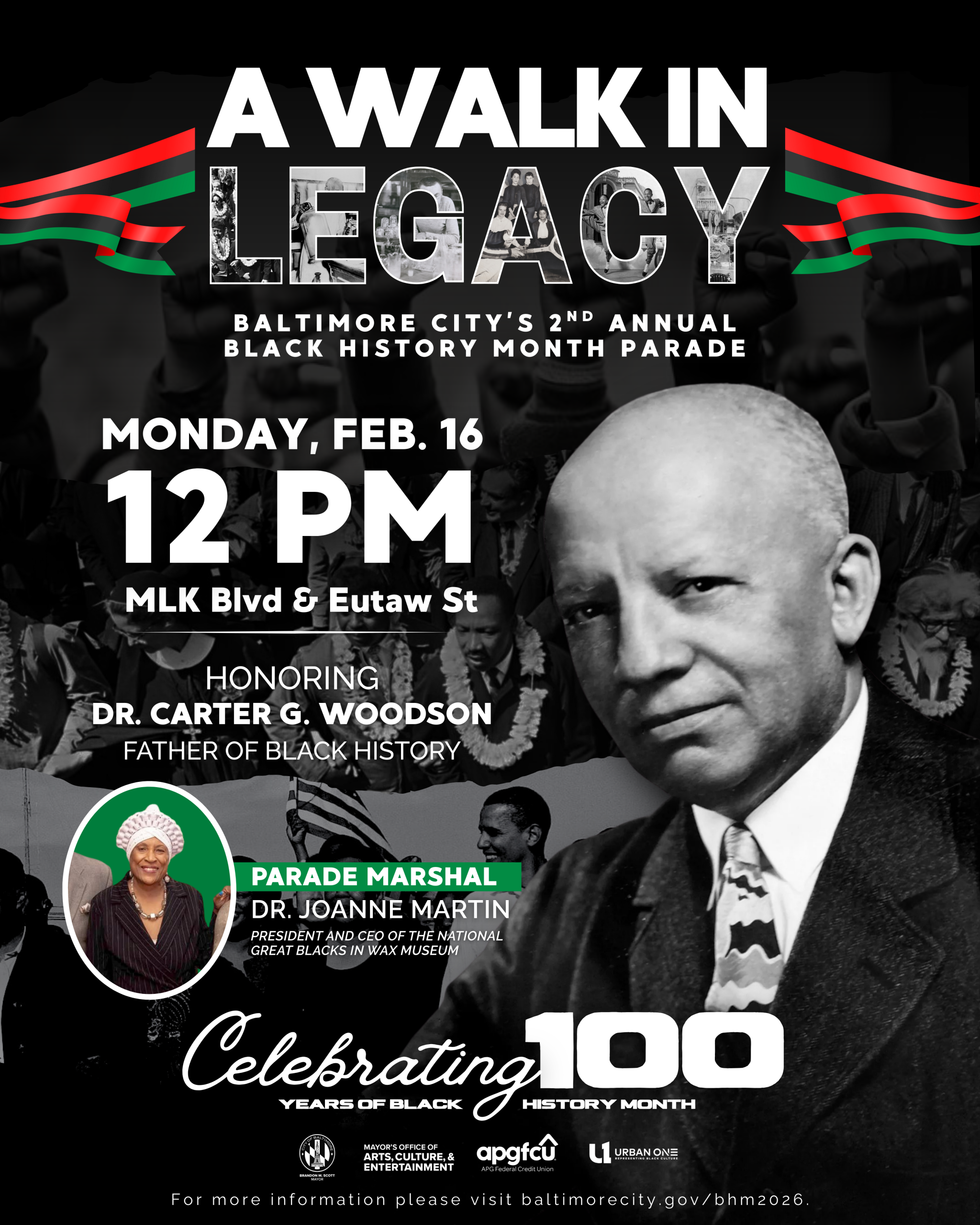
Dr. Carter G. Woodson, a young person who once worked in coal mines, designated Negro History Week in February of 1926 to honor the birthdays of Fredrick Douglass and Abraham Lincoln.
ASALH stated that Dr. Woodson set themes and provided materials to illustrate the contributions people of African descent to the movement of history and modern culture.
“As his contemporary W. E. B. Du Bois put it, ‘He literally made this country … recognize and celebrate each year a week in which it studied the effect which the American Negro has had upon the life, thought and action in the United States. I know of no other man who in a lifetime has unaided built up such a national celebration.’”
President Gerald R. Ford became the first president to issue a message recognizing Black History Month on February 10, 1976. Public Law 99-244 was passed by Congress in 1986 to designate February as Black History Month.
“These efforts have made February the month when Black history finds its way not simply into the schools of the American nation, but also into cultural heritage sites (museums, archives, libraries, parks, etc.), public squares, workplaces, houses of worship, and homes across the land and across the oceans. These institutions offer sites to discover and learn more about African American history through programming, camps, book displays, and exhibitions,” ASALH noted.
Continue to Celebrate Black History
Dr. Woodson was inspired to bring more attention to Black history. Individuals who want to attend local Black History events and increase their knowledge about contributions made by Black people can continue to keep the tradition alive. Local events are listed below. Visit websites to confirm specific details.
Annapolis
The City Announces 2026 Black History Month
A Series entitle “Rooted in Revolution: 250 Years of Black History in Annapolis” will be held in recognition of Black History Month 2026, and in preparation for the 250th anniversary of the United States. The four-part public history and cultural series will take place from 5:30 to 7:30 p.m. each Tuesday in February (Feb. 3, 10, 17 and 24) at the Michael E. Busch Annapolis Library, 1410 West Street in Annapolis. The program is free and open to the public. According to a press release, the series will explore the enduring contributions, leadership, resistance, and cultural legacy of Black Annapolitans from the colonial era to the present day. For more information, see https://www.annapolis.gov/m/newsflash/home/detail/2072.
The Banneker-Douglass-Tubman Museum hosts various events throughout the year. Visit https://bdmuseum.maryland.gov/events to obtain more information.
Baltimore City Black History Month Parade
Stay up-to-date regarding Baltimore City’s Black History Month Parade that is scheduled to be held on Monday, February 16, 2026 via https://baltimore.org/event/baltimore-black-history-month-parade.
Pratt Library
Remember to search Pratt Library’s list of upcoming events throughout the month via https://calendar.prattlibrary.org/search/events?card_size=small&days=42&event_types%5B%5D=27239&experience=&order=date.
The Smithsonian
Explore the Smithsonian’s rare collections of our five Historically Black Colleges and Universities partners https://www.si.edu/events/black-history-month. Over 100 objects from the collections of five universities will be available on the Concourse Level (C), Bank of America Special Exhibitions Gallery from January 16, 2026 – July 19, 2026.
Learn more about the origins of Black History Month and Dr. Woodson. Visit https://asalh.org/about-us/origins-of-black-history-month andhttps://asalh.org/about-us/carter-g-woodson-the-early-years-1875-1903/ .
- Andrea Blackstone
- Andrea Blackstone
- Andrea Blackstone
- Andrea Blackstone
- Andrea Blackstone
- Andrea Blackstone
- Andrea Blackstone
- Andrea Blackstone
- Andrea Blackstone
- Andrea Blackstone
- Andrea Blackstone
- Andrea Blackstone
- Andrea Blackstone
- Andrea Blackstone
- Andrea Blackstone
- Andrea Blackstone
- Andrea Blackstone
- Andrea Blackstone
- Andrea Blackstone
- Andrea Blackstone
- Andrea Blackstone
- Andrea Blackstone
- Andrea Blackstone
- Andrea Blackstone
- Andrea Blackstone
- Andrea Blackstone
- Andrea Blackstone
- Andrea Blackstone
- Andrea Blackstone
- Andrea Blackstone
- Andrea Blackstone
- Andrea Blackstone
- Andrea Blackstone
- Andrea Blackstone
- Andrea Blackstone
- Andrea Blackstone
- Andrea Blackstone
- Andrea Blackstone
- Andrea Blackstone
- Andrea Blackstone
- Andrea Blackstone
- Andrea Blackstone
- Andrea Blackstone
- Andrea Blackstone
- Andrea Blackstone
- Andrea Blackstone
- Andrea Blackstone
- Andrea Blackstone
- Andrea Blackstone
- Andrea Blackstone
- Andrea Blackstone
- Andrea Blackstone
- Andrea Blackstone
- Andrea Blackstone
- Andrea Blackstone
- Andrea Blackstone
- Andrea Blackstone
- Andrea Blackstone
- Andrea Blackstone
- Andrea Blackstone
- Andrea Blackstone
- Andrea Blackstone
- Andrea Blackstone
- Andrea Blackstone
- Andrea Blackstone
- Andrea Blackstone
- Andrea Blackstone
- Andrea Blackstone
- Andrea Blackstone
- Andrea Blackstone
- Andrea Blackstone
- Andrea Blackstone
- Andrea Blackstone
- Andrea Blackstone
- Andrea Blackstone
- Andrea Blackstone
- Andrea Blackstone
- Andrea Blackstone
- Andrea Blackstone
- Andrea Blackstone
- Andrea Blackstone
- Andrea Blackstone
- Andrea Blackstone
- Andrea Blackstone
- Andrea Blackstone
- Andrea Blackstone
- Andrea Blackstone
- Andrea Blackstone
- Andrea Blackstone
- Andrea Blackstone
- Andrea Blackstone
- Andrea Blackstone
- Andrea Blackstone
- Andrea Blackstone
- Andrea Blackstone
- Andrea Blackstone
- Andrea Blackstone
- Andrea Blackstone
- Andrea Blackstone
- Andrea Blackstone
- Andrea Blackstone
- Andrea Blackstone
- Andrea Blackstone
- Andrea Blackstone
- Andrea Blackstone
- Andrea Blackstone
- Andrea Blackstone
- Andrea Blackstone
- Andrea Blackstone
- Andrea Blackstone
- Andrea Blackstone
- Andrea Blackstone
- Andrea Blackstone
- Andrea Blackstone
- Andrea Blackstone
- Andrea Blackstone
- Andrea Blackstone
- Andrea Blackstone
- Andrea Blackstone
- Andrea Blackstone
- Andrea Blackstone
- Andrea Blackstone
- Andrea Blackstone
- Andrea Blackstone
- Andrea Blackstone
- Andrea Blackstone
- Andrea Blackstone
- Andrea Blackstone
- Andrea Blackstone
- Andrea Blackstone
- Andrea Blackstone
- Andrea Blackstone
- Andrea Blackstone
- Andrea Blackstone
- Andrea Blackstone
- Andrea Blackstone
- Andrea Blackstone
- Andrea Blackstone
- Andrea Blackstone
- Andrea Blackstone
- Andrea Blackstone
- Andrea Blackstone
- Andrea Blackstone
- Andrea Blackstone
- Andrea Blackstone
- Andrea Blackstone
- Andrea Blackstone
- Andrea Blackstone
- Andrea Blackstone
- Andrea Blackstone
- Andrea Blackstone
- Andrea Blackstone
- Andrea Blackstone
- Andrea Blackstone
- Andrea Blackstone
- Andrea Blackstone
- Andrea Blackstone
- Andrea Blackstone
- Andrea Blackstone
- Andrea Blackstone
- Andrea Blackstone
- Andrea Blackstone
- Andrea Blackstone
- Andrea Blackstone
- Andrea Blackstone
- Andrea Blackstone
- Andrea Blackstone
- Andrea Blackstone
- Andrea Blackstone
- Andrea Blackstone
- Andrea Blackstone
- Andrea Blackstone
- Andrea Blackstone
- Andrea Blackstone
- Andrea Blackstone
- Andrea Blackstone
- Andrea Blackstone
- Andrea Blackstone
- Andrea Blackstone
- Andrea Blackstone
- Andrea Blackstone
- Andrea Blackstone
- Andrea Blackstone
- Andrea Blackstone
- Andrea Blackstone
- Andrea Blackstone
- Andrea Blackstone
- Andrea Blackstone
- Andrea Blackstone
- Andrea Blackstone
- Andrea Blackstone
- Andrea Blackstone
- Andrea Blackstone
- Andrea Blackstone
- Andrea Blackstone
- Andrea Blackstone
- Andrea Blackstone
- Andrea Blackstone
- Andrea Blackstone
- Andrea Blackstone
- Andrea Blackstone
- Andrea Blackstone
- Andrea Blackstone
- Andrea Blackstone
- Andrea Blackstone
- Andrea Blackstone
- Andrea Blackstone
- Andrea Blackstone
- Andrea Blackstone
- Andrea Blackstone
- Andrea Blackstone
- Andrea Blackstone
- Andrea Blackstone
- Andrea Blackstone
- Andrea Blackstone
- Andrea Blackstone
- Andrea Blackstone
- Andrea Blackstone
- Andrea Blackstone
- Andrea Blackstone
- Andrea Blackstone
- Andrea Blackstone
- Andrea Blackstone
- Andrea Blackstone
- Andrea Blackstone
- Andrea Blackstone
- Andrea Blackstone
- Andrea Blackstone
- Andrea Blackstone
- Andrea Blackstone
- Andrea Blackstone
- Andrea Blackstone
- Andrea Blackstone
- Andrea Blackstone
- Andrea Blackstone
- Andrea Blackstone
- Andrea Blackstone
- Andrea Blackstone
- Andrea Blackstone
- Andrea Blackstone
- Andrea Blackstone
- Andrea Blackstone
- Andrea Blackstone
- Andrea Blackstone
- Andrea Blackstone
- Andrea Blackstone
- Andrea Blackstone
- Andrea Blackstone
- Andrea Blackstone
- Andrea Blackstone
- Andrea Blackstone
- Andrea Blackstone
- Andrea Blackstone
- Andrea Blackstone
- Andrea Blackstone
- Andrea Blackstone
- Andrea Blackstone
- Andrea Blackstone
- Andrea Blackstone
- Andrea Blackstone
- Andrea Blackstone
- Andrea Blackstone
- Andrea Blackstone
- Andrea Blackstone
- Andrea Blackstone
- Andrea Blackstone
- Andrea Blackstone
- Andrea Blackstone
- Andrea Blackstone
- Andrea Blackstone
- Andrea Blackstone
- Andrea Blackstone
- Andrea Blackstone
- Andrea Blackstone
- Andrea Blackstone
- Andrea Blackstone
- Andrea Blackstone