
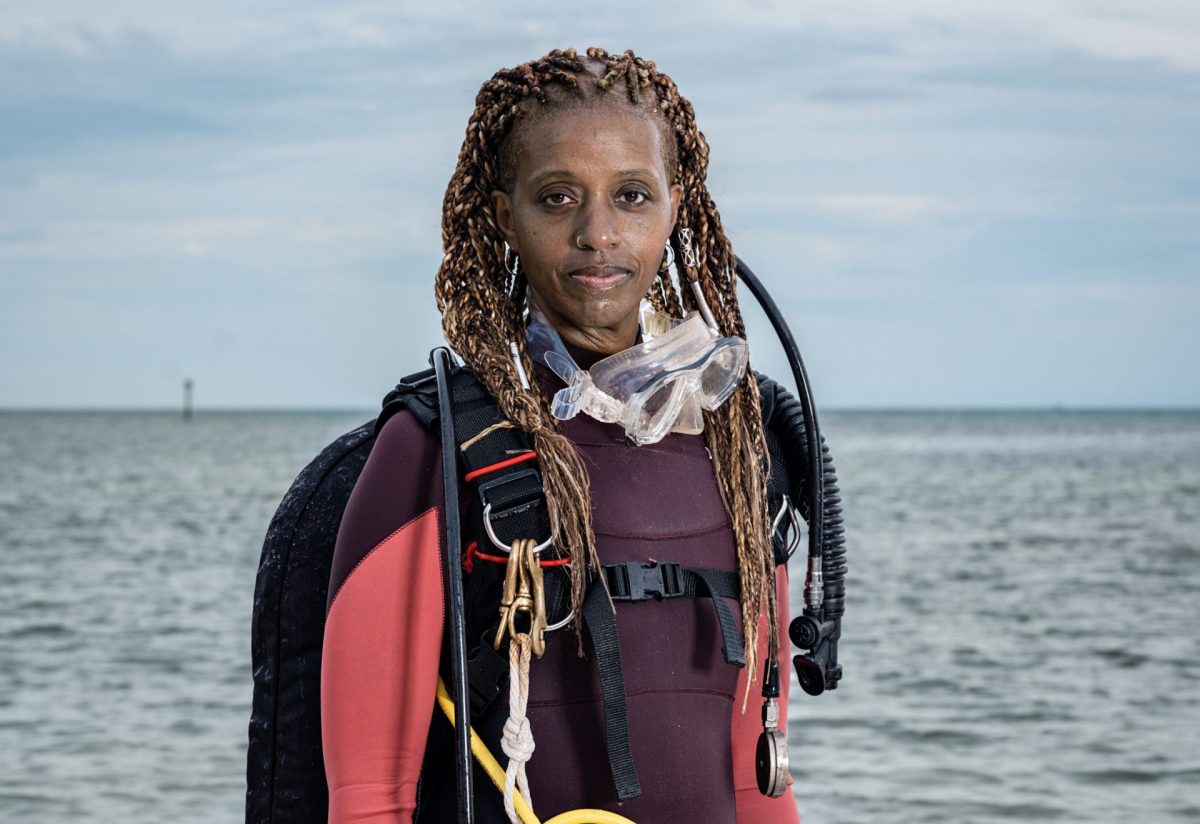
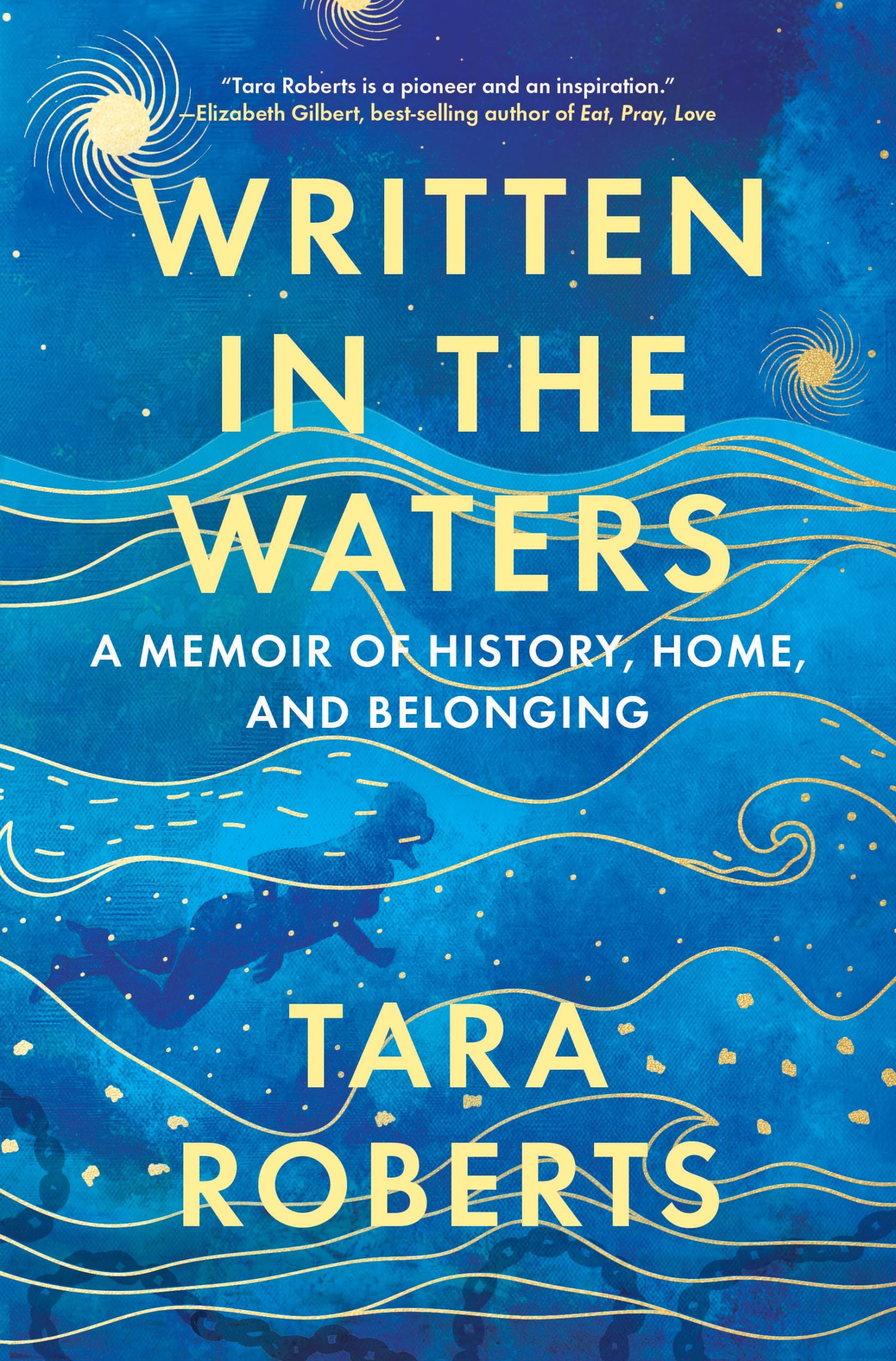
Imagine diving with and telling stories about Black scuba divers as they searched for and helped document slave shipwrecks around the world. Tara Roberts, a National Geographic Explorer-in-Residence and author of “Written in the Waters: A Memoir of History, Home, and Belonging,” was inspired to pursue the challenge after she spotted a photograph at the Smithsonian’s National Museum of African American History and Culture depicting the underwater archaeology group, Diving With a Purpose.
“I ended up on this tiny, tiny floor in the museum that I think most visitors skip because it’s more of an archival floor, but there on that floor was a picture of a group of primarily Black women in wetsuits on a boat. I’d never seen Black women in wetsuits on a boat before. I didn’t know we were in that world at all, and it really struck something inside of me,” said Roberts, recalling her trip in 2016.
She enjoyed reading books about real-life quests and adventures in her childhood, but Roberts filed thoughts of adventure away, since most of the books’ characters did not look like her.
During Roberts’ museum excursion when she lived in D.C., she felt drawn to read about the women divers who have a mission to help search for and document shipwrecks around the world. Diving With a Purpose trains young people to become archeology advocates. The organization has also trained divers, not all of whom are women, according to Roberts.
The curious museum visitor reached out to Diving With a Purpose.
“They eventually invited her to dive with them,” Roberts explained.
The special journey required Roberts to get scuba certified. She spent time with the divers and learned more about their work.. Around 2017, she did not have a clear plan but ended up quitting her job because she wanted to travel with Diving With a Purpose around the world while they embarked upon missions.
“It just felt like something I needed to do,” Roberts explained. “They were doing missions in Mozambique, in South Africa, in Senegal, Costa Rica, St. Croix, around the U.S. It’s all these places and I just wanted to be a part of it all.
Roberts said she was willing to borrow money or work at a restaurant waiting tables if she had to do it to have the flexibility she needed to participate.
Although she had storytelling roots as a journalist, Roberts had been working for a nonprofit in D.C. in communications. She spent her early career years working as an editor for women and teen magazines such as Essence and CosmoGirl.
Roberts thought of a way to help tell the stories about documented shipwrecks and slave ships while she thought of ways to finetune the details. She decided that she would share her adventures on social media, if no outlets picked up her idea for a writing assignment.
Roberts later discovered National Geographics’ storytelling grants when she was seeking opportunities to finance her participation.
“I applied a couple of times with them [National Geographic], but the second time was when they gave me a grant and that’s what started all of this,” Roberts added.
Her small grant allowed her to travel and to write some blog stories about her travels.
“And even though it was a small grant, I was like, ‘I don’t need much. I have plane tickets covered. I have backpacked before. I can make it on $10 a day. I will be fine,” Roberts added.
A National Geographic-produced and funded podcast evolved. Now, Roberts has published a book in hand about her journey. The Atlanta-based author said her literary dive started because of her blog entries.
Roberts has been formally recognized for her contributions. She became the first Black female explorer ever to be featured on the cover of National Geographic magazine. Roberts was also named the Rolex National Geographic Explorer of the Year in 2022 and a Fellow at the MIT Open Documentary Lab in 2019.
“Written in the Waters: A Memoir of History, Home, and Belonging” was published this year by National Geographic. Roberts mentioned that 1.8 million enslaved Africans died on the Middle Passage coming from Africa, going to the Americas. Her book humanizes this history, honors the ancestors, and incorporates healing.
“It’s looking for a way to know what happened in the past so that we can move through it to the other side,” said Roberts.
Learn more about Roberts and her book tour dates by visiting https://www.tararoberts.me, and https://www.tararoberts.me/written-in-the-waters to discover more about her memoir.
- Andrea Blackstone
- Andrea Blackstone
- Andrea Blackstone
- Andrea Blackstone
- Andrea Blackstone
- Andrea Blackstone
- Andrea Blackstone
- Andrea Blackstone
- Andrea Blackstone
- Andrea Blackstone
- Andrea Blackstone
- Andrea Blackstone
- Andrea Blackstone
- Andrea Blackstone
- Andrea Blackstone
- Andrea Blackstone
- Andrea Blackstone
- Andrea Blackstone
- Andrea Blackstone
- Andrea Blackstone
- Andrea Blackstone
- Andrea Blackstone
- Andrea Blackstone
- Andrea Blackstone
- Andrea Blackstone
- Andrea Blackstone
- Andrea Blackstone
- Andrea Blackstone
- Andrea Blackstone
- Andrea Blackstone
- Andrea Blackstone
- Andrea Blackstone
- Andrea Blackstone
- Andrea Blackstone
- Andrea Blackstone
- Andrea Blackstone
- Andrea Blackstone
- Andrea Blackstone
- Andrea Blackstone
- Andrea Blackstone
- Andrea Blackstone
- Andrea Blackstone
- Andrea Blackstone
- Andrea Blackstone
- Andrea Blackstone
- Andrea Blackstone
- Andrea Blackstone
- Andrea Blackstone
- Andrea Blackstone
- Andrea Blackstone
- Andrea Blackstone
- Andrea Blackstone
- Andrea Blackstone
- Andrea Blackstone
- Andrea Blackstone
- Andrea Blackstone
- Andrea Blackstone
- Andrea Blackstone
- Andrea Blackstone
- Andrea Blackstone
- Andrea Blackstone
- Andrea Blackstone
- Andrea Blackstone
- Andrea Blackstone
- Andrea Blackstone
- Andrea Blackstone
- Andrea Blackstone
- Andrea Blackstone
- Andrea Blackstone
- Andrea Blackstone
- Andrea Blackstone
- Andrea Blackstone
- Andrea Blackstone
- Andrea Blackstone
- Andrea Blackstone
- Andrea Blackstone
- Andrea Blackstone
- Andrea Blackstone
- Andrea Blackstone
- Andrea Blackstone
- Andrea Blackstone
- Andrea Blackstone
- Andrea Blackstone
- Andrea Blackstone
- Andrea Blackstone
- Andrea Blackstone
- Andrea Blackstone
- Andrea Blackstone
- Andrea Blackstone
- Andrea Blackstone
- Andrea Blackstone
- Andrea Blackstone
- Andrea Blackstone
- Andrea Blackstone
- Andrea Blackstone
- Andrea Blackstone
- Andrea Blackstone
- Andrea Blackstone
- Andrea Blackstone
- Andrea Blackstone
- Andrea Blackstone
- Andrea Blackstone
- Andrea Blackstone
- Andrea Blackstone
- Andrea Blackstone
- Andrea Blackstone
- Andrea Blackstone
- Andrea Blackstone
- Andrea Blackstone
- Andrea Blackstone
- Andrea Blackstone
- Andrea Blackstone
- Andrea Blackstone
- Andrea Blackstone
- Andrea Blackstone
- Andrea Blackstone
- Andrea Blackstone
- Andrea Blackstone
- Andrea Blackstone
- Andrea Blackstone
- Andrea Blackstone
- Andrea Blackstone
- Andrea Blackstone
- Andrea Blackstone
- Andrea Blackstone
- Andrea Blackstone
- Andrea Blackstone
- Andrea Blackstone
- Andrea Blackstone
- Andrea Blackstone
- Andrea Blackstone
- Andrea Blackstone
- Andrea Blackstone
- Andrea Blackstone
- Andrea Blackstone
- Andrea Blackstone
- Andrea Blackstone
- Andrea Blackstone
- Andrea Blackstone
- Andrea Blackstone
- Andrea Blackstone
- Andrea Blackstone
- Andrea Blackstone
- Andrea Blackstone
- Andrea Blackstone
- Andrea Blackstone
- Andrea Blackstone
- Andrea Blackstone
- Andrea Blackstone
- Andrea Blackstone
- Andrea Blackstone
- Andrea Blackstone
- Andrea Blackstone
- Andrea Blackstone
- Andrea Blackstone
- Andrea Blackstone
- Andrea Blackstone
- Andrea Blackstone
- Andrea Blackstone
- Andrea Blackstone
- Andrea Blackstone
- Andrea Blackstone
- Andrea Blackstone
- Andrea Blackstone
- Andrea Blackstone
- Andrea Blackstone
- Andrea Blackstone
- Andrea Blackstone
- Andrea Blackstone
- Andrea Blackstone
- Andrea Blackstone
- Andrea Blackstone
- Andrea Blackstone
- Andrea Blackstone
- Andrea Blackstone
- Andrea Blackstone
- Andrea Blackstone
- Andrea Blackstone
- Andrea Blackstone
- Andrea Blackstone
- Andrea Blackstone
- Andrea Blackstone
- Andrea Blackstone
- Andrea Blackstone
- Andrea Blackstone
- Andrea Blackstone
- Andrea Blackstone
- Andrea Blackstone
- Andrea Blackstone
- Andrea Blackstone
- Andrea Blackstone
- Andrea Blackstone
- Andrea Blackstone
- Andrea Blackstone
- Andrea Blackstone
- Andrea Blackstone
- Andrea Blackstone
- Andrea Blackstone
- Andrea Blackstone
- Andrea Blackstone
- Andrea Blackstone
- Andrea Blackstone
- Andrea Blackstone
- Andrea Blackstone
- Andrea Blackstone
- Andrea Blackstone
- Andrea Blackstone
- Andrea Blackstone
- Andrea Blackstone
- Andrea Blackstone
- Andrea Blackstone
- Andrea Blackstone
- Andrea Blackstone
- Andrea Blackstone
- Andrea Blackstone
- Andrea Blackstone
- Andrea Blackstone
- Andrea Blackstone
- Andrea Blackstone
- Andrea Blackstone
- Andrea Blackstone
- Andrea Blackstone
- Andrea Blackstone
- Andrea Blackstone
- Andrea Blackstone
- Andrea Blackstone
- Andrea Blackstone
- Andrea Blackstone
- Andrea Blackstone
- Andrea Blackstone
- Andrea Blackstone
- Andrea Blackstone
- Andrea Blackstone
- Andrea Blackstone
- Andrea Blackstone
- Andrea Blackstone
- Andrea Blackstone
- Andrea Blackstone
- Andrea Blackstone
- Andrea Blackstone
- Andrea Blackstone
- Andrea Blackstone
- Andrea Blackstone
- Andrea Blackstone
- Andrea Blackstone
- Andrea Blackstone
- Andrea Blackstone
- Andrea Blackstone
- Andrea Blackstone
- Andrea Blackstone
- Andrea Blackstone
- Andrea Blackstone
- Andrea Blackstone
- Andrea Blackstone
- Andrea Blackstone
- Andrea Blackstone
- Andrea Blackstone
- Andrea Blackstone
- Andrea Blackstone
- Andrea Blackstone
- Andrea Blackstone
- Andrea Blackstone
- Andrea Blackstone
- Andrea Blackstone
- Andrea Blackstone
- Andrea Blackstone
- Andrea Blackstone
- Andrea Blackstone
- Andrea Blackstone
- Andrea Blackstone
- Andrea Blackstone
- Andrea Blackstone
- Andrea Blackstone
- Andrea Blackstone
- Andrea Blackstone
- Andrea Blackstone
- Andrea Blackstone
- Andrea Blackstone
I Really think this is an Amazing Story I’m Looking Forward to purchasing this Book & Reading about Tara’s Journey & Reconnecting with Our Ancestors as well.
Awsome And Amazing