
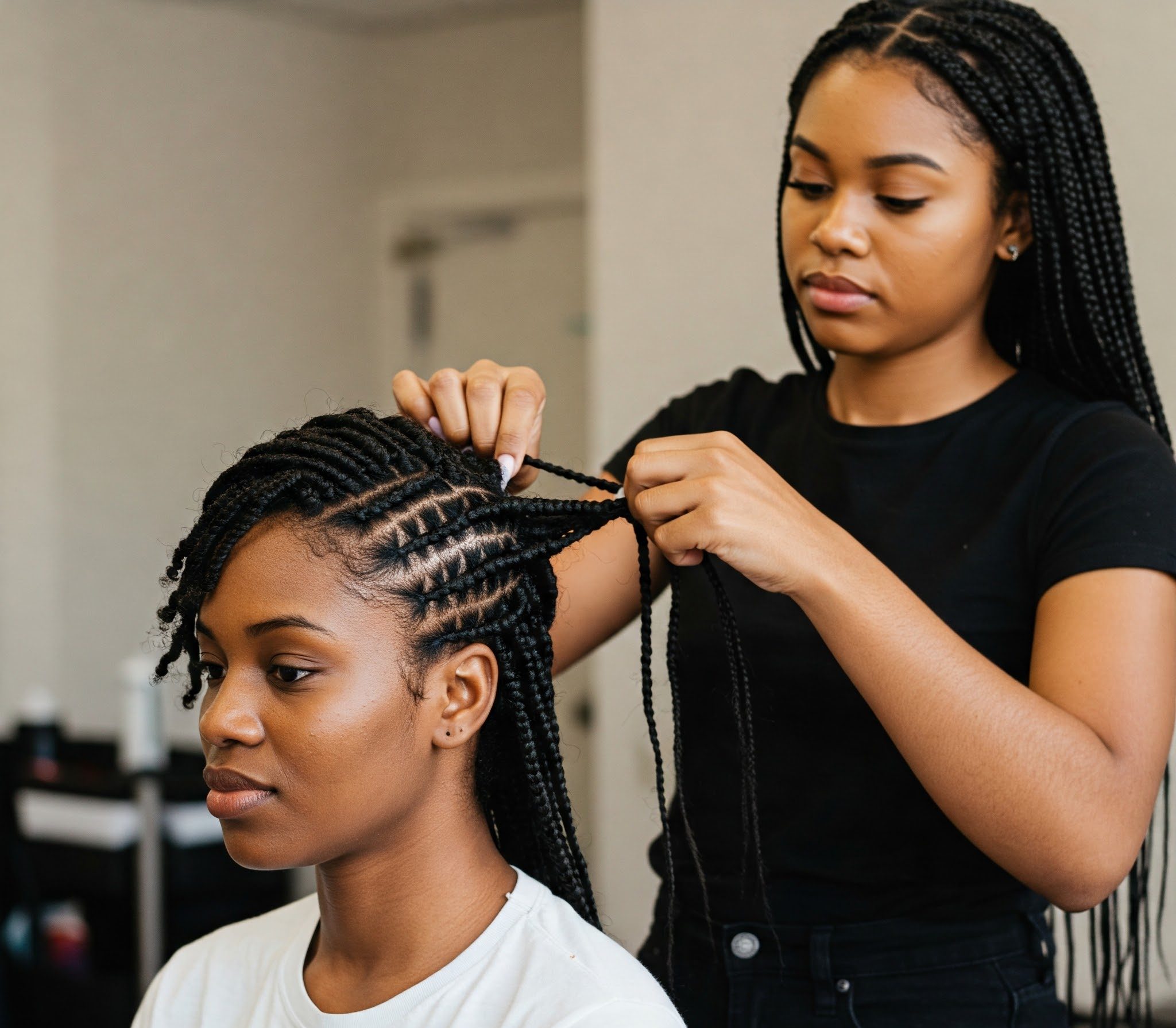
Braided hairstyles offer convenience for mostly African American girls and women who add human hair or synthetic fiber extensions to their hair. Consumer Reports (CR) has formally called into question the safety of braiding hair.
However, an ambitious medical student named Chrystal G. Thomas first wrote a paper that was published called “Carcinogenic materials in synthetic braids: an unrecognized risk of hair products for Black women” in 2023 https://www.sciencedirect.com/science/article/pii/S2667193X23000911, thereby igniting an important inquiry.
On her LinkedIn account, Thomas once mentioned that “Synthetic braid ingredients, despite synthetic braids being popular among Black women, have not yet been focused on. I’m hoping my commentary will inspire more research in this area to define the current extent of risk and ultimately lead to more positive health outcomes.”
Her paper further mentioned that “extensions are typically worn for at least 4–6 weeks, with continuous exposure to carcinogenic ingredients for those who subsequently reinstall their braids throughout the year.”
Thomas further posed that “lack of governmental regulation has resulted in the exposure of Black women to toxins in these readily accessible and popular synthetic extensions.”
Consumer Reports, which provides trusted advice and reporting, revisited Thomas’ concerns. CR reportedly sent 10 of the most popular synthetic braiding hair products on the market from brands such as Sensationnel, Magic Fingers, Sassy Collection, Shake-N-Go, Hbegant, Debut and Darling to a lab.
Dangerous chemicals were detected in 100 percent of the braiding hair that Consumer Reports tested https://www.consumerreports.org/health/wigs-hair-extensions/dangerous-chemicals-detected-in-braiding-hair-cr-tested-a4850978424/, according to findings that were published in an article written by Leigh-Ann Jackson on February 27, 2025.
Jackson further mentioned that two years ago, Thomas was a student at the Albert Einstein College of Medicine and the City University of New York who “’went to a professional stylist to have braids done using what she recalls was the popular synthetic hair brand Kanekalon.”
Jackson reported that Thomas said that she could not sleep well, her throat felt irritated, and she had trouble focusing on any type of work due to the smell that would not leave even after her hair was washed many times. In response, she removed her braids early, then she proceeded to research possible health issues tied to braiding hair as part of her public health coursework.
Consumer Reports set out to uncover answers about the safety of synthetic hair while proposing that it may be made “from a copolymer of modacrylic and vinyl chloride and can include other chemicals with known links to adverse health effects.”
James E. Rogers, PhD, director and head of product safety testing, along with his team, CR scientists conducted testing of 10 popular synthetic braiding hair products in 2024.
Primary findings cited by Consumer Reports stated that:
• Carcinogens, or chemicals that may cause cancer, were detected in 100 percent of the samples.
• Lead was detected in nine of 10 products.
• Other VOCs, including acetone, were detected in all products.
A list of known, probable, and possible carcinogens that were detected in the brands ranged from Sensationnel Ruwa 3X Pre-Stretched Kids Braid 12”; Shake-N-Go Organique Mastermix Water Curl Weave, 30”; and Sassy Collection 100% Kanekalon Jumbo Braid to Debut Wavy Hair Weave, 20.”
Full results were provided along with “Known, Probable, and Possible Carcinogens Detected” notations. See https://article.images.consumerreports.org/image/upload/v1740508146/prod/content/dam/CRO-Images-2025/Misc/Consumer-Reports-Test-Results-Synthetic-Braiding-Hair.pdf to read the report.
Jackson pointed out that VOCs in synthetic braiding hair were tested since braids are commonly flat ironed, sealed with heat from a lighter, or dipped in hot water near the end of a hair-braiding service.
According to Rogers, “Every sample tested had detectable levels of at least six VOCs. The highest number detected in any of the samples was 14.”
Additionally, “ the higher the total number of VOCs in a product, the higher the likelihood of a negative impact on the health of the user,” Rogers also said.
Thomas thanked CR for following up on her commentary by testing several synthetic braiding extension products.
“Harmful materials were found in all the products they tested. This work is so important because it can ultimately help protect consumers and push for safer materials to appear on the market, as well as is an opportunity to push for more protective regulation for our cosmetic products,” Thomas shared on her LinkedIn account https://www.linkedin.com/feed/update/urn:li:activity:7301254599015841793.
CR’s investigation raises concerns about the need for safer hair products that are marketed to African American women. A petition calling on the FDA to ensure the safety of synthetic braiding hair products is underway.
“Without any rules in place, companies are left to police themselves, and consumers likely have no idea about the potential health harms they’re being exposed to,” CR’s petition stated.Visit https://action.consumerreports.org/cro-20250227-fdabraidinghairpetition to obtain more information.
- Andrea Blackstone
- Andrea Blackstone
- Andrea Blackstone
- Andrea Blackstone
- Andrea Blackstone
- Andrea Blackstone
- Andrea Blackstone
- Andrea Blackstone
- Andrea Blackstone
- Andrea Blackstone
- Andrea Blackstone
- Andrea Blackstone
- Andrea Blackstone
- Andrea Blackstone
- Andrea Blackstone
- Andrea Blackstone
- Andrea Blackstone
- Andrea Blackstone
- Andrea Blackstone
- Andrea Blackstone
- Andrea Blackstone
- Andrea Blackstone
- Andrea Blackstone
- Andrea Blackstone
- Andrea Blackstone
- Andrea Blackstone
- Andrea Blackstone
- Andrea Blackstone
- Andrea Blackstone
- Andrea Blackstone
- Andrea Blackstone
- Andrea Blackstone
- Andrea Blackstone
- Andrea Blackstone
- Andrea Blackstone
- Andrea Blackstone
- Andrea Blackstone
- Andrea Blackstone
- Andrea Blackstone
- Andrea Blackstone
- Andrea Blackstone
- Andrea Blackstone
- Andrea Blackstone
- Andrea Blackstone
- Andrea Blackstone
- Andrea Blackstone
- Andrea Blackstone
- Andrea Blackstone
- Andrea Blackstone
- Andrea Blackstone
- Andrea Blackstone
- Andrea Blackstone
- Andrea Blackstone
- Andrea Blackstone
- Andrea Blackstone
- Andrea Blackstone
- Andrea Blackstone
- Andrea Blackstone
- Andrea Blackstone
- Andrea Blackstone
- Andrea Blackstone
- Andrea Blackstone
- Andrea Blackstone
- Andrea Blackstone
- Andrea Blackstone
- Andrea Blackstone
- Andrea Blackstone
- Andrea Blackstone
- Andrea Blackstone
- Andrea Blackstone
- Andrea Blackstone
- Andrea Blackstone
- Andrea Blackstone
- Andrea Blackstone
- Andrea Blackstone
- Andrea Blackstone
- Andrea Blackstone
- Andrea Blackstone
- Andrea Blackstone
- Andrea Blackstone
- Andrea Blackstone
- Andrea Blackstone
- Andrea Blackstone
- Andrea Blackstone
- Andrea Blackstone
- Andrea Blackstone
- Andrea Blackstone
- Andrea Blackstone
- Andrea Blackstone
- Andrea Blackstone
- Andrea Blackstone
- Andrea Blackstone
- Andrea Blackstone
- Andrea Blackstone
- Andrea Blackstone
- Andrea Blackstone
- Andrea Blackstone
- Andrea Blackstone
- Andrea Blackstone
- Andrea Blackstone
- Andrea Blackstone
- Andrea Blackstone
- Andrea Blackstone
- Andrea Blackstone
- Andrea Blackstone
- Andrea Blackstone
- Andrea Blackstone
- Andrea Blackstone
- Andrea Blackstone
- Andrea Blackstone
- Andrea Blackstone
- Andrea Blackstone
- Andrea Blackstone
- Andrea Blackstone
- Andrea Blackstone
- Andrea Blackstone
- Andrea Blackstone
- Andrea Blackstone
- Andrea Blackstone
- Andrea Blackstone
- Andrea Blackstone
- Andrea Blackstone
- Andrea Blackstone
- Andrea Blackstone
- Andrea Blackstone
- Andrea Blackstone
- Andrea Blackstone
- Andrea Blackstone
- Andrea Blackstone
- Andrea Blackstone
- Andrea Blackstone
- Andrea Blackstone
- Andrea Blackstone
- Andrea Blackstone
- Andrea Blackstone
- Andrea Blackstone
- Andrea Blackstone
- Andrea Blackstone
- Andrea Blackstone
- Andrea Blackstone
- Andrea Blackstone
- Andrea Blackstone
- Andrea Blackstone
- Andrea Blackstone
- Andrea Blackstone
- Andrea Blackstone
- Andrea Blackstone
- Andrea Blackstone
- Andrea Blackstone
- Andrea Blackstone
- Andrea Blackstone
- Andrea Blackstone
- Andrea Blackstone
- Andrea Blackstone
- Andrea Blackstone
- Andrea Blackstone
- Andrea Blackstone
- Andrea Blackstone
- Andrea Blackstone
- Andrea Blackstone
- Andrea Blackstone
- Andrea Blackstone
- Andrea Blackstone
- Andrea Blackstone
- Andrea Blackstone
- Andrea Blackstone
- Andrea Blackstone
- Andrea Blackstone
- Andrea Blackstone
- Andrea Blackstone
- Andrea Blackstone
- Andrea Blackstone
- Andrea Blackstone
- Andrea Blackstone
- Andrea Blackstone
- Andrea Blackstone
- Andrea Blackstone
- Andrea Blackstone
- Andrea Blackstone
- Andrea Blackstone
- Andrea Blackstone
- Andrea Blackstone
- Andrea Blackstone
- Andrea Blackstone
- Andrea Blackstone
- Andrea Blackstone
- Andrea Blackstone
- Andrea Blackstone
- Andrea Blackstone
- Andrea Blackstone
- Andrea Blackstone
- Andrea Blackstone
- Andrea Blackstone
- Andrea Blackstone
- Andrea Blackstone
- Andrea Blackstone
- Andrea Blackstone
- Andrea Blackstone
- Andrea Blackstone
- Andrea Blackstone
- Andrea Blackstone
- Andrea Blackstone
- Andrea Blackstone
- Andrea Blackstone
- Andrea Blackstone
- Andrea Blackstone
- Andrea Blackstone
- Andrea Blackstone
- Andrea Blackstone
- Andrea Blackstone
- Andrea Blackstone
- Andrea Blackstone
- Andrea Blackstone
- Andrea Blackstone
- Andrea Blackstone
- Andrea Blackstone
- Andrea Blackstone
- Andrea Blackstone
- Andrea Blackstone
- Andrea Blackstone
- Andrea Blackstone
- Andrea Blackstone
- Andrea Blackstone
- Andrea Blackstone
- Andrea Blackstone
- Andrea Blackstone
- Andrea Blackstone
- Andrea Blackstone
- Andrea Blackstone
- Andrea Blackstone
- Andrea Blackstone
- Andrea Blackstone
- Andrea Blackstone
- Andrea Blackstone
- Andrea Blackstone
- Andrea Blackstone
- Andrea Blackstone
- Andrea Blackstone
- Andrea Blackstone
- Andrea Blackstone
- Andrea Blackstone
- Andrea Blackstone
- Andrea Blackstone
- Andrea Blackstone
- Andrea Blackstone
- Andrea Blackstone
- Andrea Blackstone
- Andrea Blackstone
- Andrea Blackstone
- Andrea Blackstone
- Andrea Blackstone
- Andrea Blackstone
- Andrea Blackstone
- Andrea Blackstone
- Andrea Blackstone
- Andrea Blackstone
- Andrea Blackstone
- Andrea Blackstone
- Andrea Blackstone
- Andrea Blackstone
- Andrea Blackstone
- Andrea Blackstone
- Andrea Blackstone
- Andrea Blackstone
- Andrea Blackstone
- Andrea Blackstone
- Andrea Blackstone
- Andrea Blackstone
- Andrea Blackstone
- Andrea Blackstone
- Andrea Blackstone
- Andrea Blackstone
- Andrea Blackstone
- Andrea Blackstone
- Andrea Blackstone
- Andrea Blackstone
It is important that this information continues to reach the community, for personal health and our collective wellbeing!