

High food prices; the government shutdown; employment cutbacks; and the upcoming November 1, 2025, interruption of SNAP benefits are some of many reasons the food insecurity gap is narrowing in the United States.
Although food banks and pantries have faced funding cuts in 2025 to reduce federal spending, more Americans are turning to them during tough times. Arriving at sites early can be key since the demand for food has skyrocketed. Unfortunately, the demand can be higher than supplies allow after lines form.
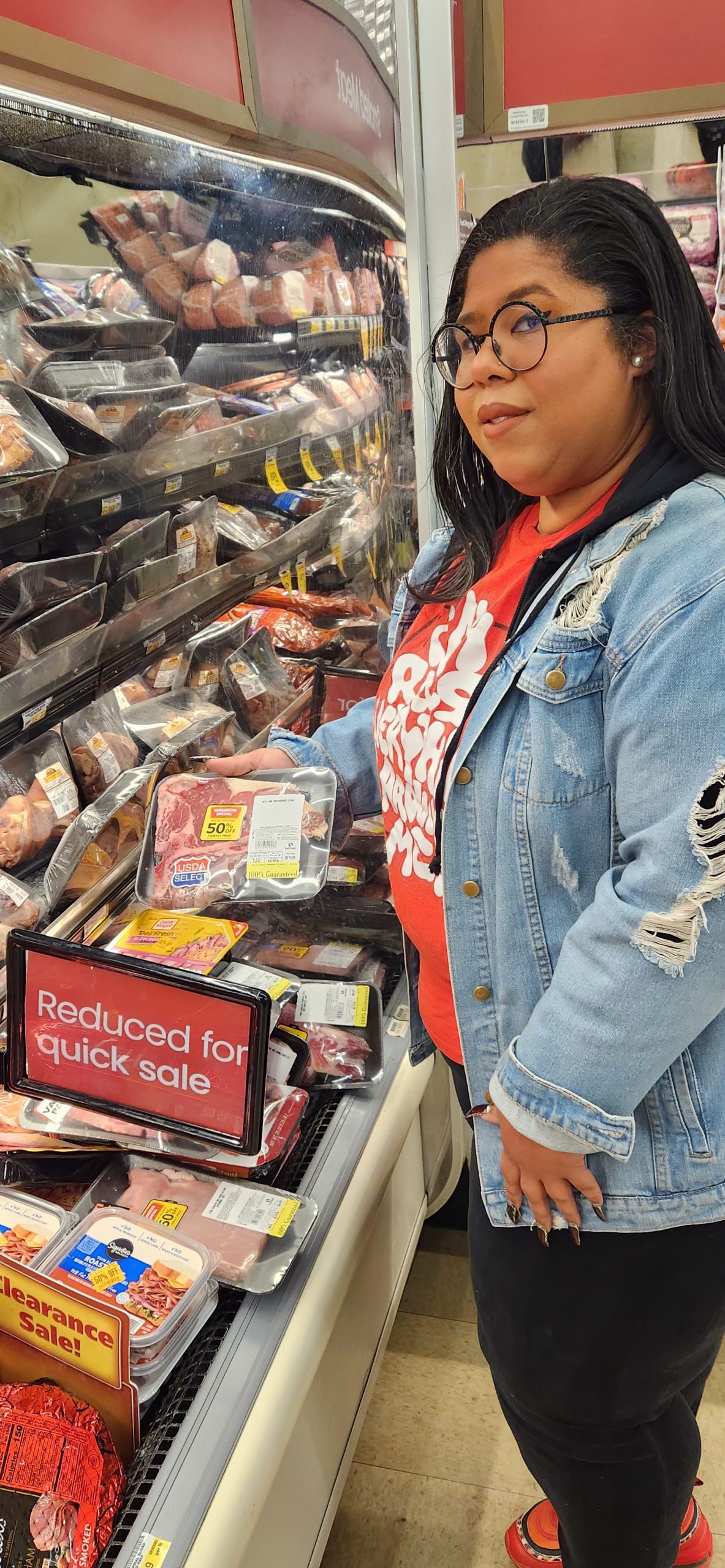
Photo credit: Dominic McDonald
Social media has become a resource to exchange information and spread the word about food bank locations, pantries, and ideas to stretch meals.
Melanie Cunningham, an Arlington, Virginia resident, has been employed as a federal government contractor.
“I was recently RIF’ed [affected by a Reduction in Force], due to DOGE [Department of Government Efficiency] cuts,” she stated.
Cunningham, who enjoys cooking, baking, foraging for edible and medicinal plants and herbs, and reading and writing, has had more time to notice trends in grocery stores. The regular shopper at establishments such as Safeway, Harris Teeter, Wegmans, and Whole Foods has noticed 50% off sale stickers on meat, something that she did not recall from previous years.
“Note that the meat is likely approaching its expiration date in the store, so, for food safety, it is best to cook it within one to two days or freeze it immediately,” Cunningham said.
Try to find out when meat department associates usually mark them down. Many stores reduce meat prices early in the morning, or at a time in the week when they make room for new inventory. Pay attention to how the meat looks and smells before you purchase it.
Locate a clearance rack with shelf items such as canned goods or other merchandise. Remember that cans should be in good shape to ensure that the contents should be safe to eat.
“NEVER USE food from cans that are leaking, bulging, or badly dented; cracked jars or jars with loose or bulging lids; canned food with a foul odor; or any container that spurts liquid when opening. Such cans could contain Clostridium botulinum,” the USDA noted (https://ask.usda.gov/s/article/Is-food-in-damaged-cans-dangerous).
Pay attention to the sodium content and other additives in canned food. Compare frozen options or items such as dry beans. You can control what is added to your meals. Reading labels can be especially beneficial for people with high blood pressure, diabetes and other health conditions. Dry beans are high in fiber and affordable meal fillers.
“During this time, people need to get back to basics by adapting their food preferences and pantries, finding value in meals that stretch. For many, that means looking to the meals of their ancestors or to those of other cultures. Start by centering the meal around plants and healthy starches to stretch it, incorporating beans and rice (a complete protein source), soups and stews, pastas, and one-pot meals. Shifting from processed foods when it makes sense, is convenient, and is cost-efficient to whole and minimally processed foods—a few small switches, such as buying frozen vegetables instead of fresh or canned. Fresh vegetables have a shorter shelf life, and canned vegetables are higher in sodium and preservatives,” Cunningham added.
Avoid impulse purchases by making a shopping list before going to the store. Do not forget to grab a flyer near the front door to find out if anything that you need is on sale. Coupon apps and mailers can help you to stretch your budget, too. Know what produce is advisable to buy organic. The Environmental Working Group’s (EWG) Dirty Dozen https://www.ewg.org/foodnews/dirty-dozen.php includes an analysis of 12 fruits and vegetables that were most contaminated with pesticides.
“Ranking the produce with the most and least pesticide residues, EWG’s Shopper’s Guide to Pesticides in Produce™ helps consumers know more about what they buy and eat,” EWG reported.
Leftovers can be transformed into delicious, nourishing soups as the weather cools down. Consult food blogs, and websites such as https://myreliablerecipes.com/soup-leftovers-into-magic to jumpstart creative soup options.
Cunningham mentioned that a co-op-like grocery shopping model at wholesale stores such as Costco, BJ’s Wholesale Club and Sam’s Club, allows shoppers to shop in bulk with a group. Food can be divided along with the cost of purchased items. This cost-saving strategy saves refrigerator space and reduces the risk of wasted food.
“During this time, I think it is essential for us to exercise adaptability, resilience, and creativity to sustain ourselves and our families,” she said.
- Andrea Blackstone
- Andrea Blackstone
- Andrea Blackstone
- Andrea Blackstone
- Andrea Blackstone
- Andrea Blackstone
- Andrea Blackstone
- Andrea Blackstone
- Andrea Blackstone
- Andrea Blackstone
- Andrea Blackstone
- Andrea Blackstone
- Andrea Blackstone
- Andrea Blackstone
- Andrea Blackstone
- Andrea Blackstone
- Andrea Blackstone
- Andrea Blackstone
- Andrea Blackstone
- Andrea Blackstone
- Andrea Blackstone
- Andrea Blackstone
- Andrea Blackstone
- Andrea Blackstone
- Andrea Blackstone
- Andrea Blackstone
- Andrea Blackstone
- Andrea Blackstone
- Andrea Blackstone
- Andrea Blackstone
- Andrea Blackstone
- Andrea Blackstone
- Andrea Blackstone
- Andrea Blackstone
- Andrea Blackstone
- Andrea Blackstone
- Andrea Blackstone
- Andrea Blackstone
- Andrea Blackstone
- Andrea Blackstone
- Andrea Blackstone
- Andrea Blackstone
- Andrea Blackstone
- Andrea Blackstone
- Andrea Blackstone
- Andrea Blackstone
- Andrea Blackstone
- Andrea Blackstone
- Andrea Blackstone
- Andrea Blackstone
- Andrea Blackstone
- Andrea Blackstone
- Andrea Blackstone
- Andrea Blackstone
- Andrea Blackstone
- Andrea Blackstone
- Andrea Blackstone
- Andrea Blackstone
- Andrea Blackstone
- Andrea Blackstone
- Andrea Blackstone
- Andrea Blackstone
- Andrea Blackstone
- Andrea Blackstone
- Andrea Blackstone
- Andrea Blackstone
- Andrea Blackstone
- Andrea Blackstone
- Andrea Blackstone
- Andrea Blackstone
- Andrea Blackstone
- Andrea Blackstone
- Andrea Blackstone
- Andrea Blackstone
- Andrea Blackstone
- Andrea Blackstone
- Andrea Blackstone
- Andrea Blackstone
- Andrea Blackstone
- Andrea Blackstone
- Andrea Blackstone
- Andrea Blackstone
- Andrea Blackstone
- Andrea Blackstone
- Andrea Blackstone
- Andrea Blackstone
- Andrea Blackstone
- Andrea Blackstone
- Andrea Blackstone
- Andrea Blackstone
- Andrea Blackstone
- Andrea Blackstone
- Andrea Blackstone
- Andrea Blackstone
- Andrea Blackstone
- Andrea Blackstone
- Andrea Blackstone
- Andrea Blackstone
- Andrea Blackstone
- Andrea Blackstone
- Andrea Blackstone
- Andrea Blackstone
- Andrea Blackstone
- Andrea Blackstone
- Andrea Blackstone
- Andrea Blackstone
- Andrea Blackstone
- Andrea Blackstone
- Andrea Blackstone
- Andrea Blackstone
- Andrea Blackstone
- Andrea Blackstone
- Andrea Blackstone
- Andrea Blackstone
- Andrea Blackstone
- Andrea Blackstone
- Andrea Blackstone
- Andrea Blackstone
- Andrea Blackstone
- Andrea Blackstone
- Andrea Blackstone
- Andrea Blackstone
- Andrea Blackstone
- Andrea Blackstone
- Andrea Blackstone
- Andrea Blackstone
- Andrea Blackstone
- Andrea Blackstone
- Andrea Blackstone
- Andrea Blackstone
- Andrea Blackstone
- Andrea Blackstone
- Andrea Blackstone
- Andrea Blackstone
- Andrea Blackstone
- Andrea Blackstone
- Andrea Blackstone
- Andrea Blackstone
- Andrea Blackstone
- Andrea Blackstone
- Andrea Blackstone
- Andrea Blackstone
- Andrea Blackstone
- Andrea Blackstone
- Andrea Blackstone
- Andrea Blackstone
- Andrea Blackstone
- Andrea Blackstone
- Andrea Blackstone
- Andrea Blackstone
- Andrea Blackstone
- Andrea Blackstone
- Andrea Blackstone
- Andrea Blackstone
- Andrea Blackstone
- Andrea Blackstone
- Andrea Blackstone
- Andrea Blackstone
- Andrea Blackstone
- Andrea Blackstone
- Andrea Blackstone
- Andrea Blackstone
- Andrea Blackstone
- Andrea Blackstone
- Andrea Blackstone
- Andrea Blackstone
- Andrea Blackstone
- Andrea Blackstone
- Andrea Blackstone
- Andrea Blackstone
- Andrea Blackstone
- Andrea Blackstone
- Andrea Blackstone
- Andrea Blackstone
- Andrea Blackstone
- Andrea Blackstone
- Andrea Blackstone
- Andrea Blackstone
- Andrea Blackstone
- Andrea Blackstone
- Andrea Blackstone
- Andrea Blackstone
- Andrea Blackstone
- Andrea Blackstone
- Andrea Blackstone
- Andrea Blackstone
- Andrea Blackstone
- Andrea Blackstone
- Andrea Blackstone
- Andrea Blackstone
- Andrea Blackstone
- Andrea Blackstone
- Andrea Blackstone
- Andrea Blackstone
- Andrea Blackstone
- Andrea Blackstone
- Andrea Blackstone
- Andrea Blackstone
- Andrea Blackstone
- Andrea Blackstone
- Andrea Blackstone
- Andrea Blackstone
- Andrea Blackstone
- Andrea Blackstone
- Andrea Blackstone
- Andrea Blackstone
- Andrea Blackstone
- Andrea Blackstone
- Andrea Blackstone
- Andrea Blackstone
- Andrea Blackstone
- Andrea Blackstone
- Andrea Blackstone
- Andrea Blackstone
- Andrea Blackstone
- Andrea Blackstone
- Andrea Blackstone
- Andrea Blackstone
- Andrea Blackstone
- Andrea Blackstone
- Andrea Blackstone
- Andrea Blackstone
- Andrea Blackstone
- Andrea Blackstone
- Andrea Blackstone
- Andrea Blackstone
- Andrea Blackstone
- Andrea Blackstone
- Andrea Blackstone
- Andrea Blackstone
- Andrea Blackstone
- Andrea Blackstone
- Andrea Blackstone
- Andrea Blackstone
- Andrea Blackstone
- Andrea Blackstone
- Andrea Blackstone
- Andrea Blackstone
- Andrea Blackstone
- Andrea Blackstone
- Andrea Blackstone
- Andrea Blackstone
- Andrea Blackstone
- Andrea Blackstone
- Andrea Blackstone
- Andrea Blackstone
- Andrea Blackstone
- Andrea Blackstone
- Andrea Blackstone
- Andrea Blackstone
- Andrea Blackstone
- Andrea Blackstone
- Andrea Blackstone
- Andrea Blackstone
- Andrea Blackstone
- Andrea Blackstone
- Andrea Blackstone
- Andrea Blackstone
- Andrea Blackstone
- Andrea Blackstone
- Andrea Blackstone
- Andrea Blackstone
- Andrea Blackstone
- Andrea Blackstone
- Andrea Blackstone
- Andrea Blackstone
- Andrea Blackstone
- Andrea Blackstone
- Andrea Blackstone
- Andrea Blackstone
- Andrea Blackstone
- Andrea Blackstone
- Andrea Blackstone
- Andrea Blackstone
- Andrea Blackstone
- Andrea Blackstone
- Andrea Blackstone
- Andrea Blackstone
This is best friend. I love her