

Western medicine utilizes evidence-based practices that have been scientifically proven through research and clinical trials to treat various illnesses and diseases. However, the use of herbal remedies, spiritual cleansings, and plant-based options is gaining recognition beyond rural communities in the Caribbean for individuals who choose to supplement their care with alternative health solutions.
Ethnobotany and Land Stewardship
Aleya Fraser, a land steward, ethnobotanist, and author with Caribbean roots who graduated from the University of Maryland, College Park in 2010, originally hails from Baltimore County. She possesses a strong interest in herbal knowledge and gaining ancestral wisdom through communing with elders. Although her father moved to the United States as a teenager, Fraser spent summers visiting his mother (Anastasia May Fraser) in Trinidad when she was growing up. She began spending more time there in 2017, and then officially relocated in 2020.
“I was visiting in March 2020, and the borders closed due to COVID, so I ended up staying and putting down more roots. I was inspired to move back due to my connection to the land, my family, and my desire to farm there and learn more about traditional medicine,” Aleya explained.
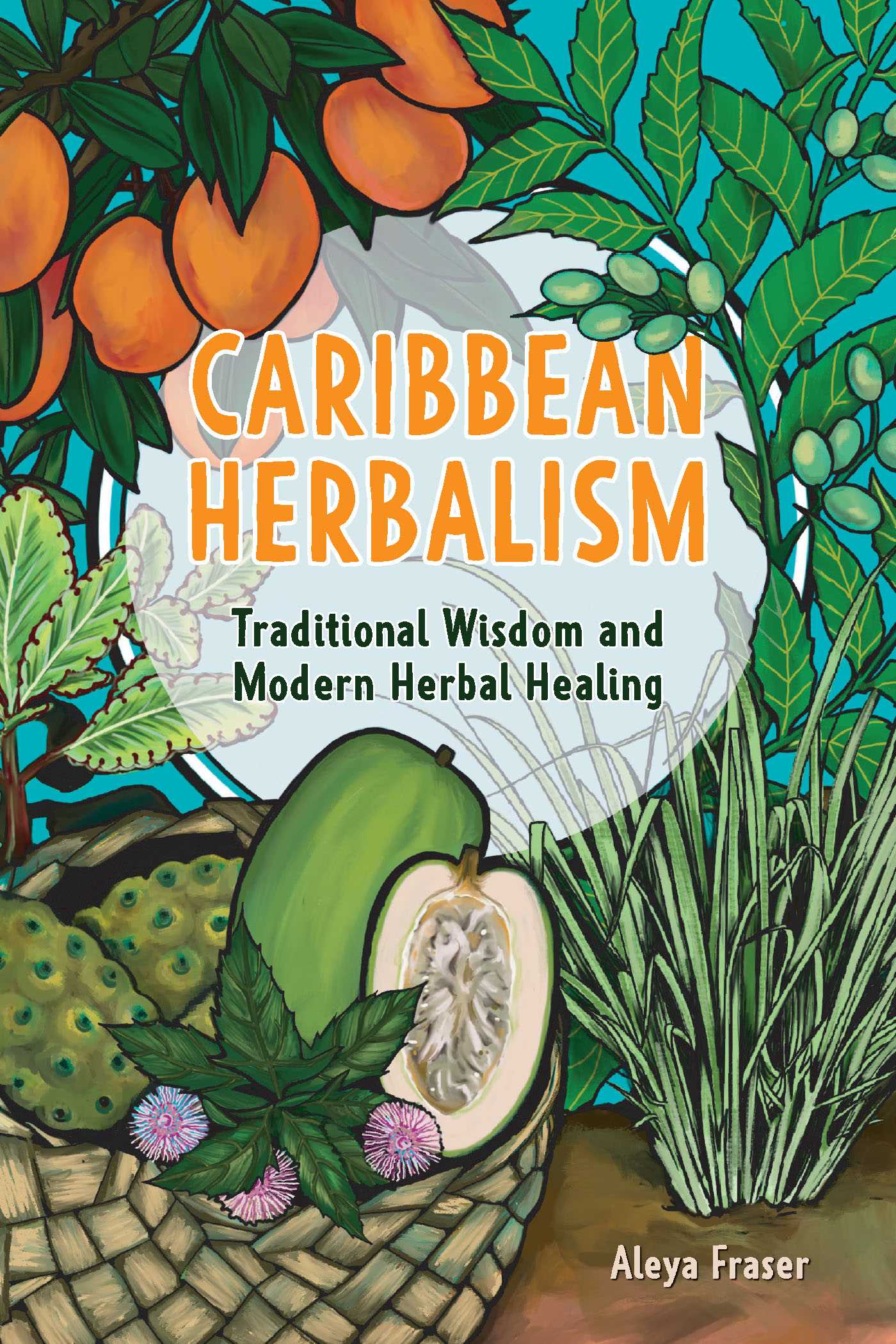
The ethnobotanist—someone who studies the relationship between people and plants, particularly how different cultures utilize plants for medicine, food, rituals, shelter, and other purposes—evolved into the author of “Caribbean Herbalism: Traditional Knowledge and Modern Herbal Healing.”
“I consider myself a cultural plant detective who learns from traditional knowledge keepers and helps protect and share that wisdom,” she added.
Ancestral Wisdom and Healing Traditions
Aleya remarked that her 96-year-old grandmother has been subtly teaching her about herbal knowledge since she was five years old. During visits, the elder Fraser provided drinks such as turmeric tea, and she turned to remedies to soothe bug bites such as aloe vera.
“Whenever I asked her what a plant was, she would tell me the name and also what it was used for traditionally,” Aleya recalled.

Photo courtesy of Aleya Fraser
Aleya became acutely interested in ethnobotany and land stewardship in 2014, when she began farming organic vegetables and advocating for the use of food as medicine.
“This passion transferred to the plants that I did not intentionally plant on the farm, which many would call weeds. Once learning the common uses of the ‘weeds’ on the farm, like dandelion and purslane and lamb’s quarters, I became hooked on learning and researching the uses of plants in my ecosystem,” said Aleya.
The author was motivated to write “Caribbean Herbalism: Traditional Wisdom and Modern Herbal Healing” to share the knowledge she had acquired over the past decade.
“I wanted this information to be more accessible to people in the Caribbean and abroad to inspire them to connect with plants and healing traditions,” she added.
Aleya further stated that a chapter of her book is devoted to how to make herbal remedies that include bush teas (herbal teas made from steeping plant material in hot water) and bush baths (an herbal bath where you sit in a tub with herbs or make a strong tea and pour into your bath water so that your skin can absorb the medicinal compounds extracted from the plants). Remember to consult your medical provider before beginning any herbal regimen.
Three practical tips for growing an herbal garden
Creating your own herbal garden can help you to embrace health-conscious eating habits. Aleya mentioned that if the native soil is poor or space is tight, containers are your best friend. You can use pots, recycled buckets, wooden crates, or grow bags to get started. Fill them with a mix of compost, potting soil, and coconut coir or perlite for drainage, and grow herbs like basil, thyme, mint, rosemary, or chives, which thrive in containers.
“Herbs love sun, so you should place containers in the sunniest spot (rooftops, balconies, window ledges), build or buy vertical planters, hanging baskets, or wall-mounted shelves and choose herbs that don’t need deep roots like oregano, parsley, and cilantro,” Aleya advised.
If you are stuck with nutrient-poor soil, try “do it yourself” composting or liquid plant feeds.
“You can make a small vermicompost bin (worm compost) or bury kitchen scraps like banana peels, eggshells, or vegetable peels near your plants. You can also create a simple compost tea by soaking compost or food scraps in water for a few days, then use it to water your herbs,” Aleya stated.
Visit www.caribbeanherbalism.com to learn more about Aleya Fraser and “Caribbean Herbalism: Traditional Knowledge and Modern Healing.”
- Andrea Blackstone
- Andrea Blackstone
- Andrea Blackstone
- Andrea Blackstone
- Andrea Blackstone
- Andrea Blackstone
- Andrea Blackstone
- Andrea Blackstone
- Andrea Blackstone
- Andrea Blackstone
- Andrea Blackstone
- Andrea Blackstone
- Andrea Blackstone
- Andrea Blackstone
- Andrea Blackstone
- Andrea Blackstone
- Andrea Blackstone
- Andrea Blackstone
- Andrea Blackstone
- Andrea Blackstone
- Andrea Blackstone
- Andrea Blackstone
- Andrea Blackstone
- Andrea Blackstone
- Andrea Blackstone
- Andrea Blackstone
- Andrea Blackstone
- Andrea Blackstone
- Andrea Blackstone
- Andrea Blackstone
- Andrea Blackstone
- Andrea Blackstone
- Andrea Blackstone
- Andrea Blackstone
- Andrea Blackstone
- Andrea Blackstone
- Andrea Blackstone
- Andrea Blackstone
- Andrea Blackstone
- Andrea Blackstone
- Andrea Blackstone
- Andrea Blackstone
- Andrea Blackstone
- Andrea Blackstone
- Andrea Blackstone
- Andrea Blackstone
- Andrea Blackstone
- Andrea Blackstone
- Andrea Blackstone
- Andrea Blackstone
- Andrea Blackstone
- Andrea Blackstone
- Andrea Blackstone
- Andrea Blackstone
- Andrea Blackstone
- Andrea Blackstone
- Andrea Blackstone
- Andrea Blackstone
- Andrea Blackstone
- Andrea Blackstone
- Andrea Blackstone
- Andrea Blackstone
- Andrea Blackstone
- Andrea Blackstone
- Andrea Blackstone
- Andrea Blackstone
- Andrea Blackstone
- Andrea Blackstone
- Andrea Blackstone
- Andrea Blackstone
- Andrea Blackstone
- Andrea Blackstone
- Andrea Blackstone
- Andrea Blackstone
- Andrea Blackstone
- Andrea Blackstone
- Andrea Blackstone
- Andrea Blackstone
- Andrea Blackstone
- Andrea Blackstone
- Andrea Blackstone
- Andrea Blackstone
- Andrea Blackstone
- Andrea Blackstone
- Andrea Blackstone
- Andrea Blackstone
- Andrea Blackstone
- Andrea Blackstone
- Andrea Blackstone
- Andrea Blackstone
- Andrea Blackstone
- Andrea Blackstone
- Andrea Blackstone
- Andrea Blackstone
- Andrea Blackstone
- Andrea Blackstone
- Andrea Blackstone
- Andrea Blackstone
- Andrea Blackstone
- Andrea Blackstone
- Andrea Blackstone
- Andrea Blackstone
- Andrea Blackstone
- Andrea Blackstone
- Andrea Blackstone
- Andrea Blackstone
- Andrea Blackstone
- Andrea Blackstone
- Andrea Blackstone
- Andrea Blackstone
- Andrea Blackstone
- Andrea Blackstone
- Andrea Blackstone
- Andrea Blackstone
- Andrea Blackstone
- Andrea Blackstone
- Andrea Blackstone
- Andrea Blackstone
- Andrea Blackstone
- Andrea Blackstone
- Andrea Blackstone
- Andrea Blackstone
- Andrea Blackstone
- Andrea Blackstone
- Andrea Blackstone
- Andrea Blackstone
- Andrea Blackstone
- Andrea Blackstone
- Andrea Blackstone
- Andrea Blackstone
- Andrea Blackstone
- Andrea Blackstone
- Andrea Blackstone
- Andrea Blackstone
- Andrea Blackstone
- Andrea Blackstone
- Andrea Blackstone
- Andrea Blackstone
- Andrea Blackstone
- Andrea Blackstone
- Andrea Blackstone
- Andrea Blackstone
- Andrea Blackstone
- Andrea Blackstone
- Andrea Blackstone
- Andrea Blackstone
- Andrea Blackstone
- Andrea Blackstone
- Andrea Blackstone
- Andrea Blackstone
- Andrea Blackstone
- Andrea Blackstone
- Andrea Blackstone
- Andrea Blackstone
- Andrea Blackstone
- Andrea Blackstone
- Andrea Blackstone
- Andrea Blackstone
- Andrea Blackstone
- Andrea Blackstone
- Andrea Blackstone
- Andrea Blackstone
- Andrea Blackstone
- Andrea Blackstone
- Andrea Blackstone
- Andrea Blackstone
- Andrea Blackstone
- Andrea Blackstone
- Andrea Blackstone
- Andrea Blackstone
- Andrea Blackstone
- Andrea Blackstone
- Andrea Blackstone
- Andrea Blackstone
- Andrea Blackstone
- Andrea Blackstone
- Andrea Blackstone
- Andrea Blackstone
- Andrea Blackstone
- Andrea Blackstone
- Andrea Blackstone
- Andrea Blackstone
- Andrea Blackstone
- Andrea Blackstone
- Andrea Blackstone
- Andrea Blackstone
- Andrea Blackstone
- Andrea Blackstone
- Andrea Blackstone
- Andrea Blackstone
- Andrea Blackstone
- Andrea Blackstone
- Andrea Blackstone
- Andrea Blackstone
- Andrea Blackstone
- Andrea Blackstone
- Andrea Blackstone
- Andrea Blackstone
- Andrea Blackstone
- Andrea Blackstone
- Andrea Blackstone
- Andrea Blackstone
- Andrea Blackstone
- Andrea Blackstone
- Andrea Blackstone
- Andrea Blackstone
- Andrea Blackstone
- Andrea Blackstone
- Andrea Blackstone
- Andrea Blackstone
- Andrea Blackstone
- Andrea Blackstone
- Andrea Blackstone
- Andrea Blackstone
- Andrea Blackstone
- Andrea Blackstone
- Andrea Blackstone
- Andrea Blackstone
- Andrea Blackstone
- Andrea Blackstone
- Andrea Blackstone
- Andrea Blackstone
- Andrea Blackstone
- Andrea Blackstone
- Andrea Blackstone
- Andrea Blackstone
- Andrea Blackstone
- Andrea Blackstone
- Andrea Blackstone
- Andrea Blackstone
- Andrea Blackstone
- Andrea Blackstone
- Andrea Blackstone
- Andrea Blackstone
- Andrea Blackstone
- Andrea Blackstone
- Andrea Blackstone
- Andrea Blackstone
- Andrea Blackstone
- Andrea Blackstone
- Andrea Blackstone
- Andrea Blackstone
- Andrea Blackstone
- Andrea Blackstone
- Andrea Blackstone
- Andrea Blackstone
- Andrea Blackstone
- Andrea Blackstone
- Andrea Blackstone
- Andrea Blackstone
- Andrea Blackstone
- Andrea Blackstone
- Andrea Blackstone
- Andrea Blackstone
- Andrea Blackstone
- Andrea Blackstone
- Andrea Blackstone
- Andrea Blackstone
- Andrea Blackstone
- Andrea Blackstone
- Andrea Blackstone
- Andrea Blackstone
- Andrea Blackstone
- Andrea Blackstone
- Andrea Blackstone
- Andrea Blackstone
- Andrea Blackstone
- Andrea Blackstone
- Andrea Blackstone
- Andrea Blackstone
- Andrea Blackstone
- Andrea Blackstone
- Andrea Blackstone
- Andrea Blackstone
- Andrea Blackstone
- Andrea Blackstone
- Andrea Blackstone
Wow what a beautiful feature! I read this book and it was very helpful to my journey!