
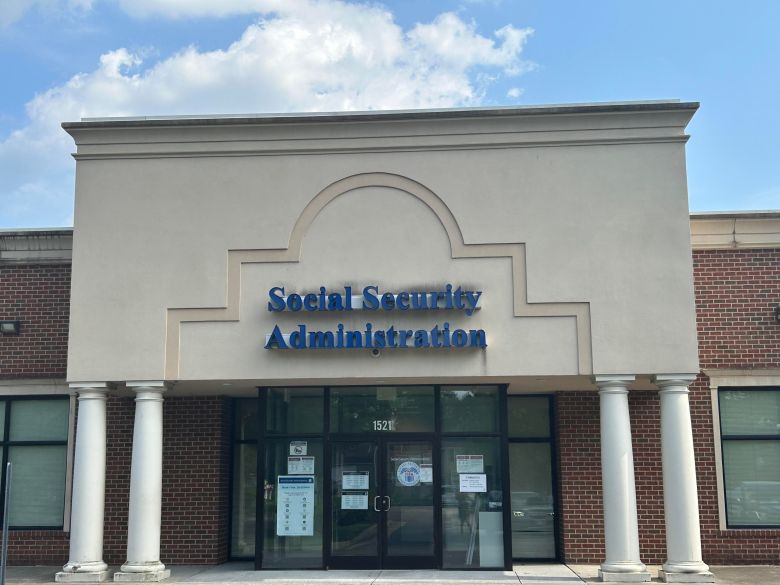
Individuals who were born in 1960 or later who want to retire and receive their full Social Security benefits should note upcoming age changes that will begin on January 1, 2026. The updated full retirement age requirement will be 67 instead of 65 years old.
“In 1983, Congress passed a law to gradually raise the age because people are living longer and are generally healthier in older age. The law raised the full retirement age beginning with people born in 1938 or later. The retirement age gradually increases by a few months for every birth year, until it reaches 67 for people born in 1960 and later,” the Social Security Administration explained online (https://www.ssa.gov/benefits/retirement/planner/ageincrease.html).
Financially Plan to Retire
Social Security provides an online Retirement Age Calculator to enable individuals to assess his or her retirement age when eligibility for unreduced Social Security retirement benefits would begin.
“The year and month you reach full retirement age depends on the year you were born. You can find your full retirement age by choosing your birth year in the calculator below, or by using our retirement age chart,” according to information provided by Social Security (https://www.ssa.gov/benefits/retirement/planner/ageincrease.html).
You may also note that the earliest a person can start receiving Social Security retirement benefits will remain 62 years old. It is critical for prospective retirees to determine if retirement is financially conceivable on a fixed income.
The History of the Social Security Act
The Social Security Act dates to August 14, 1935 when “a system of old-age benefits for workers, benefits for victims of industrial accidents, unemployment insurance, and aid for dependent mothers and children, persons who are blind, and persons with disabilities” was established, according to National Archives (https://www.archives.gov/milestone-documents/social-security-act).
President Roosevelt signed the Social Security Act into law on August 15, 1935 to support older Americans. “U.S. social security ‘insurance’ was supported from ‘contributions’ such as ‘taxes on individuals’ wages and employers’ payrolls rather than directly from government funds.”
Additionally, National Archives’ explanation of the Social Security Act specified that “the Social Security Board to register citizens for benefits, administer the contributions received by the federal government, and send payments to recipients.”
When the Social Security Act was established, qualified retirees were entitled to receive benefits at 65 years old, per historical information provided by Social Security (https://www.ssa.gov/history/35act.html#TITLE%20II).
What happened in 1983?
The Social Security Amendment of 1983 allowed for various changes including an retirement age increase for workers from the original age of 65 to 67 if they wanted to receive full benefit retirement, although gradual changes were set to be made over a period of time. Changes included a raised “age of eligibility for unreduced retirement benefits in two stages to 67 by the year 2027. Workers born in 1938 will be the first group affected by the gradual increase. Benefits will still be available at age 62, but with greater reduction,” Social Security research revealed (https://www.ssa.gov/history/1983amend.html).
Status of The Old-Age and Survivors Insurance (OASI) Trust Fund
The Old-Age and Survivors Insurance Trust Fund is a separate account in the United States Treasury (https://www.ssa.gov/OACT/ProgData/describeoasi.html).
“The trust fund provides automatic spending authority to pay monthly benefits to retired-worker (old-age) beneficiaries and their spouses and children and to survivors of deceased insured workers. With such spending authority, the Social Security Administration does not need to periodically request money from the Congress to pay benefits,” the Social Security Administration mentioned.
The Social Security and Medicare Boards of Trustees issued a message to the public about the Old-Age and Survivors Insurance (OASI) Trust Fund, which was created pursuant to section 201 of the Social Security Act Amendments of 1939. A 2025 annual report revealed that Social Security and Medicare programs face significant financing issues. Will either one run out of money?“The Old-Age and Survivors Insurance (OASI) Trust Fund will be able to pay 100 percent of total scheduled benefits until 2033, unchanged from last year’s report. At that time, the fund’s reserves will become depleted and continuing program income will be sufficient to pay 77 percent of total scheduled benefits,” according to an annual report https://www.ssa.gov/oact/trsum/.