
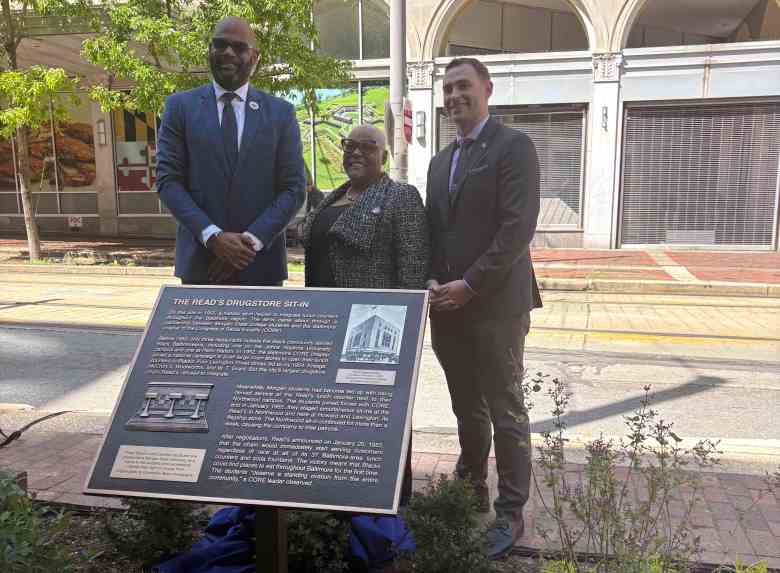
BALTIMORE, April 29, 2025—Baltimore National Heritage Area unveiled a commemorative plaque honoring the 1955 Read’s Drug Store sit-in, a landmark event in the Civil Rights Movement at 301 W. Lexington Street in Baltimore on April 29, 2025. The celebration formally acknowledged Baltimore as the first city to organize a peaceful, non-violent civil rights sit-in. This historic act was initiated by students who sought shelter from the cold inside Read’s Drug Store, but were told to leave due to the store’s segregation policies. Instead, they remained in protest. This moment in history preceded a more widely recognized sit-in at the Woolworth Lunch Counter in Greensboro, North Carolina.
“Today, we honored not only a historical location but also the courage and conviction of young individuals who challenged the injustice of segregation in Baltimore,” said Shauntee Daniels, Executive Director of Baltimore National Heritage Area. “With this plaque, we honor the past while simultaneously issuing a call to the present, ensuring that all individuals who traverse this intersection will recognize that, at this place, history was created that ignited change in this nation.”
The plaque, now permanently affixed at the intersection of Lexington and Howard Streets, will serve as a public reminder of Baltimore’s pivotal role in the Civil Rights Movement. The ceremony was attended by elected officials, dignitaries, community leaders, and representatives of the Baltimore National Heritage Area.
“What an awesome piece of American history,” said Councilmember Zac Blanchard of Baltimore’s 11th District. “It’s a history of opposing and resisting oppression, resisting what is wrong in a non-violent but confident and brave way.”
“It is a true honor to stand here with you all at this sacred site, a site where history was made, where courage stood taller than fear, and where a simple act of defiance helped change the arc of this nation’s story,” said Cleveland Horton, II, Executive Director of the Maryland Commission on Civil Rights. “We are gathered here to unveil a plaque, but what we are really unveiling, what we are truly lifting up, is a legacy of bravery, dignity, and unstoppable hope.”
The Baltimore National Heritage Area remains committed to preserving and promoting the city’s diverse history through signage, programming, and inclusive community engagement.
- Submitted to the Baltimore Times
- Submitted to the Baltimore Times
- Submitted to the Baltimore Times
- Submitted to the Baltimore Times
- Submitted to the Baltimore Times
- Submitted to the Baltimore Times
- Submitted to the Baltimore Times
- Submitted to the Baltimore Times
- Submitted to the Baltimore Times
- Submitted to the Baltimore Times
- Submitted to the Baltimore Times
- Submitted to the Baltimore Times
- Submitted to the Baltimore Times
- Submitted to the Baltimore Times
- Submitted to the Baltimore Times
- Submitted to the Baltimore Times
- Submitted to the Baltimore Times
- Submitted to the Baltimore Times
- Submitted to the Baltimore Times
- Submitted to the Baltimore Times
- Submitted to the Baltimore Times
- Submitted to the Baltimore Times
- Submitted to the Baltimore Times
- Submitted to the Baltimore Times
- Submitted to the Baltimore Times
- Submitted to the Baltimore Times
- Submitted to the Baltimore Times
- Submitted to the Baltimore Times
- Submitted to the Baltimore Times
- Submitted to the Baltimore Times
- Submitted to the Baltimore Times
- Submitted to the Baltimore Times
- Submitted to the Baltimore Times
- Submitted to the Baltimore Times
- Submitted to the Baltimore Times
- Submitted to the Baltimore Times
- Submitted to the Baltimore Times
- Submitted to the Baltimore Times
- Submitted to the Baltimore Times
- Submitted to the Baltimore Times
- Submitted to the Baltimore Times
- Submitted to the Baltimore Times
- Submitted to the Baltimore Times
- Submitted to the Baltimore Times
- Submitted to the Baltimore Times
- Submitted to the Baltimore Times
- Submitted to the Baltimore Times
- Submitted to the Baltimore Times
- Submitted to the Baltimore Times
- Submitted to the Baltimore Times
- Submitted to the Baltimore Times
- Submitted to the Baltimore Times
- Submitted to the Baltimore Times
- Submitted to the Baltimore Times
- Submitted to the Baltimore Times
- Submitted to the Baltimore Times
- Submitted to the Baltimore Times
- Submitted to the Baltimore Times
- Submitted to the Baltimore Times
- Submitted to the Baltimore Times
- Submitted to the Baltimore Times
- Submitted to the Baltimore Times
- Submitted to the Baltimore Times
- Submitted to the Baltimore Times
- Submitted to the Baltimore Times
- Submitted to the Baltimore Times
- Submitted to the Baltimore Times
- Submitted to the Baltimore Times
- Submitted to the Baltimore Times
- Submitted to the Baltimore Times
- Submitted to the Baltimore Times
- Submitted to the Baltimore Times
- Submitted to the Baltimore Times
- Submitted to the Baltimore Times
- Submitted to the Baltimore Times
- Submitted to the Baltimore Times
- Submitted to the Baltimore Times
- Submitted to the Baltimore Times
- Submitted to the Baltimore Times
- Submitted to the Baltimore Times
- Submitted to the Baltimore Times
- Submitted to the Baltimore Times
- Submitted to the Baltimore Times
- Submitted to the Baltimore Times
- Submitted to the Baltimore Times
- Submitted to the Baltimore Times
- Submitted to the Baltimore Times
- Submitted to the Baltimore Times
- Submitted to the Baltimore Times
- Submitted to the Baltimore Times
- Submitted to the Baltimore Times
- Submitted to the Baltimore Times
- Submitted to the Baltimore Times
- Submitted to the Baltimore Times
- Submitted to the Baltimore Times
- Submitted to the Baltimore Times
- Submitted to the Baltimore Times
- Submitted to the Baltimore Times
- Submitted to the Baltimore Times
- Submitted to the Baltimore Times
- Submitted to the Baltimore Times
- Submitted to the Baltimore Times
- Submitted to the Baltimore Times
- Submitted to the Baltimore Times
- Submitted to the Baltimore Times
- Submitted to the Baltimore Times
- Submitted to the Baltimore Times
- Submitted to the Baltimore Times
- Submitted to the Baltimore Times
- Submitted to the Baltimore Times
- Submitted to the Baltimore Times
- Submitted to the Baltimore Times
- Submitted to the Baltimore Times
- Submitted to the Baltimore Times
- Submitted to the Baltimore Times
- Submitted to the Baltimore Times
- Submitted to the Baltimore Times
- Submitted to the Baltimore Times
- Submitted to the Baltimore Times
- Submitted to the Baltimore Times
- Submitted to the Baltimore Times
- Submitted to the Baltimore Times
- Submitted to the Baltimore Times
- Submitted to the Baltimore Times
- Submitted to the Baltimore Times
- Submitted to the Baltimore Times
- Submitted to the Baltimore Times
- Submitted to the Baltimore Times
- Submitted to the Baltimore Times
- Submitted to the Baltimore Times
- Submitted to the Baltimore Times
- Submitted to the Baltimore Times
- Submitted to the Baltimore Times
- Submitted to the Baltimore Times
- Submitted to the Baltimore Times
- Submitted to the Baltimore Times
- Submitted to the Baltimore Times
- Submitted to the Baltimore Times
- Submitted to the Baltimore Times
- Submitted to the Baltimore Times
- Submitted to the Baltimore Times
- Submitted to the Baltimore Times
- Submitted to the Baltimore Times
- Submitted to the Baltimore Times
- Submitted to the Baltimore Times
- Submitted to the Baltimore Times
- Submitted to the Baltimore Times
- Submitted to the Baltimore Times
- Submitted to the Baltimore Times
- Submitted to the Baltimore Times
- Submitted to the Baltimore Times
- Submitted to the Baltimore Times
- Submitted to the Baltimore Times
- Submitted to the Baltimore Times
- Submitted to the Baltimore Times
- Submitted to the Baltimore Times
- Submitted to the Baltimore Times
- Submitted to the Baltimore Times
- Submitted to the Baltimore Times
- Submitted to the Baltimore Times
- Submitted to the Baltimore Times
- Submitted to the Baltimore Times
- Submitted to the Baltimore Times
- Submitted to the Baltimore Times
- Submitted to the Baltimore Times
- Submitted to the Baltimore Times
- Submitted to the Baltimore Times
- Submitted to the Baltimore Times
- Submitted to the Baltimore Times
- Submitted to the Baltimore Times
- Submitted to the Baltimore Times
- Submitted to the Baltimore Times
- Submitted to the Baltimore Times
- Submitted to the Baltimore Times
- Submitted to the Baltimore Times
- Submitted to the Baltimore Times
- Submitted to the Baltimore Times
- Submitted to the Baltimore Times
- Submitted to the Baltimore Times
- Submitted to the Baltimore Times
- Submitted to the Baltimore Times
- Submitted to the Baltimore Times
- Submitted to the Baltimore Times
- Submitted to the Baltimore Times
- Submitted to the Baltimore Times
- Submitted to the Baltimore Times
- Submitted to the Baltimore Times
- Submitted to the Baltimore Times
- Submitted to the Baltimore Times
- Submitted to the Baltimore Times
- Submitted to the Baltimore Times
- Submitted to the Baltimore Times
- Submitted to the Baltimore Times
- Submitted to the Baltimore Times
- Submitted to the Baltimore Times
- Submitted to the Baltimore Times
- Submitted to the Baltimore Times
- Submitted to the Baltimore Times
- Submitted to the Baltimore Times
- Submitted to the Baltimore Times
- Submitted to the Baltimore Times
- Submitted to the Baltimore Times
- Submitted to the Baltimore Times
- Submitted to the Baltimore Times
- Submitted to the Baltimore Times
- Submitted to the Baltimore Times
- Submitted to the Baltimore Times
- Submitted to the Baltimore Times
- Submitted to the Baltimore Times
- Submitted to the Baltimore Times
- Submitted to the Baltimore Times
- Submitted to the Baltimore Times
- Submitted to the Baltimore Times
- Submitted to the Baltimore Times
- Submitted to the Baltimore Times
- Submitted to the Baltimore Times
- Submitted to the Baltimore Times
- Submitted to the Baltimore Times
- Submitted to the Baltimore Times
- Submitted to the Baltimore Times
- Submitted to the Baltimore Times
- Submitted to the Baltimore Times
- Submitted to the Baltimore Times
- Submitted to the Baltimore Times
- Submitted to the Baltimore Times
- Submitted to the Baltimore Times
- Submitted to the Baltimore Times
- Submitted to the Baltimore Times
- Submitted to the Baltimore Times
- Submitted to the Baltimore Times
- Submitted to the Baltimore Times
- Submitted to the Baltimore Times
- Submitted to the Baltimore Times
- Submitted to the Baltimore Times
- Submitted to the Baltimore Times
- Submitted to the Baltimore Times
- Submitted to the Baltimore Times
- Submitted to the Baltimore Times
- Submitted to the Baltimore Times
- Submitted to the Baltimore Times
- Submitted to the Baltimore Times
- Submitted to the Baltimore Times
- Submitted to the Baltimore Times
- Submitted to the Baltimore Times
- Submitted to the Baltimore Times
- Submitted to the Baltimore Times
- Submitted to the Baltimore Times
- Submitted to the Baltimore Times
- Submitted to the Baltimore Times
- Submitted to the Baltimore Times
- Submitted to the Baltimore Times
- Submitted to the Baltimore Times
- Submitted to the Baltimore Times
- Submitted to the Baltimore Times
- Submitted to the Baltimore Times
- Submitted to the Baltimore Times
- Submitted to the Baltimore Times
- Submitted to the Baltimore Times
- Submitted to the Baltimore Times
- Submitted to the Baltimore Times
- Submitted to the Baltimore Times
- Submitted to the Baltimore Times
- Submitted to the Baltimore Times
- Submitted to the Baltimore Times
- Submitted to the Baltimore Times
- Submitted to the Baltimore Times
- Submitted to the Baltimore Times
- Submitted to the Baltimore Times
- Submitted to the Baltimore Times
- Submitted to the Baltimore Times
- Submitted to the Baltimore Times
- Submitted to the Baltimore Times
- Submitted to the Baltimore Times
- Submitted to the Baltimore Times
- Submitted to the Baltimore Times
- Submitted to the Baltimore Times
- Submitted to the Baltimore Times
- Submitted to the Baltimore Times
- Submitted to the Baltimore Times
- Submitted to the Baltimore Times
- Submitted to the Baltimore Times
- Submitted to the Baltimore Times
- Submitted to the Baltimore Times
- Submitted to the Baltimore Times
- Submitted to the Baltimore Times
- Submitted to the Baltimore Times
- Submitted to the Baltimore Times
- Submitted to the Baltimore Times
- Submitted to the Baltimore Times
- Submitted to the Baltimore Times
- Submitted to the Baltimore Times
- Submitted to the Baltimore Times
- Submitted to the Baltimore Times
- Submitted to the Baltimore Times
- Submitted to the Baltimore Times
- Submitted to the Baltimore Times
- Submitted to the Baltimore Times
- Submitted to the Baltimore Times
- Submitted to the Baltimore Times
- Submitted to the Baltimore Times
- Submitted to the Baltimore Times
- Submitted to the Baltimore Times
- Submitted to the Baltimore Times
- Submitted to the Baltimore Times
- Submitted to the Baltimore Times
- Submitted to the Baltimore Times
- Submitted to the Baltimore Times
- Submitted to the Baltimore Times
- Submitted to the Baltimore Times
- Submitted to the Baltimore Times
- Submitted to the Baltimore Times
- Submitted to the Baltimore Times
- Submitted to the Baltimore Times
- Submitted to the Baltimore Times
- Submitted to the Baltimore Times
- Submitted to the Baltimore Times
- Submitted to the Baltimore Times
- Submitted to the Baltimore Times
- Submitted to the Baltimore Times
- Submitted to the Baltimore Times
- Submitted to the Baltimore Times
- Submitted to the Baltimore Times
- Submitted to the Baltimore Times
- Submitted to the Baltimore Times
- Submitted to the Baltimore Times
- Submitted to the Baltimore Times
- Submitted to the Baltimore Times
- Submitted to the Baltimore Times
- Submitted to the Baltimore Times
- Submitted to the Baltimore Times
- Submitted to the Baltimore Times
- Submitted to the Baltimore Times
- Submitted to the Baltimore Times
- Submitted to the Baltimore Times
- Submitted to the Baltimore Times
- Submitted to the Baltimore Times
- Submitted to the Baltimore Times
- Submitted to the Baltimore Times
- Submitted to the Baltimore Times
- Submitted to the Baltimore Times
- Submitted to the Baltimore Times
- Submitted to the Baltimore Times
- Submitted to the Baltimore Times
- Submitted to the Baltimore Times
- Submitted to the Baltimore Times
- Submitted to the Baltimore Times
- Submitted to the Baltimore Times
- Submitted to the Baltimore Times
- Submitted to the Baltimore Times
- Submitted to the Baltimore Times
- Submitted to the Baltimore Times
- Submitted to the Baltimore Times
- Submitted to the Baltimore Times
- Submitted to the Baltimore Times
- Submitted to the Baltimore Times
- Submitted to the Baltimore Times
- Submitted to the Baltimore Times
- Submitted to the Baltimore Times
- Submitted to the Baltimore Times
- Submitted to the Baltimore Times
- Submitted to the Baltimore Times
- Submitted to the Baltimore Times
- Submitted to the Baltimore Times
- Submitted to the Baltimore Times
- Submitted to the Baltimore Times
- Submitted to the Baltimore Times
- Submitted to the Baltimore Times
- Submitted to the Baltimore Times
- Submitted to the Baltimore Times
- Submitted to the Baltimore Times
- Submitted to the Baltimore Times
- Submitted to the Baltimore Times
- Submitted to the Baltimore Times
- Submitted to the Baltimore Times
- Submitted to the Baltimore Times
- Submitted to the Baltimore Times
- Submitted to the Baltimore Times
- Submitted to the Baltimore Times
- Submitted to the Baltimore Times
- Submitted to the Baltimore Times
- Submitted to the Baltimore Times
- Submitted to the Baltimore Times
- Submitted to the Baltimore Times
- Submitted to the Baltimore Times
- Submitted to the Baltimore Times
- Submitted to the Baltimore Times
- Submitted to the Baltimore Times
- Submitted to the Baltimore Times
- Submitted to the Baltimore Times
- Submitted to the Baltimore Times
- Submitted to the Baltimore Times
- Submitted to the Baltimore Times
- Submitted to the Baltimore Times
- Submitted to the Baltimore Times
- Submitted to the Baltimore Times
- Submitted to the Baltimore Times
- Submitted to the Baltimore Times
- Submitted to the Baltimore Times
- Submitted to the Baltimore Times
- Submitted to the Baltimore Times
- Submitted to the Baltimore Times
- Submitted to the Baltimore Times
- Submitted to the Baltimore Times
- Submitted to the Baltimore Times
- Submitted to the Baltimore Times
- Submitted to the Baltimore Times
- Submitted to the Baltimore Times
- Submitted to the Baltimore Times
- Submitted to the Baltimore Times
- Submitted to the Baltimore Times
- Submitted to the Baltimore Times
- Submitted to the Baltimore Times
- Submitted to the Baltimore Times
- Submitted to the Baltimore Times
- Submitted to the Baltimore Times
- Submitted to the Baltimore Times
- Submitted to the Baltimore Times
- Submitted to the Baltimore Times
- Submitted to the Baltimore Times
- Submitted to the Baltimore Times
- Submitted to the Baltimore Times
- Submitted to the Baltimore Times
- Submitted to the Baltimore Times
- Submitted to the Baltimore Times
- Submitted to the Baltimore Times
- Submitted to the Baltimore Times
- Submitted to the Baltimore Times
- Submitted to the Baltimore Times
- Submitted to the Baltimore Times
- Submitted to the Baltimore Times
- Submitted to the Baltimore Times
- Submitted to the Baltimore Times
- Submitted to the Baltimore Times
- Submitted to the Baltimore Times
- Submitted to the Baltimore Times
- Submitted to the Baltimore Times
- Submitted to the Baltimore Times
- Submitted to the Baltimore Times
- Submitted to the Baltimore Times
- Submitted to the Baltimore Times
- Submitted to the Baltimore Times
- Submitted to the Baltimore Times
- Submitted to the Baltimore Times
- Submitted to the Baltimore Times
- Submitted to the Baltimore Times
- Submitted to the Baltimore Times
- Submitted to the Baltimore Times
- Submitted to the Baltimore Times
- Submitted to the Baltimore Times
- Submitted to the Baltimore Times
- Submitted to the Baltimore Times
- Submitted to the Baltimore Times
- Submitted to the Baltimore Times
- Submitted to the Baltimore Times
- Submitted to the Baltimore Times
- Submitted to the Baltimore Times
- Submitted to the Baltimore Times
- Submitted to the Baltimore Times
- Submitted to the Baltimore Times
- Submitted to the Baltimore Times
- Submitted to the Baltimore Times
- Submitted to the Baltimore Times
- Submitted to the Baltimore Times
- Submitted to the Baltimore Times
- Submitted to the Baltimore Times
- Submitted to the Baltimore Times
- Submitted to the Baltimore Times
- Submitted to the Baltimore Times
- Submitted to the Baltimore Times
- Submitted to the Baltimore Times
- Submitted to the Baltimore Times
- Submitted to the Baltimore Times
- Submitted to the Baltimore Times
- Submitted to the Baltimore Times
- Submitted to the Baltimore Times
- Submitted to the Baltimore Times
- Submitted to the Baltimore Times
- Submitted to the Baltimore Times
- Submitted to the Baltimore Times
- Submitted to the Baltimore Times
- Submitted to the Baltimore Times
- Submitted to the Baltimore Times
- Submitted to the Baltimore Times
- Submitted to the Baltimore Times
- Submitted to the Baltimore Times
- Submitted to the Baltimore Times
- Submitted to the Baltimore Times
- Submitted to the Baltimore Times
- Submitted to the Baltimore Times
- Submitted to the Baltimore Times
- Submitted to the Baltimore Times
- Submitted to the Baltimore Times
- Submitted to the Baltimore Times
- Submitted to the Baltimore Times
- Submitted to the Baltimore Times
- Submitted to the Baltimore Times
- Submitted to the Baltimore Times
- Submitted to the Baltimore Times
- Submitted to the Baltimore Times
- Submitted to the Baltimore Times
- Submitted to the Baltimore Times
- Submitted to the Baltimore Times
- Submitted to the Baltimore Times
- Submitted to the Baltimore Times
- Submitted to the Baltimore Times
- Submitted to the Baltimore Times
- Submitted to the Baltimore Times
- Submitted to the Baltimore Times
- Submitted to the Baltimore Times
- Submitted to the Baltimore Times
- Submitted to the Baltimore Times
- Submitted to the Baltimore Times
- Submitted to the Baltimore Times
- Submitted to the Baltimore Times
- Submitted to the Baltimore Times
- Submitted to the Baltimore Times
- Submitted to the Baltimore Times
- Submitted to the Baltimore Times
- Submitted to the Baltimore Times
- Submitted to the Baltimore Times
- Submitted to the Baltimore Times
- Submitted to the Baltimore Times
- Submitted to the Baltimore Times
- Submitted to the Baltimore Times
- Submitted to the Baltimore Times
- Submitted to the Baltimore Times
- Submitted to the Baltimore Times
- Submitted to the Baltimore Times
- Submitted to the Baltimore Times
- Submitted to the Baltimore Times
- Submitted to the Baltimore Times
- Submitted to the Baltimore Times
- Submitted to the Baltimore Times
- Submitted to the Baltimore Times
- Submitted to the Baltimore Times
- Submitted to the Baltimore Times
- Submitted to the Baltimore Times
- Submitted to the Baltimore Times
- Submitted to the Baltimore Times
- Submitted to the Baltimore Times
- Submitted to the Baltimore Times
- Submitted to the Baltimore Times
- Submitted to the Baltimore Times
- Submitted to the Baltimore Times
- Submitted to the Baltimore Times
- Submitted to the Baltimore Times
- Submitted to the Baltimore Times
- Submitted to the Baltimore Times
- Submitted to the Baltimore Times
- Submitted to the Baltimore Times
- Submitted to the Baltimore Times
- Submitted to the Baltimore Times
- Submitted to the Baltimore Times
- Submitted to the Baltimore Times
- Submitted to the Baltimore Times
- Submitted to the Baltimore Times
- Submitted to the Baltimore Times
- Submitted to the Baltimore Times
- Submitted to the Baltimore Times
- Submitted to the Baltimore Times
- Submitted to the Baltimore Times
- Submitted to the Baltimore Times
- Submitted to the Baltimore Times
- Submitted to the Baltimore Times
- Submitted to the Baltimore Times
- Submitted to the Baltimore Times
- Submitted to the Baltimore Times
- Submitted to the Baltimore Times
- Submitted to the Baltimore Times
- Submitted to the Baltimore Times
- Submitted to the Baltimore Times
- Submitted to the Baltimore Times
- Submitted to the Baltimore Times
- Submitted to the Baltimore Times
- Submitted to the Baltimore Times
- Submitted to the Baltimore Times
- Submitted to the Baltimore Times
- Submitted to the Baltimore Times
- Submitted to the Baltimore Times
- Submitted to the Baltimore Times
- Submitted to the Baltimore Times
- Submitted to the Baltimore Times
- Submitted to the Baltimore Times
- Submitted to the Baltimore Times
- Submitted to the Baltimore Times
- Submitted to the Baltimore Times
- Submitted to the Baltimore Times
- Submitted to the Baltimore Times
- Submitted to the Baltimore Times
- Submitted to the Baltimore Times
- Submitted to the Baltimore Times
- Submitted to the Baltimore Times
- Submitted to the Baltimore Times
- Submitted to the Baltimore Times
- Submitted to the Baltimore Times
- Submitted to the Baltimore Times
- Submitted to the Baltimore Times
- Submitted to the Baltimore Times
- Submitted to the Baltimore Times
- Submitted to the Baltimore Times
- Submitted to the Baltimore Times
- Submitted to the Baltimore Times
- Submitted to the Baltimore Times
- Submitted to the Baltimore Times
- Submitted to the Baltimore Times
- Submitted to the Baltimore Times
- Submitted to the Baltimore Times
- Submitted to the Baltimore Times
- Submitted to the Baltimore Times
- Submitted to the Baltimore Times
- Submitted to the Baltimore Times
- Submitted to the Baltimore Times
- Submitted to the Baltimore Times
- Submitted to the Baltimore Times
- Submitted to the Baltimore Times
- Submitted to the Baltimore Times
- Submitted to the Baltimore Times
- Submitted to the Baltimore Times
- Submitted to the Baltimore Times
- Submitted to the Baltimore Times
- Submitted to the Baltimore Times
- Submitted to the Baltimore Times
- Submitted to the Baltimore Times
- Submitted to the Baltimore Times
- Submitted to the Baltimore Times
- Submitted to the Baltimore Times
- Submitted to the Baltimore Times
- Submitted to the Baltimore Times
- Submitted to the Baltimore Times
- Submitted to the Baltimore Times
- Submitted to the Baltimore Times
- Submitted to the Baltimore Times
- Submitted to the Baltimore Times
- Submitted to the Baltimore Times
- Submitted to the Baltimore Times
- Submitted to the Baltimore Times
- Submitted to the Baltimore Times
- Submitted to the Baltimore Times
- Submitted to the Baltimore Times
- Submitted to the Baltimore Times
- Submitted to the Baltimore Times
- Submitted to the Baltimore Times
- Submitted to the Baltimore Times
- Submitted to the Baltimore Times
- Submitted to the Baltimore Times
- Submitted to the Baltimore Times
- Submitted to the Baltimore Times
- Submitted to the Baltimore Times
- Submitted to the Baltimore Times
- Submitted to the Baltimore Times
- Submitted to the Baltimore Times
- Submitted to the Baltimore Times
- Submitted to the Baltimore Times
- Submitted to the Baltimore Times
- Submitted to the Baltimore Times
- Submitted to the Baltimore Times
- Submitted to the Baltimore Times
- Submitted to the Baltimore Times
- Submitted to the Baltimore Times
- Submitted to the Baltimore Times
- Submitted to the Baltimore Times
- Submitted to the Baltimore Times
- Submitted to the Baltimore Times
- Submitted to the Baltimore Times
- Submitted to the Baltimore Times
- Submitted to the Baltimore Times
- Submitted to the Baltimore Times
- Submitted to the Baltimore Times
- Submitted to the Baltimore Times
- Submitted to the Baltimore Times
- Submitted to the Baltimore Times
- Submitted to the Baltimore Times
- Submitted to the Baltimore Times
- Submitted to the Baltimore Times
- Submitted to the Baltimore Times
- Submitted to the Baltimore Times
- Submitted to the Baltimore Times
- Submitted to the Baltimore Times
- Submitted to the Baltimore Times
- Submitted to the Baltimore Times
- Submitted to the Baltimore Times
- Submitted to the Baltimore Times
- Submitted to the Baltimore Times
- Submitted to the Baltimore Times
- Submitted to the Baltimore Times
- Submitted to the Baltimore Times
- Submitted to the Baltimore Times
- Submitted to the Baltimore Times
- Submitted to the Baltimore Times
- Submitted to the Baltimore Times
- Submitted to the Baltimore Times
- Submitted to the Baltimore Times
- Submitted to the Baltimore Times
- Submitted to the Baltimore Times
- Submitted to the Baltimore Times
- Submitted to the Baltimore Times
- Submitted to the Baltimore Times
- Submitted to the Baltimore Times
- Submitted to the Baltimore Times
- Submitted to the Baltimore Times
- Submitted to the Baltimore Times
- Submitted to the Baltimore Times
- Submitted to the Baltimore Times
- Submitted to the Baltimore Times
- Submitted to the Baltimore Times
- Submitted to the Baltimore Times
- Submitted to the Baltimore Times
- Submitted to the Baltimore Times
- Submitted to the Baltimore Times
- Submitted to the Baltimore Times
- Submitted to the Baltimore Times
- Submitted to the Baltimore Times
- Submitted to the Baltimore Times
- Submitted to the Baltimore Times
- Submitted to the Baltimore Times
- Submitted to the Baltimore Times
- Submitted to the Baltimore Times
- Submitted to the Baltimore Times
- Submitted to the Baltimore Times
- Submitted to the Baltimore Times
- Submitted to the Baltimore Times
- Submitted to the Baltimore Times
- Submitted to the Baltimore Times
- Submitted to the Baltimore Times
- Submitted to the Baltimore Times
- Submitted to the Baltimore Times
- Submitted to the Baltimore Times
- Submitted to the Baltimore Times
- Submitted to the Baltimore Times
- Submitted to the Baltimore Times
- Submitted to the Baltimore Times
- Submitted to the Baltimore Times
- Submitted to the Baltimore Times
- Submitted to the Baltimore Times
- Submitted to the Baltimore Times
- Submitted to the Baltimore Times
- Submitted to the Baltimore Times
- Submitted to the Baltimore Times
- Submitted to the Baltimore Times
- Submitted to the Baltimore Times
- Submitted to the Baltimore Times
- Submitted to the Baltimore Times
- Submitted to the Baltimore Times
- Submitted to the Baltimore Times
- Submitted to the Baltimore Times
- Submitted to the Baltimore Times
- Submitted to the Baltimore Times
- Submitted to the Baltimore Times
- Submitted to the Baltimore Times
- Submitted to the Baltimore Times
- Submitted to the Baltimore Times
- Submitted to the Baltimore Times
- Submitted to the Baltimore Times
- Submitted to the Baltimore Times
- Submitted to the Baltimore Times
- Submitted to the Baltimore Times
- Submitted to the Baltimore Times
- Submitted to the Baltimore Times
- Submitted to the Baltimore Times
- Submitted to the Baltimore Times
- Submitted to the Baltimore Times
- Submitted to the Baltimore Times
- Submitted to the Baltimore Times
- Submitted to the Baltimore Times
- Submitted to the Baltimore Times
- Submitted to the Baltimore Times
- Submitted to the Baltimore Times
- Submitted to the Baltimore Times
- Submitted to the Baltimore Times
- Submitted to the Baltimore Times
- Submitted to the Baltimore Times
- Submitted to the Baltimore Times
- Submitted to the Baltimore Times
- Submitted to the Baltimore Times
- Submitted to the Baltimore Times
- Submitted to the Baltimore Times
- Submitted to the Baltimore Times
- Submitted to the Baltimore Times
- Submitted to the Baltimore Times
- Submitted to the Baltimore Times
- Submitted to the Baltimore Times
- Submitted to the Baltimore Times
- Submitted to the Baltimore Times
- Submitted to the Baltimore Times
- Submitted to the Baltimore Times
- Submitted to the Baltimore Times
- Submitted to the Baltimore Times
- Submitted to the Baltimore Times
- Submitted to the Baltimore Times
- Submitted to the Baltimore Times
- Submitted to the Baltimore Times
- Submitted to the Baltimore Times
- Submitted to the Baltimore Times
- Submitted to the Baltimore Times
- Submitted to the Baltimore Times
- Submitted to the Baltimore Times
- Submitted to the Baltimore Times
- Submitted to the Baltimore Times
- Submitted to the Baltimore Times
- Submitted to the Baltimore Times
- Submitted to the Baltimore Times
- Submitted to the Baltimore Times
- Submitted to the Baltimore Times
- Submitted to the Baltimore Times
- Submitted to the Baltimore Times
- Submitted to the Baltimore Times
- Submitted to the Baltimore Times
- Submitted to the Baltimore Times
- Submitted to the Baltimore Times
- Submitted to the Baltimore Times
- Submitted to the Baltimore Times
- Submitted to the Baltimore Times
- Submitted to the Baltimore Times
- Submitted to the Baltimore Times
- Submitted to the Baltimore Times
- Submitted to the Baltimore Times
- Submitted to the Baltimore Times
- Submitted to the Baltimore Times
- Submitted to the Baltimore Times
- Submitted to the Baltimore Times
- Submitted to the Baltimore Times
- Submitted to the Baltimore Times
- Submitted to the Baltimore Times
- Submitted to the Baltimore Times
- Submitted to the Baltimore Times
- Submitted to the Baltimore Times
- Submitted to the Baltimore Times
- Submitted to the Baltimore Times
- Submitted to the Baltimore Times
- Submitted to the Baltimore Times
- Submitted to the Baltimore Times
- Submitted to the Baltimore Times
- Submitted to the Baltimore Times
- Submitted to the Baltimore Times
- Submitted to the Baltimore Times
- Submitted to the Baltimore Times
- Submitted to the Baltimore Times
- Submitted to the Baltimore Times
- Submitted to the Baltimore Times
- Submitted to the Baltimore Times
- Submitted to the Baltimore Times
- Submitted to the Baltimore Times
- Submitted to the Baltimore Times
- Submitted to the Baltimore Times
- Submitted to the Baltimore Times
- Submitted to the Baltimore Times
- Submitted to the Baltimore Times
- Submitted to the Baltimore Times
- Submitted to the Baltimore Times
- Submitted to the Baltimore Times
- Submitted to the Baltimore Times
- Submitted to the Baltimore Times
- Submitted to the Baltimore Times
- Submitted to the Baltimore Times
- Submitted to the Baltimore Times
- Submitted to the Baltimore Times
- Submitted to the Baltimore Times
- Submitted to the Baltimore Times
- Submitted to the Baltimore Times
- Submitted to the Baltimore Times
- Submitted to the Baltimore Times
- Submitted to the Baltimore Times
- Submitted to the Baltimore Times
- Submitted to the Baltimore Times
- Submitted to the Baltimore Times
- Submitted to the Baltimore Times
- Submitted to the Baltimore Times
- Submitted to the Baltimore Times
- Submitted to the Baltimore Times
- Submitted to the Baltimore Times
- Submitted to the Baltimore Times
- Submitted to the Baltimore Times
- Submitted to the Baltimore Times
- Submitted to the Baltimore Times
- Submitted to the Baltimore Times
- Submitted to the Baltimore Times
- Submitted to the Baltimore Times
- Submitted to the Baltimore Times
- Submitted to the Baltimore Times
- Submitted to the Baltimore Times
- Submitted to the Baltimore Times
- Submitted to the Baltimore Times
- Submitted to the Baltimore Times
- Submitted to the Baltimore Times
- Submitted to the Baltimore Times
- Submitted to the Baltimore Times
- Submitted to the Baltimore Times
- Submitted to the Baltimore Times
- Submitted to the Baltimore Times
- Submitted to the Baltimore Times
- Submitted to the Baltimore Times
- Submitted to the Baltimore Times
- Submitted to the Baltimore Times
- Submitted to the Baltimore Times
- Submitted to the Baltimore Times
- Submitted to the Baltimore Times
- Submitted to the Baltimore Times
- Submitted to the Baltimore Times
- Submitted to the Baltimore Times
- Submitted to the Baltimore Times
- Submitted to the Baltimore Times
- Submitted to the Baltimore Times
- Submitted to the Baltimore Times
- Submitted to the Baltimore Times
- Submitted to the Baltimore Times
- Submitted to the Baltimore Times
- Submitted to the Baltimore Times
- Submitted to the Baltimore Times
- Submitted to the Baltimore Times
- Submitted to the Baltimore Times
- Submitted to the Baltimore Times
- Submitted to the Baltimore Times
- Submitted to the Baltimore Times
- Submitted to the Baltimore Times
- Submitted to the Baltimore Times
- Submitted to the Baltimore Times
- Submitted to the Baltimore Times
- Submitted to the Baltimore Times
- Submitted to the Baltimore Times
- Submitted to the Baltimore Times
- Submitted to the Baltimore Times
- Submitted to the Baltimore Times
- Submitted to the Baltimore Times
- Submitted to the Baltimore Times
- Submitted to the Baltimore Times
- Submitted to the Baltimore Times
- Submitted to the Baltimore Times
- Submitted to the Baltimore Times
- Submitted to the Baltimore Times
- Submitted to the Baltimore Times
- Submitted to the Baltimore Times
- Submitted to the Baltimore Times
- Submitted to the Baltimore Times
- Submitted to the Baltimore Times
- Submitted to the Baltimore Times
- Submitted to the Baltimore Times
- Submitted to the Baltimore Times
- Submitted to the Baltimore Times
- Submitted to the Baltimore Times
- Submitted to the Baltimore Times
- Submitted to the Baltimore Times
- Submitted to the Baltimore Times
- Submitted to the Baltimore Times
- Submitted to the Baltimore Times
- Submitted to the Baltimore Times
- Submitted to the Baltimore Times
- Submitted to the Baltimore Times
- Submitted to the Baltimore Times
- Submitted to the Baltimore Times
- Submitted to the Baltimore Times
- Submitted to the Baltimore Times
- Submitted to the Baltimore Times
- Submitted to the Baltimore Times
- Submitted to the Baltimore Times
- Submitted to the Baltimore Times
- Submitted to the Baltimore Times
- Submitted to the Baltimore Times
- Submitted to the Baltimore Times
- Submitted to the Baltimore Times
- Submitted to the Baltimore Times
- Submitted to the Baltimore Times
- Submitted to the Baltimore Times
- Submitted to the Baltimore Times
- Submitted to the Baltimore Times
- Submitted to the Baltimore Times
- Submitted to the Baltimore Times
- Submitted to the Baltimore Times
- Submitted to the Baltimore Times
- Submitted to the Baltimore Times
- Submitted to the Baltimore Times
- Submitted to the Baltimore Times
- Submitted to the Baltimore Times
- Submitted to the Baltimore Times
- Submitted to the Baltimore Times
- Submitted to the Baltimore Times
- Submitted to the Baltimore Times
- Submitted to the Baltimore Times
- Submitted to the Baltimore Times
- Submitted to the Baltimore Times
- Submitted to the Baltimore Times
- Submitted to the Baltimore Times
- Submitted to the Baltimore Times
- Submitted to the Baltimore Times
- Submitted to the Baltimore Times
- Submitted to the Baltimore Times
- Submitted to the Baltimore Times
- Submitted to the Baltimore Times
- Submitted to the Baltimore Times
- Submitted to the Baltimore Times
- Submitted to the Baltimore Times
- Submitted to the Baltimore Times
- Submitted to the Baltimore Times
- Submitted to the Baltimore Times
- Submitted to the Baltimore Times
- Submitted to the Baltimore Times
- Submitted to the Baltimore Times
- Submitted to the Baltimore Times
- Submitted to the Baltimore Times
- Submitted to the Baltimore Times
- Submitted to the Baltimore Times
- Submitted to the Baltimore Times
- Submitted to the Baltimore Times
- Submitted to the Baltimore Times
- Submitted to the Baltimore Times
- Submitted to the Baltimore Times
- Submitted to the Baltimore Times
- Submitted to the Baltimore Times
- Submitted to the Baltimore Times
- Submitted to the Baltimore Times
- Submitted to the Baltimore Times
- Submitted to the Baltimore Times
- Submitted to the Baltimore Times
- Submitted to the Baltimore Times
- Submitted to the Baltimore Times
- Submitted to the Baltimore Times
- Submitted to the Baltimore Times
- Submitted to the Baltimore Times
- Submitted to the Baltimore Times
- Submitted to the Baltimore Times
- Submitted to the Baltimore Times
- Submitted to the Baltimore Times
- Submitted to the Baltimore Times
- Submitted to the Baltimore Times
- Submitted to the Baltimore Times
- Submitted to the Baltimore Times
- Submitted to the Baltimore Times
- Submitted to the Baltimore Times
- Submitted to the Baltimore Times
- Submitted to the Baltimore Times
- Submitted to the Baltimore Times
- Submitted to the Baltimore Times
- Submitted to the Baltimore Times
- Submitted to the Baltimore Times
- Submitted to the Baltimore Times
- Submitted to the Baltimore Times
- Submitted to the Baltimore Times
- Submitted to the Baltimore Times
- Submitted to the Baltimore Times
- Submitted to the Baltimore Times
- Submitted to the Baltimore Times
- Submitted to the Baltimore Times
- Submitted to the Baltimore Times
- Submitted to the Baltimore Times
- Submitted to the Baltimore Times
- Submitted to the Baltimore Times
- Submitted to the Baltimore Times
- Submitted to the Baltimore Times
- Submitted to the Baltimore Times
- Submitted to the Baltimore Times
- Submitted to the Baltimore Times
- Submitted to the Baltimore Times
- Submitted to the Baltimore Times
- Submitted to the Baltimore Times
- Submitted to the Baltimore Times
- Submitted to the Baltimore Times
- Submitted to the Baltimore Times
- Submitted to the Baltimore Times
- Submitted to the Baltimore Times
- Submitted to the Baltimore Times
- Submitted to the Baltimore Times
- Submitted to the Baltimore Times
- Submitted to the Baltimore Times
- Submitted to the Baltimore Times
- Submitted to the Baltimore Times
- Submitted to the Baltimore Times
- Submitted to the Baltimore Times
- Submitted to the Baltimore Times
- Submitted to the Baltimore Times
- Submitted to the Baltimore Times
- Submitted to the Baltimore Times
- Submitted to the Baltimore Times
- Submitted to the Baltimore Times
- Submitted to the Baltimore Times
- Submitted to the Baltimore Times
- Submitted to the Baltimore Times
- Submitted to the Baltimore Times
- Submitted to the Baltimore Times
- Submitted to the Baltimore Times
- Submitted to the Baltimore Times
- Submitted to the Baltimore Times
- Submitted to the Baltimore Times
- Submitted to the Baltimore Times
- Submitted to the Baltimore Times
- Submitted to the Baltimore Times
- Submitted to the Baltimore Times
- Submitted to the Baltimore Times
- Submitted to the Baltimore Times
- Submitted to the Baltimore Times
- Submitted to the Baltimore Times
- Submitted to the Baltimore Times
- Submitted to the Baltimore Times
- Submitted to the Baltimore Times
- Submitted to the Baltimore Times
- Submitted to the Baltimore Times
- Submitted to the Baltimore Times
- Submitted to the Baltimore Times
- Submitted to the Baltimore Times
- Submitted to the Baltimore Times
- Submitted to the Baltimore Times
- Submitted to the Baltimore Times
- Submitted to the Baltimore Times
- Submitted to the Baltimore Times
- Submitted to the Baltimore Times
- Submitted to the Baltimore Times
- Submitted to the Baltimore Times
- Submitted to the Baltimore Times
- Submitted to the Baltimore Times
- Submitted to the Baltimore Times
- Submitted to the Baltimore Times
- Submitted to the Baltimore Times
- Submitted to the Baltimore Times
- Submitted to the Baltimore Times
- Submitted to the Baltimore Times
- Submitted to the Baltimore Times
- Submitted to the Baltimore Times
- Submitted to the Baltimore Times
- Submitted to the Baltimore Times
- Submitted to the Baltimore Times
- Submitted to the Baltimore Times
- Submitted to the Baltimore Times
- Submitted to the Baltimore Times
- Submitted to the Baltimore Times
- Submitted to the Baltimore Times
- Submitted to the Baltimore Times
- Submitted to the Baltimore Times
- Submitted to the Baltimore Times
- Submitted to the Baltimore Times
- Submitted to the Baltimore Times
- Submitted to the Baltimore Times
- Submitted to the Baltimore Times
- Submitted to the Baltimore Times
- Submitted to the Baltimore Times
- Submitted to the Baltimore Times
- Submitted to the Baltimore Times
- Submitted to the Baltimore Times
- Submitted to the Baltimore Times
- Submitted to the Baltimore Times
- Submitted to the Baltimore Times
- Submitted to the Baltimore Times
- Submitted to the Baltimore Times
- Submitted to the Baltimore Times
- Submitted to the Baltimore Times
- Submitted to the Baltimore Times
- Submitted to the Baltimore Times
- Submitted to the Baltimore Times
- Submitted to the Baltimore Times
- Submitted to the Baltimore Times
- Submitted to the Baltimore Times
- Submitted to the Baltimore Times
- Submitted to the Baltimore Times
- Submitted to the Baltimore Times
- Submitted to the Baltimore Times
- Submitted to the Baltimore Times
- Submitted to the Baltimore Times
- Submitted to the Baltimore Times
- Submitted to the Baltimore Times
- Submitted to the Baltimore Times
- Submitted to the Baltimore Times