
The Community College of Baltimore County is bringing the story of Turner Station to the forefront with a new gallery exhibit at its Dundalk campus that explores the history, culture, and resilience of one of Maryland’s few remaining historically African American communities. Through artifacts, archival materials, and a carefully curated historical timeline, the exhibit traces Turner Station’s rise, challenges, and lasting contributions to the region.
A public reception celebrating the exhibit will take place Monday, January 26, from 5 to 7 p.m. in the lobby of the Alvin and Mary Lloyd College Center at Community College of Baltimore County Dundalk, located at 7200 Sollers Point Road. The evening will feature a presentation beginning at 6 p.m. with a keynote address from Kweisi Mfume, a former Turner Station resident, along with remarks from U.S. Rep. Johnny Olszewski.
The exhibit is a collaboration between the Galleries at CCBC and the Turner Station Conservation Teams and is curated by historian Michelle Wright, CCBC assistant professor of history and Africana studies. At its center is a timeline highlighting pivotal moments in Turner Station history, alongside in-depth profiles of four notable natives whose lives reflect the community’s national and local impact. These include Congressman Mfume; Henrietta Lacks, whose story has reshaped conversations around medical ethics; Calvin Hill, former NFL star and father of NBA player Grant Hill; and Dr. Joseph Henry Thomas, a respected physician and entrepreneur whose family played a major role in developing the neighborhood.
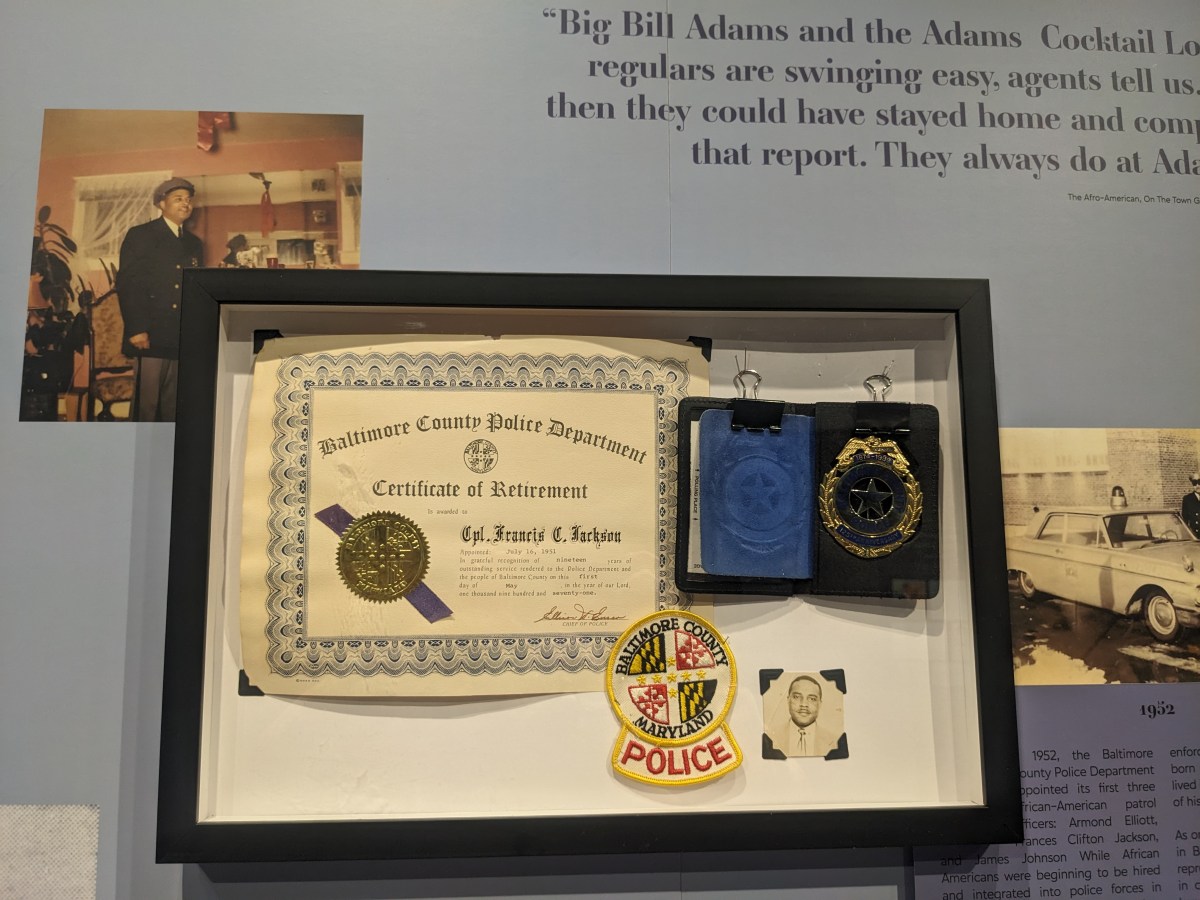
Artifacts on view, on loan from the Turner Station History Center, provide tangible connections to Turner Station’s working-class roots and collective memory. Among them are pieces of wreckage from the Francis Scott Key Bridge, which collapsed in 2024. The bridge holds particular meaning for Turner Station residents, many of whom worked at the Bethlehem Steel mill at Sparrows Point, where the bridge’s steel was fabricated in the 1970s. Additional items include the law enforcement badge and retirement paperwork of Francis Jackson, one of the first African American police officers to patrol the community, as well as materials spotlighting Henrietta Lacks and her enduring legacy. Guests attending the reception will also receive a reproduction newspaper compiling articles and advertisements about Turner Station dating back to the 1880s.

The photos marked “Timeline” show the timeline of notable dates and associated artifacts that we have on display. Courtesy Photo 
The photos marked “Timeline” show the timeline of notable dates and associated artifacts that we have on display. Courtesy Photo 
The photos marked “Timeline” show the timeline of notable dates and associated artifacts that we have on display. Courtesy Photo 
Photos named “Francis Jackson badge” are of the badge and retirement paperwork for Francis Jackson, one of the first African American police officers to patrol Turner Station. Courtesy Photo 
The photo marked “Key Bridge remnants” depicts pieces of the wreckage of the Key Bridge, which was built with steel fabricated at Bethlehem Steel, where most Turner Station residents worked. Courtesy Photo 
The photos called “Wall of Famous Residents” show the wall of plaques that commemorate noted Turner Station residents, including Henrietta Lacks and Calvin Hill. Courtesy Photo
The exhibit also places Turner Station within a broader historical context. Named after J.M. Turner, a late-19th-century landowner, the area grew rapidly after a rail station was established to serve the nearby steel plant at Sparrows Point. As demand for steel surged during World War I, African Americans moved to the neighborhood in large numbers, helping Turner Station flourish. The community’s population peaked at nearly 9,000 residents in the 1950s before declining in subsequent decades, bringing significant social and economic challenges. Since its founding in 2003, the Turner Station Conservation Teams Inc. has played a vital role in preserving the community’s history while supporting ongoing revitalization efforts.
“CCBC’s commitment to the communities we serve includes raising awareness of their rich histories,” said CCBC President Sandra Kurtinitis. “We’re grateful to the Turner Station History Center and the area’s current and former residents for trusting our college with their precious stories and beloved artifacts.”
The Turner Station exhibit will be on view at the Dundalk Community Gallery through April 17. Gallery hours vary by day—Monday from 10 a.m. to 1 p.m.; Tuesday from 10 a.m. to 5:30 p.m.; and Wednesday from 10 a.m. to 5 p.m.—and the gallery is closed Thursday through Sunday. Visitors are encouraged to check CCBC’s website for the most up-to-date information on hours and related events.
- Submitted to the Baltimore Times
- Submitted to the Baltimore Times
- Submitted to the Baltimore Times
- Submitted to the Baltimore Times
- Submitted to the Baltimore Times
- Submitted to the Baltimore Times
- Submitted to the Baltimore Times
- Submitted to the Baltimore Times
- Submitted to the Baltimore Times
- Submitted to the Baltimore Times
- Submitted to the Baltimore Times
- Submitted to the Baltimore Times
- Submitted to the Baltimore Times
- Submitted to the Baltimore Times
- Submitted to the Baltimore Times
- Submitted to the Baltimore Times
- Submitted to the Baltimore Times
- Submitted to the Baltimore Times
- Submitted to the Baltimore Times
- Submitted to the Baltimore Times
- Submitted to the Baltimore Times
- Submitted to the Baltimore Times
- Submitted to the Baltimore Times
- Submitted to the Baltimore Times
- Submitted to the Baltimore Times
- Submitted to the Baltimore Times
- Submitted to the Baltimore Times
- Submitted to the Baltimore Times
- Submitted to the Baltimore Times
- Submitted to the Baltimore Times
- Submitted to the Baltimore Times
- Submitted to the Baltimore Times
- Submitted to the Baltimore Times
- Submitted to the Baltimore Times
- Submitted to the Baltimore Times
- Submitted to the Baltimore Times
- Submitted to the Baltimore Times
- Submitted to the Baltimore Times
- Submitted to the Baltimore Times
- Submitted to the Baltimore Times
- Submitted to the Baltimore Times
- Submitted to the Baltimore Times
- Submitted to the Baltimore Times
- Submitted to the Baltimore Times
- Submitted to the Baltimore Times
- Submitted to the Baltimore Times
- Submitted to the Baltimore Times
- Submitted to the Baltimore Times
- Submitted to the Baltimore Times
- Submitted to the Baltimore Times
- Submitted to the Baltimore Times
- Submitted to the Baltimore Times
- Submitted to the Baltimore Times
- Submitted to the Baltimore Times
- Submitted to the Baltimore Times
- Submitted to the Baltimore Times
- Submitted to the Baltimore Times
- Submitted to the Baltimore Times
- Submitted to the Baltimore Times
- Submitted to the Baltimore Times
- Submitted to the Baltimore Times
- Submitted to the Baltimore Times
- Submitted to the Baltimore Times
- Submitted to the Baltimore Times
- Submitted to the Baltimore Times
- Submitted to the Baltimore Times
- Submitted to the Baltimore Times
- Submitted to the Baltimore Times
- Submitted to the Baltimore Times
- Submitted to the Baltimore Times
- Submitted to the Baltimore Times
- Submitted to the Baltimore Times
- Submitted to the Baltimore Times
- Submitted to the Baltimore Times
- Submitted to the Baltimore Times
- Submitted to the Baltimore Times
- Submitted to the Baltimore Times
- Submitted to the Baltimore Times
- Submitted to the Baltimore Times
- Submitted to the Baltimore Times
- Submitted to the Baltimore Times
- Submitted to the Baltimore Times
- Submitted to the Baltimore Times
- Submitted to the Baltimore Times
- Submitted to the Baltimore Times
- Submitted to the Baltimore Times
- Submitted to the Baltimore Times
- Submitted to the Baltimore Times
- Submitted to the Baltimore Times
- Submitted to the Baltimore Times
- Submitted to the Baltimore Times
- Submitted to the Baltimore Times
- Submitted to the Baltimore Times
- Submitted to the Baltimore Times
- Submitted to the Baltimore Times
- Submitted to the Baltimore Times
- Submitted to the Baltimore Times
- Submitted to the Baltimore Times
- Submitted to the Baltimore Times
- Submitted to the Baltimore Times
- Submitted to the Baltimore Times
- Submitted to the Baltimore Times
- Submitted to the Baltimore Times
- Submitted to the Baltimore Times
- Submitted to the Baltimore Times
- Submitted to the Baltimore Times
- Submitted to the Baltimore Times
- Submitted to the Baltimore Times
- Submitted to the Baltimore Times
- Submitted to the Baltimore Times
- Submitted to the Baltimore Times
- Submitted to the Baltimore Times
- Submitted to the Baltimore Times
- Submitted to the Baltimore Times
- Submitted to the Baltimore Times
- Submitted to the Baltimore Times
- Submitted to the Baltimore Times
- Submitted to the Baltimore Times
- Submitted to the Baltimore Times
- Submitted to the Baltimore Times
- Submitted to the Baltimore Times
- Submitted to the Baltimore Times
- Submitted to the Baltimore Times
- Submitted to the Baltimore Times
- Submitted to the Baltimore Times
- Submitted to the Baltimore Times
- Submitted to the Baltimore Times
- Submitted to the Baltimore Times
- Submitted to the Baltimore Times
- Submitted to the Baltimore Times
- Submitted to the Baltimore Times
- Submitted to the Baltimore Times
- Submitted to the Baltimore Times
- Submitted to the Baltimore Times
- Submitted to the Baltimore Times
- Submitted to the Baltimore Times
- Submitted to the Baltimore Times
- Submitted to the Baltimore Times
- Submitted to the Baltimore Times
- Submitted to the Baltimore Times
- Submitted to the Baltimore Times
- Submitted to the Baltimore Times
- Submitted to the Baltimore Times
- Submitted to the Baltimore Times
- Submitted to the Baltimore Times
- Submitted to the Baltimore Times
- Submitted to the Baltimore Times
- Submitted to the Baltimore Times
- Submitted to the Baltimore Times
- Submitted to the Baltimore Times
- Submitted to the Baltimore Times
- Submitted to the Baltimore Times
- Submitted to the Baltimore Times
- Submitted to the Baltimore Times
- Submitted to the Baltimore Times
- Submitted to the Baltimore Times
- Submitted to the Baltimore Times
- Submitted to the Baltimore Times
- Submitted to the Baltimore Times
- Submitted to the Baltimore Times
- Submitted to the Baltimore Times
- Submitted to the Baltimore Times
- Submitted to the Baltimore Times
- Submitted to the Baltimore Times
- Submitted to the Baltimore Times
- Submitted to the Baltimore Times
- Submitted to the Baltimore Times
- Submitted to the Baltimore Times
- Submitted to the Baltimore Times
- Submitted to the Baltimore Times
- Submitted to the Baltimore Times
- Submitted to the Baltimore Times
- Submitted to the Baltimore Times
- Submitted to the Baltimore Times
- Submitted to the Baltimore Times
- Submitted to the Baltimore Times
- Submitted to the Baltimore Times
- Submitted to the Baltimore Times
- Submitted to the Baltimore Times
- Submitted to the Baltimore Times
- Submitted to the Baltimore Times
- Submitted to the Baltimore Times
- Submitted to the Baltimore Times
- Submitted to the Baltimore Times
- Submitted to the Baltimore Times
- Submitted to the Baltimore Times
- Submitted to the Baltimore Times
- Submitted to the Baltimore Times
- Submitted to the Baltimore Times
- Submitted to the Baltimore Times
- Submitted to the Baltimore Times
- Submitted to the Baltimore Times
- Submitted to the Baltimore Times
- Submitted to the Baltimore Times
- Submitted to the Baltimore Times
- Submitted to the Baltimore Times
- Submitted to the Baltimore Times
- Submitted to the Baltimore Times
- Submitted to the Baltimore Times
- Submitted to the Baltimore Times
- Submitted to the Baltimore Times
- Submitted to the Baltimore Times
- Submitted to the Baltimore Times
- Submitted to the Baltimore Times
- Submitted to the Baltimore Times
- Submitted to the Baltimore Times
- Submitted to the Baltimore Times
- Submitted to the Baltimore Times
- Submitted to the Baltimore Times
- Submitted to the Baltimore Times
- Submitted to the Baltimore Times
- Submitted to the Baltimore Times
- Submitted to the Baltimore Times
- Submitted to the Baltimore Times
- Submitted to the Baltimore Times
- Submitted to the Baltimore Times
- Submitted to the Baltimore Times
- Submitted to the Baltimore Times
- Submitted to the Baltimore Times
- Submitted to the Baltimore Times
- Submitted to the Baltimore Times
- Submitted to the Baltimore Times
- Submitted to the Baltimore Times
- Submitted to the Baltimore Times
- Submitted to the Baltimore Times
- Submitted to the Baltimore Times
- Submitted to the Baltimore Times
- Submitted to the Baltimore Times
- Submitted to the Baltimore Times
- Submitted to the Baltimore Times
- Submitted to the Baltimore Times
- Submitted to the Baltimore Times
- Submitted to the Baltimore Times
- Submitted to the Baltimore Times
- Submitted to the Baltimore Times
- Submitted to the Baltimore Times
- Submitted to the Baltimore Times
- Submitted to the Baltimore Times
- Submitted to the Baltimore Times
- Submitted to the Baltimore Times
- Submitted to the Baltimore Times
- Submitted to the Baltimore Times
- Submitted to the Baltimore Times
- Submitted to the Baltimore Times
- Submitted to the Baltimore Times
- Submitted to the Baltimore Times
- Submitted to the Baltimore Times
- Submitted to the Baltimore Times
- Submitted to the Baltimore Times
- Submitted to the Baltimore Times
- Submitted to the Baltimore Times
- Submitted to the Baltimore Times
- Submitted to the Baltimore Times
- Submitted to the Baltimore Times
- Submitted to the Baltimore Times
- Submitted to the Baltimore Times
- Submitted to the Baltimore Times
- Submitted to the Baltimore Times
- Submitted to the Baltimore Times
- Submitted to the Baltimore Times
- Submitted to the Baltimore Times
- Submitted to the Baltimore Times
- Submitted to the Baltimore Times
- Submitted to the Baltimore Times
- Submitted to the Baltimore Times
- Submitted to the Baltimore Times
- Submitted to the Baltimore Times
- Submitted to the Baltimore Times
- Submitted to the Baltimore Times
- Submitted to the Baltimore Times
- Submitted to the Baltimore Times
- Submitted to the Baltimore Times
- Submitted to the Baltimore Times
- Submitted to the Baltimore Times
- Submitted to the Baltimore Times
- Submitted to the Baltimore Times
- Submitted to the Baltimore Times
- Submitted to the Baltimore Times
- Submitted to the Baltimore Times
- Submitted to the Baltimore Times
- Submitted to the Baltimore Times
- Submitted to the Baltimore Times
- Submitted to the Baltimore Times
- Submitted to the Baltimore Times
- Submitted to the Baltimore Times
- Submitted to the Baltimore Times
- Submitted to the Baltimore Times
- Submitted to the Baltimore Times
- Submitted to the Baltimore Times
- Submitted to the Baltimore Times
- Submitted to the Baltimore Times
- Submitted to the Baltimore Times
- Submitted to the Baltimore Times
- Submitted to the Baltimore Times
- Submitted to the Baltimore Times
- Submitted to the Baltimore Times
- Submitted to the Baltimore Times
- Submitted to the Baltimore Times
- Submitted to the Baltimore Times
- Submitted to the Baltimore Times
- Submitted to the Baltimore Times
- Submitted to the Baltimore Times
- Submitted to the Baltimore Times
- Submitted to the Baltimore Times
- Submitted to the Baltimore Times
- Submitted to the Baltimore Times
- Submitted to the Baltimore Times
- Submitted to the Baltimore Times
- Submitted to the Baltimore Times
- Submitted to the Baltimore Times
- Submitted to the Baltimore Times
- Submitted to the Baltimore Times
- Submitted to the Baltimore Times
- Submitted to the Baltimore Times
- Submitted to the Baltimore Times
- Submitted to the Baltimore Times
- Submitted to the Baltimore Times
- Submitted to the Baltimore Times
- Submitted to the Baltimore Times
- Submitted to the Baltimore Times
- Submitted to the Baltimore Times
- Submitted to the Baltimore Times
- Submitted to the Baltimore Times
- Submitted to the Baltimore Times
- Submitted to the Baltimore Times
- Submitted to the Baltimore Times
- Submitted to the Baltimore Times
- Submitted to the Baltimore Times
- Submitted to the Baltimore Times
- Submitted to the Baltimore Times
- Submitted to the Baltimore Times
- Submitted to the Baltimore Times
- Submitted to the Baltimore Times
- Submitted to the Baltimore Times
- Submitted to the Baltimore Times
- Submitted to the Baltimore Times
- Submitted to the Baltimore Times
- Submitted to the Baltimore Times
- Submitted to the Baltimore Times
- Submitted to the Baltimore Times
- Submitted to the Baltimore Times
- Submitted to the Baltimore Times
- Submitted to the Baltimore Times
- Submitted to the Baltimore Times
- Submitted to the Baltimore Times
- Submitted to the Baltimore Times
- Submitted to the Baltimore Times
- Submitted to the Baltimore Times
- Submitted to the Baltimore Times
- Submitted to the Baltimore Times
- Submitted to the Baltimore Times
- Submitted to the Baltimore Times
- Submitted to the Baltimore Times
- Submitted to the Baltimore Times
- Submitted to the Baltimore Times
- Submitted to the Baltimore Times
- Submitted to the Baltimore Times
- Submitted to the Baltimore Times
- Submitted to the Baltimore Times
- Submitted to the Baltimore Times
- Submitted to the Baltimore Times
- Submitted to the Baltimore Times
- Submitted to the Baltimore Times
- Submitted to the Baltimore Times
- Submitted to the Baltimore Times
- Submitted to the Baltimore Times
- Submitted to the Baltimore Times
- Submitted to the Baltimore Times
- Submitted to the Baltimore Times
- Submitted to the Baltimore Times
- Submitted to the Baltimore Times
- Submitted to the Baltimore Times
- Submitted to the Baltimore Times
- Submitted to the Baltimore Times
- Submitted to the Baltimore Times
- Submitted to the Baltimore Times
- Submitted to the Baltimore Times
- Submitted to the Baltimore Times
- Submitted to the Baltimore Times
- Submitted to the Baltimore Times
- Submitted to the Baltimore Times
- Submitted to the Baltimore Times
- Submitted to the Baltimore Times
- Submitted to the Baltimore Times
- Submitted to the Baltimore Times
- Submitted to the Baltimore Times
- Submitted to the Baltimore Times
- Submitted to the Baltimore Times
- Submitted to the Baltimore Times
- Submitted to the Baltimore Times
- Submitted to the Baltimore Times
- Submitted to the Baltimore Times
- Submitted to the Baltimore Times
- Submitted to the Baltimore Times
- Submitted to the Baltimore Times
- Submitted to the Baltimore Times
- Submitted to the Baltimore Times
- Submitted to the Baltimore Times
- Submitted to the Baltimore Times
- Submitted to the Baltimore Times
- Submitted to the Baltimore Times
- Submitted to the Baltimore Times
- Submitted to the Baltimore Times
- Submitted to the Baltimore Times
- Submitted to the Baltimore Times
- Submitted to the Baltimore Times
- Submitted to the Baltimore Times
- Submitted to the Baltimore Times
- Submitted to the Baltimore Times
- Submitted to the Baltimore Times
- Submitted to the Baltimore Times
- Submitted to the Baltimore Times
- Submitted to the Baltimore Times
- Submitted to the Baltimore Times
- Submitted to the Baltimore Times
- Submitted to the Baltimore Times
- Submitted to the Baltimore Times
- Submitted to the Baltimore Times
- Submitted to the Baltimore Times
- Submitted to the Baltimore Times
- Submitted to the Baltimore Times
- Submitted to the Baltimore Times
- Submitted to the Baltimore Times
- Submitted to the Baltimore Times
- Submitted to the Baltimore Times
- Submitted to the Baltimore Times
- Submitted to the Baltimore Times
- Submitted to the Baltimore Times
- Submitted to the Baltimore Times
- Submitted to the Baltimore Times
- Submitted to the Baltimore Times
- Submitted to the Baltimore Times
- Submitted to the Baltimore Times
- Submitted to the Baltimore Times
- Submitted to the Baltimore Times
- Submitted to the Baltimore Times
- Submitted to the Baltimore Times
- Submitted to the Baltimore Times
- Submitted to the Baltimore Times
- Submitted to the Baltimore Times
- Submitted to the Baltimore Times
- Submitted to the Baltimore Times
- Submitted to the Baltimore Times
- Submitted to the Baltimore Times
- Submitted to the Baltimore Times
- Submitted to the Baltimore Times
- Submitted to the Baltimore Times
- Submitted to the Baltimore Times
- Submitted to the Baltimore Times
- Submitted to the Baltimore Times
- Submitted to the Baltimore Times
- Submitted to the Baltimore Times
- Submitted to the Baltimore Times
- Submitted to the Baltimore Times
- Submitted to the Baltimore Times
- Submitted to the Baltimore Times
- Submitted to the Baltimore Times
- Submitted to the Baltimore Times
- Submitted to the Baltimore Times
- Submitted to the Baltimore Times
- Submitted to the Baltimore Times
- Submitted to the Baltimore Times
- Submitted to the Baltimore Times
- Submitted to the Baltimore Times
- Submitted to the Baltimore Times
- Submitted to the Baltimore Times
- Submitted to the Baltimore Times
- Submitted to the Baltimore Times
- Submitted to the Baltimore Times
- Submitted to the Baltimore Times
- Submitted to the Baltimore Times
- Submitted to the Baltimore Times
- Submitted to the Baltimore Times
- Submitted to the Baltimore Times
- Submitted to the Baltimore Times
- Submitted to the Baltimore Times
- Submitted to the Baltimore Times
- Submitted to the Baltimore Times
- Submitted to the Baltimore Times
- Submitted to the Baltimore Times
- Submitted to the Baltimore Times
- Submitted to the Baltimore Times
- Submitted to the Baltimore Times
- Submitted to the Baltimore Times
- Submitted to the Baltimore Times
- Submitted to the Baltimore Times
- Submitted to the Baltimore Times
- Submitted to the Baltimore Times
- Submitted to the Baltimore Times
- Submitted to the Baltimore Times
- Submitted to the Baltimore Times
- Submitted to the Baltimore Times
- Submitted to the Baltimore Times
- Submitted to the Baltimore Times
- Submitted to the Baltimore Times
- Submitted to the Baltimore Times
- Submitted to the Baltimore Times
- Submitted to the Baltimore Times
- Submitted to the Baltimore Times
- Submitted to the Baltimore Times
- Submitted to the Baltimore Times
- Submitted to the Baltimore Times
- Submitted to the Baltimore Times
- Submitted to the Baltimore Times
- Submitted to the Baltimore Times
- Submitted to the Baltimore Times
- Submitted to the Baltimore Times
- Submitted to the Baltimore Times
- Submitted to the Baltimore Times
- Submitted to the Baltimore Times
- Submitted to the Baltimore Times
- Submitted to the Baltimore Times
- Submitted to the Baltimore Times
- Submitted to the Baltimore Times
- Submitted to the Baltimore Times
- Submitted to the Baltimore Times
- Submitted to the Baltimore Times
- Submitted to the Baltimore Times
- Submitted to the Baltimore Times
- Submitted to the Baltimore Times
- Submitted to the Baltimore Times
- Submitted to the Baltimore Times
- Submitted to the Baltimore Times
- Submitted to the Baltimore Times
- Submitted to the Baltimore Times
- Submitted to the Baltimore Times
- Submitted to the Baltimore Times
- Submitted to the Baltimore Times
- Submitted to the Baltimore Times
- Submitted to the Baltimore Times
- Submitted to the Baltimore Times
- Submitted to the Baltimore Times
- Submitted to the Baltimore Times
- Submitted to the Baltimore Times
- Submitted to the Baltimore Times
- Submitted to the Baltimore Times
- Submitted to the Baltimore Times
- Submitted to the Baltimore Times
- Submitted to the Baltimore Times
- Submitted to the Baltimore Times
- Submitted to the Baltimore Times
- Submitted to the Baltimore Times
- Submitted to the Baltimore Times
- Submitted to the Baltimore Times
- Submitted to the Baltimore Times
- Submitted to the Baltimore Times
- Submitted to the Baltimore Times
- Submitted to the Baltimore Times
- Submitted to the Baltimore Times
- Submitted to the Baltimore Times
- Submitted to the Baltimore Times
- Submitted to the Baltimore Times
- Submitted to the Baltimore Times
- Submitted to the Baltimore Times
- Submitted to the Baltimore Times
- Submitted to the Baltimore Times
- Submitted to the Baltimore Times
- Submitted to the Baltimore Times
- Submitted to the Baltimore Times
- Submitted to the Baltimore Times
- Submitted to the Baltimore Times
- Submitted to the Baltimore Times
- Submitted to the Baltimore Times
- Submitted to the Baltimore Times
- Submitted to the Baltimore Times
- Submitted to the Baltimore Times
- Submitted to the Baltimore Times
- Submitted to the Baltimore Times
- Submitted to the Baltimore Times
- Submitted to the Baltimore Times
- Submitted to the Baltimore Times
- Submitted to the Baltimore Times
- Submitted to the Baltimore Times
- Submitted to the Baltimore Times
- Submitted to the Baltimore Times
- Submitted to the Baltimore Times
- Submitted to the Baltimore Times
- Submitted to the Baltimore Times
- Submitted to the Baltimore Times
- Submitted to the Baltimore Times
- Submitted to the Baltimore Times
- Submitted to the Baltimore Times
- Submitted to the Baltimore Times
- Submitted to the Baltimore Times
- Submitted to the Baltimore Times
- Submitted to the Baltimore Times
- Submitted to the Baltimore Times
- Submitted to the Baltimore Times
- Submitted to the Baltimore Times
- Submitted to the Baltimore Times
- Submitted to the Baltimore Times
- Submitted to the Baltimore Times
- Submitted to the Baltimore Times
- Submitted to the Baltimore Times
- Submitted to the Baltimore Times
- Submitted to the Baltimore Times
- Submitted to the Baltimore Times
- Submitted to the Baltimore Times
- Submitted to the Baltimore Times
- Submitted to the Baltimore Times
- Submitted to the Baltimore Times
- Submitted to the Baltimore Times
- Submitted to the Baltimore Times
- Submitted to the Baltimore Times
- Submitted to the Baltimore Times
- Submitted to the Baltimore Times
- Submitted to the Baltimore Times
- Submitted to the Baltimore Times
- Submitted to the Baltimore Times
- Submitted to the Baltimore Times
- Submitted to the Baltimore Times
- Submitted to the Baltimore Times
- Submitted to the Baltimore Times
- Submitted to the Baltimore Times
- Submitted to the Baltimore Times
- Submitted to the Baltimore Times
- Submitted to the Baltimore Times
- Submitted to the Baltimore Times
- Submitted to the Baltimore Times
- Submitted to the Baltimore Times
- Submitted to the Baltimore Times
- Submitted to the Baltimore Times
- Submitted to the Baltimore Times
- Submitted to the Baltimore Times
- Submitted to the Baltimore Times
- Submitted to the Baltimore Times
- Submitted to the Baltimore Times
- Submitted to the Baltimore Times
- Submitted to the Baltimore Times
- Submitted to the Baltimore Times
- Submitted to the Baltimore Times
- Submitted to the Baltimore Times
- Submitted to the Baltimore Times
- Submitted to the Baltimore Times
- Submitted to the Baltimore Times
- Submitted to the Baltimore Times
- Submitted to the Baltimore Times
- Submitted to the Baltimore Times
- Submitted to the Baltimore Times
- Submitted to the Baltimore Times
- Submitted to the Baltimore Times
- Submitted to the Baltimore Times
- Submitted to the Baltimore Times
- Submitted to the Baltimore Times
- Submitted to the Baltimore Times
- Submitted to the Baltimore Times
- Submitted to the Baltimore Times
- Submitted to the Baltimore Times
- Submitted to the Baltimore Times
- Submitted to the Baltimore Times
- Submitted to the Baltimore Times
- Submitted to the Baltimore Times
- Submitted to the Baltimore Times
- Submitted to the Baltimore Times
- Submitted to the Baltimore Times
- Submitted to the Baltimore Times
- Submitted to the Baltimore Times
- Submitted to the Baltimore Times
- Submitted to the Baltimore Times
- Submitted to the Baltimore Times
- Submitted to the Baltimore Times
- Submitted to the Baltimore Times
- Submitted to the Baltimore Times
- Submitted to the Baltimore Times
- Submitted to the Baltimore Times
- Submitted to the Baltimore Times
- Submitted to the Baltimore Times
- Submitted to the Baltimore Times
- Submitted to the Baltimore Times
- Submitted to the Baltimore Times
- Submitted to the Baltimore Times
- Submitted to the Baltimore Times
- Submitted to the Baltimore Times
- Submitted to the Baltimore Times
- Submitted to the Baltimore Times
- Submitted to the Baltimore Times
- Submitted to the Baltimore Times
- Submitted to the Baltimore Times
- Submitted to the Baltimore Times
- Submitted to the Baltimore Times
- Submitted to the Baltimore Times
- Submitted to the Baltimore Times
- Submitted to the Baltimore Times
- Submitted to the Baltimore Times
- Submitted to the Baltimore Times
- Submitted to the Baltimore Times
- Submitted to the Baltimore Times
- Submitted to the Baltimore Times
- Submitted to the Baltimore Times
- Submitted to the Baltimore Times
- Submitted to the Baltimore Times
- Submitted to the Baltimore Times
- Submitted to the Baltimore Times
- Submitted to the Baltimore Times
- Submitted to the Baltimore Times
- Submitted to the Baltimore Times
- Submitted to the Baltimore Times
- Submitted to the Baltimore Times
- Submitted to the Baltimore Times
- Submitted to the Baltimore Times
- Submitted to the Baltimore Times
- Submitted to the Baltimore Times
- Submitted to the Baltimore Times
- Submitted to the Baltimore Times
- Submitted to the Baltimore Times
- Submitted to the Baltimore Times
- Submitted to the Baltimore Times
- Submitted to the Baltimore Times
- Submitted to the Baltimore Times
- Submitted to the Baltimore Times
- Submitted to the Baltimore Times
- Submitted to the Baltimore Times
- Submitted to the Baltimore Times
- Submitted to the Baltimore Times
- Submitted to the Baltimore Times
- Submitted to the Baltimore Times
- Submitted to the Baltimore Times
- Submitted to the Baltimore Times
- Submitted to the Baltimore Times
- Submitted to the Baltimore Times
- Submitted to the Baltimore Times
- Submitted to the Baltimore Times
- Submitted to the Baltimore Times
- Submitted to the Baltimore Times
- Submitted to the Baltimore Times
- Submitted to the Baltimore Times
- Submitted to the Baltimore Times
- Submitted to the Baltimore Times
- Submitted to the Baltimore Times
- Submitted to the Baltimore Times
- Submitted to the Baltimore Times
- Submitted to the Baltimore Times
- Submitted to the Baltimore Times
- Submitted to the Baltimore Times
- Submitted to the Baltimore Times
- Submitted to the Baltimore Times
- Submitted to the Baltimore Times
- Submitted to the Baltimore Times
- Submitted to the Baltimore Times
- Submitted to the Baltimore Times
- Submitted to the Baltimore Times
- Submitted to the Baltimore Times
- Submitted to the Baltimore Times
- Submitted to the Baltimore Times
- Submitted to the Baltimore Times
- Submitted to the Baltimore Times
- Submitted to the Baltimore Times
- Submitted to the Baltimore Times
- Submitted to the Baltimore Times
- Submitted to the Baltimore Times
- Submitted to the Baltimore Times
- Submitted to the Baltimore Times
- Submitted to the Baltimore Times
- Submitted to the Baltimore Times
- Submitted to the Baltimore Times
- Submitted to the Baltimore Times
- Submitted to the Baltimore Times
- Submitted to the Baltimore Times
- Submitted to the Baltimore Times
- Submitted to the Baltimore Times
- Submitted to the Baltimore Times
- Submitted to the Baltimore Times
- Submitted to the Baltimore Times
- Submitted to the Baltimore Times
- Submitted to the Baltimore Times
- Submitted to the Baltimore Times
- Submitted to the Baltimore Times
- Submitted to the Baltimore Times
- Submitted to the Baltimore Times
- Submitted to the Baltimore Times
- Submitted to the Baltimore Times
- Submitted to the Baltimore Times
- Submitted to the Baltimore Times
- Submitted to the Baltimore Times
- Submitted to the Baltimore Times
- Submitted to the Baltimore Times
- Submitted to the Baltimore Times
- Submitted to the Baltimore Times
- Submitted to the Baltimore Times
- Submitted to the Baltimore Times
- Submitted to the Baltimore Times
- Submitted to the Baltimore Times
- Submitted to the Baltimore Times
- Submitted to the Baltimore Times
- Submitted to the Baltimore Times
- Submitted to the Baltimore Times
- Submitted to the Baltimore Times
- Submitted to the Baltimore Times
- Submitted to the Baltimore Times
- Submitted to the Baltimore Times
- Submitted to the Baltimore Times
- Submitted to the Baltimore Times
- Submitted to the Baltimore Times
- Submitted to the Baltimore Times
- Submitted to the Baltimore Times
- Submitted to the Baltimore Times
- Submitted to the Baltimore Times
- Submitted to the Baltimore Times
- Submitted to the Baltimore Times
- Submitted to the Baltimore Times
- Submitted to the Baltimore Times
- Submitted to the Baltimore Times
- Submitted to the Baltimore Times
- Submitted to the Baltimore Times
- Submitted to the Baltimore Times
- Submitted to the Baltimore Times
- Submitted to the Baltimore Times
- Submitted to the Baltimore Times
- Submitted to the Baltimore Times
- Submitted to the Baltimore Times
- Submitted to the Baltimore Times
- Submitted to the Baltimore Times
- Submitted to the Baltimore Times
- Submitted to the Baltimore Times
- Submitted to the Baltimore Times
- Submitted to the Baltimore Times
- Submitted to the Baltimore Times
- Submitted to the Baltimore Times
- Submitted to the Baltimore Times
- Submitted to the Baltimore Times
- Submitted to the Baltimore Times
- Submitted to the Baltimore Times
- Submitted to the Baltimore Times
- Submitted to the Baltimore Times
- Submitted to the Baltimore Times
- Submitted to the Baltimore Times
- Submitted to the Baltimore Times
- Submitted to the Baltimore Times
- Submitted to the Baltimore Times
- Submitted to the Baltimore Times
- Submitted to the Baltimore Times
- Submitted to the Baltimore Times
- Submitted to the Baltimore Times
- Submitted to the Baltimore Times
- Submitted to the Baltimore Times
- Submitted to the Baltimore Times
- Submitted to the Baltimore Times
- Submitted to the Baltimore Times
- Submitted to the Baltimore Times
- Submitted to the Baltimore Times
- Submitted to the Baltimore Times
- Submitted to the Baltimore Times
- Submitted to the Baltimore Times
- Submitted to the Baltimore Times
- Submitted to the Baltimore Times
- Submitted to the Baltimore Times
- Submitted to the Baltimore Times
- Submitted to the Baltimore Times
- Submitted to the Baltimore Times
- Submitted to the Baltimore Times
- Submitted to the Baltimore Times
- Submitted to the Baltimore Times
- Submitted to the Baltimore Times
- Submitted to the Baltimore Times
- Submitted to the Baltimore Times
- Submitted to the Baltimore Times
- Submitted to the Baltimore Times
- Submitted to the Baltimore Times
- Submitted to the Baltimore Times
- Submitted to the Baltimore Times
- Submitted to the Baltimore Times
- Submitted to the Baltimore Times
- Submitted to the Baltimore Times
- Submitted to the Baltimore Times
- Submitted to the Baltimore Times
- Submitted to the Baltimore Times
- Submitted to the Baltimore Times
- Submitted to the Baltimore Times
- Submitted to the Baltimore Times
- Submitted to the Baltimore Times
- Submitted to the Baltimore Times
- Submitted to the Baltimore Times
- Submitted to the Baltimore Times
- Submitted to the Baltimore Times
- Submitted to the Baltimore Times
- Submitted to the Baltimore Times
- Submitted to the Baltimore Times
- Submitted to the Baltimore Times
- Submitted to the Baltimore Times
- Submitted to the Baltimore Times
- Submitted to the Baltimore Times
- Submitted to the Baltimore Times
- Submitted to the Baltimore Times
- Submitted to the Baltimore Times
- Submitted to the Baltimore Times
- Submitted to the Baltimore Times
- Submitted to the Baltimore Times
- Submitted to the Baltimore Times
- Submitted to the Baltimore Times
- Submitted to the Baltimore Times
- Submitted to the Baltimore Times
- Submitted to the Baltimore Times
- Submitted to the Baltimore Times
- Submitted to the Baltimore Times
- Submitted to the Baltimore Times
- Submitted to the Baltimore Times
- Submitted to the Baltimore Times
- Submitted to the Baltimore Times
- Submitted to the Baltimore Times
- Submitted to the Baltimore Times
- Submitted to the Baltimore Times
- Submitted to the Baltimore Times
- Submitted to the Baltimore Times
- Submitted to the Baltimore Times
- Submitted to the Baltimore Times
- Submitted to the Baltimore Times
- Submitted to the Baltimore Times
- Submitted to the Baltimore Times
- Submitted to the Baltimore Times
- Submitted to the Baltimore Times
- Submitted to the Baltimore Times
- Submitted to the Baltimore Times
- Submitted to the Baltimore Times
- Submitted to the Baltimore Times
- Submitted to the Baltimore Times
- Submitted to the Baltimore Times
- Submitted to the Baltimore Times
- Submitted to the Baltimore Times
- Submitted to the Baltimore Times
- Submitted to the Baltimore Times
- Submitted to the Baltimore Times
- Submitted to the Baltimore Times
- Submitted to the Baltimore Times
- Submitted to the Baltimore Times
- Submitted to the Baltimore Times
- Submitted to the Baltimore Times
- Submitted to the Baltimore Times
- Submitted to the Baltimore Times
- Submitted to the Baltimore Times
- Submitted to the Baltimore Times
- Submitted to the Baltimore Times
- Submitted to the Baltimore Times
- Submitted to the Baltimore Times
- Submitted to the Baltimore Times
- Submitted to the Baltimore Times
- Submitted to the Baltimore Times
- Submitted to the Baltimore Times
- Submitted to the Baltimore Times
- Submitted to the Baltimore Times
- Submitted to the Baltimore Times
- Submitted to the Baltimore Times
- Submitted to the Baltimore Times
- Submitted to the Baltimore Times
- Submitted to the Baltimore Times
- Submitted to the Baltimore Times
- Submitted to the Baltimore Times
- Submitted to the Baltimore Times
- Submitted to the Baltimore Times
- Submitted to the Baltimore Times
- Submitted to the Baltimore Times
- Submitted to the Baltimore Times
- Submitted to the Baltimore Times
- Submitted to the Baltimore Times
- Submitted to the Baltimore Times
- Submitted to the Baltimore Times
- Submitted to the Baltimore Times
- Submitted to the Baltimore Times
- Submitted to the Baltimore Times
- Submitted to the Baltimore Times
- Submitted to the Baltimore Times
- Submitted to the Baltimore Times
- Submitted to the Baltimore Times
- Submitted to the Baltimore Times
- Submitted to the Baltimore Times
- Submitted to the Baltimore Times
- Submitted to the Baltimore Times
- Submitted to the Baltimore Times
- Submitted to the Baltimore Times
- Submitted to the Baltimore Times
- Submitted to the Baltimore Times
- Submitted to the Baltimore Times
- Submitted to the Baltimore Times
- Submitted to the Baltimore Times
- Submitted to the Baltimore Times
- Submitted to the Baltimore Times
- Submitted to the Baltimore Times
- Submitted to the Baltimore Times
- Submitted to the Baltimore Times
- Submitted to the Baltimore Times
- Submitted to the Baltimore Times
- Submitted to the Baltimore Times
- Submitted to the Baltimore Times
- Submitted to the Baltimore Times
- Submitted to the Baltimore Times
- Submitted to the Baltimore Times
- Submitted to the Baltimore Times
- Submitted to the Baltimore Times
- Submitted to the Baltimore Times
- Submitted to the Baltimore Times
- Submitted to the Baltimore Times
- Submitted to the Baltimore Times
- Submitted to the Baltimore Times
- Submitted to the Baltimore Times
- Submitted to the Baltimore Times
- Submitted to the Baltimore Times
- Submitted to the Baltimore Times
- Submitted to the Baltimore Times
- Submitted to the Baltimore Times
- Submitted to the Baltimore Times
- Submitted to the Baltimore Times
- Submitted to the Baltimore Times
- Submitted to the Baltimore Times
- Submitted to the Baltimore Times
- Submitted to the Baltimore Times
- Submitted to the Baltimore Times
- Submitted to the Baltimore Times
- Submitted to the Baltimore Times
- Submitted to the Baltimore Times
- Submitted to the Baltimore Times
- Submitted to the Baltimore Times
- Submitted to the Baltimore Times
- Submitted to the Baltimore Times
- Submitted to the Baltimore Times
- Submitted to the Baltimore Times
- Submitted to the Baltimore Times
- Submitted to the Baltimore Times
- Submitted to the Baltimore Times
- Submitted to the Baltimore Times
- Submitted to the Baltimore Times
- Submitted to the Baltimore Times
- Submitted to the Baltimore Times
- Submitted to the Baltimore Times
- Submitted to the Baltimore Times
- Submitted to the Baltimore Times
- Submitted to the Baltimore Times
- Submitted to the Baltimore Times
- Submitted to the Baltimore Times
- Submitted to the Baltimore Times
- Submitted to the Baltimore Times
- Submitted to the Baltimore Times
- Submitted to the Baltimore Times
- Submitted to the Baltimore Times
- Submitted to the Baltimore Times
- Submitted to the Baltimore Times
- Submitted to the Baltimore Times
- Submitted to the Baltimore Times
- Submitted to the Baltimore Times
- Submitted to the Baltimore Times
- Submitted to the Baltimore Times
- Submitted to the Baltimore Times
- Submitted to the Baltimore Times
- Submitted to the Baltimore Times
- Submitted to the Baltimore Times
- Submitted to the Baltimore Times
- Submitted to the Baltimore Times
- Submitted to the Baltimore Times
- Submitted to the Baltimore Times
- Submitted to the Baltimore Times
- Submitted to the Baltimore Times
- Submitted to the Baltimore Times
- Submitted to the Baltimore Times
- Submitted to the Baltimore Times
- Submitted to the Baltimore Times
- Submitted to the Baltimore Times
- Submitted to the Baltimore Times
- Submitted to the Baltimore Times
- Submitted to the Baltimore Times
- Submitted to the Baltimore Times
- Submitted to the Baltimore Times
- Submitted to the Baltimore Times
- Submitted to the Baltimore Times
- Submitted to the Baltimore Times
- Submitted to the Baltimore Times
- Submitted to the Baltimore Times
- Submitted to the Baltimore Times
- Submitted to the Baltimore Times
- Submitted to the Baltimore Times
- Submitted to the Baltimore Times
- Submitted to the Baltimore Times
- Submitted to the Baltimore Times
- Submitted to the Baltimore Times
- Submitted to the Baltimore Times
- Submitted to the Baltimore Times
- Submitted to the Baltimore Times
- Submitted to the Baltimore Times
- Submitted to the Baltimore Times
- Submitted to the Baltimore Times
- Submitted to the Baltimore Times
- Submitted to the Baltimore Times
- Submitted to the Baltimore Times
- Submitted to the Baltimore Times
- Submitted to the Baltimore Times
- Submitted to the Baltimore Times
- Submitted to the Baltimore Times
- Submitted to the Baltimore Times
- Submitted to the Baltimore Times
- Submitted to the Baltimore Times
- Submitted to the Baltimore Times
- Submitted to the Baltimore Times
- Submitted to the Baltimore Times
- Submitted to the Baltimore Times
- Submitted to the Baltimore Times
- Submitted to the Baltimore Times
- Submitted to the Baltimore Times
- Submitted to the Baltimore Times
- Submitted to the Baltimore Times
- Submitted to the Baltimore Times
- Submitted to the Baltimore Times
- Submitted to the Baltimore Times
- Submitted to the Baltimore Times
- Submitted to the Baltimore Times
- Submitted to the Baltimore Times
- Submitted to the Baltimore Times
- Submitted to the Baltimore Times
- Submitted to the Baltimore Times
- Submitted to the Baltimore Times
- Submitted to the Baltimore Times
- Submitted to the Baltimore Times
- Submitted to the Baltimore Times
- Submitted to the Baltimore Times
- Submitted to the Baltimore Times
- Submitted to the Baltimore Times
- Submitted to the Baltimore Times
- Submitted to the Baltimore Times
- Submitted to the Baltimore Times
- Submitted to the Baltimore Times
- Submitted to the Baltimore Times
- Submitted to the Baltimore Times
- Submitted to the Baltimore Times
- Submitted to the Baltimore Times
- Submitted to the Baltimore Times
- Submitted to the Baltimore Times
- Submitted to the Baltimore Times
- Submitted to the Baltimore Times
- Submitted to the Baltimore Times
- Submitted to the Baltimore Times
- Submitted to the Baltimore Times
- Submitted to the Baltimore Times
- Submitted to the Baltimore Times
- Submitted to the Baltimore Times
- Submitted to the Baltimore Times
- Submitted to the Baltimore Times
- Submitted to the Baltimore Times
- Submitted to the Baltimore Times
- Submitted to the Baltimore Times
- Submitted to the Baltimore Times
- Submitted to the Baltimore Times
- Submitted to the Baltimore Times
- Submitted to the Baltimore Times
- Submitted to the Baltimore Times
- Submitted to the Baltimore Times
- Submitted to the Baltimore Times
- Submitted to the Baltimore Times
- Submitted to the Baltimore Times
- Submitted to the Baltimore Times
- Submitted to the Baltimore Times
- Submitted to the Baltimore Times
- Submitted to the Baltimore Times
- Submitted to the Baltimore Times
- Submitted to the Baltimore Times
- Submitted to the Baltimore Times
- Submitted to the Baltimore Times
- Submitted to the Baltimore Times
- Submitted to the Baltimore Times
- Submitted to the Baltimore Times
- Submitted to the Baltimore Times